
Is Ohenro Daiko a Scam? How to Spot Shady Proxy Operators and Choose One You Can Actually Trust
If the word “scam” crossed your mind while researching proxy pilgrimage, you’re not alone. Handing money and a deeply personal prayer to someone you’ve never met, asking them to walk 1,400 km of Shikoku on your behalf — of course you hesitate. Honest doubt is the right reflex here.
Search “Ohenro Daiko scam” or “proxy pilgrimage fraud” and you’ll find plenty of people asking exactly what you’re asking. Pick the wrong operator and you’ll regret it for years. Pick a real one, and the prayers you can’t deliver yourself get carried faithfully to all eighty-eight temples.
- Why “Ohenro Daiko feels shady” is a fair and useful reaction
- The actual tricks dishonest operators use to fake a pilgrimage
- The four pieces of proof a legitimate operator always delivers
- Three questions to send before you book, and five things to check on their website
By the end of this piece, you’ll be able to tell a real Ohenro Daiko operator from a fake one without relying on anyone’s word for it. Let’s start with why that uneasy feeling is actually telling you something important.
Is Ohenro Daiko Really Sketchy? Why Your Hesitation Makes Complete Sense
Let’s cut straight to it: Ohenro Daiko itself isn’t a scam. It sits on top of daisan (代参), the centuries-old Japanese tradition of a proxy pilgrimage pilgrimage — someone walking on behalf of a person who can’t go themselves because of age, illness, or distance. In Shikoku that custom has been accepted for generations.
In the Edo period, families in Shikoku and elsewhere in Japan would commission a traveling monk or a devoted pilgrim to walk on their behalf — paying for lodging, the stamp fees, and a modest honorarium. The deliverable was the nokyocho, brought home and kept as a family artifact passed down through generations. What’s happening today is essentially the same transaction, just with bank transfers instead of sacks of rice and with email instead of handwritten letters.
So why does it feel sketchy today? Because from booking to completion, you never see a single moment of the work yourself. You’re trusting someone you’ve never met with a serious sum of money and, more importantly, a prayer you can’t replace. That’s nothing like buying sneakers online.
- There’s no easy way for the client to verify all 88 temples were actually visited
- The industry has no licensing body — literally anyone can hang up an “Ohenro Daiko” sign
- The prayer being carried is often for someone who has died, and can’t be redone
- Prices swing wildly — from a few hundred dollars to tens of thousands — with no transparent benchmark
That third point carries the real emotional weight. If you later discover your operator skipped temples, the money loss hurts less than the feeling of having failed the person you were praying for. Whether an operator understands that weight is the very first thing to test.
By the way, if pricing is your first concern, our honest breakdown of Ohenro Daiko cost walks through every line item. Once you know what a real pilgrimage actually costs, spotting suspiciously cheap operators gets much easier.
Yes, You’re Right to Ask “Did They Actually Go?”
The question “did they actually walk all 88 temples?” isn’t rude — it’s the single most effective filter you have. That suspicion is exactly what weeds shady operators out.
The Shikoku 88-temple route runs over 1,400 kilometers from Ryozenji (Temple 1, Tokushima) to Okuboji (Temple 88, Kagawa). On foot it’s around 40 days; by car the absolute minimum is about 10 days. So if an operator tells you they finished “in 5 days,” the math simply doesn’t work — something was skipped.
So drop the “trust or don’t trust” framing. What you want is an operator who hands over so much evidence there’s nothing left to doubt. Asking for that isn’t rude. It’s just your job as the client.
One more note on how to frame those questions. You’re not accusing anyone of fraud by asking for proof — you’re doing the same due diligence you’d do with any other significant purchase. A professional operator welcomes it, because clear proof is the easiest way to earn a repeat client or a referral. How an operator reacts to the question tells you a lot before you’ve even looked at the answers they give.
Red Flags in the Proxy Industry — How Shady Operators Actually Work
Fake or half-fake Ohenro Daiko operators exist. The amounts involved are often small enough that victims don’t pursue it, which is why you rarely see these cases in the news — but complaints to Japan’s consumer affairs centers come in every year. Here’s what I’ve seen from inside the industry.
The operators who get away with it rarely leave a dramatic paper trail. What they rely on is clients who feel embarrassed about having doubted, who don’t pursue a refund for a few hundred dollars, and who can’t easily prove the 88 stamps in their nokyocho were obtained fraudulently. The whole fraud model depends on client silence. Knowing the patterns in advance is how you break that silence before it ever starts.
- Pricing way below the market (e.g., under $300 for all 88 temples)
- No face, no real name, no office address on the website
- Only a stamped nokyocho (temple stamp book) and a marked byakue (pilgrim’s white robe) delivered — no photos, no visit log
- Replies come slow, vague, and dodge specifics
- Bank transfer goes to a personal account; legally required commerce disclosures missing
That first red flag — suspiciously cheap pricing — is almost always a giveaway. Just the fuel, highway tolls, and temple stamp fees for an actual 88-temple route come out to at least a few thousand dollars. The nokyocho stamp alone is 500 yen × 88 temples = 44,000 yen (after the 2024 fee revision). Add lodging, labor, and insurance, and a $300 offer just isn’t mathematically possible.
Translation: “cheap” usually means “they skipped the temples and faked the stamps.” Which, for a memorial pilgrimage, is the opposite of what you wanted. Again, our Ohenro Daiko cost breakdown shows exactly where honest money goes — compare any quote you’re getting against that.
A related tactic worth knowing: some shady operators quote cheap upfront, then pile on “unavoidable” add-ons once the pilgrimage is underway — extra temple fees, accommodation upgrades, fuel surcharges, emergency route changes. By the time you push back, they’ll say everything’s already paid for, and you end up having spent more than a reputable operator would have charged from the very beginning. A clean, itemized price list published on the website — one you can read before you send a single yen — is the simplest defense against that bait-and-switch pattern.
Why Fake Operators Exist — And How to Spot Them
Ohenro Daiko is an industry with zero licensing requirements. File a simple business registration and you can legally call yourself an “Ohenro Daiko operator” the next morning. In theory, you could open a proxy pilgrimage business without ever setting foot in Shikoku. That near-zero barrier to entry is exactly why dishonest operators keep appearing.
Here are the patterns that come up most often.
- Operating a website from Tokyo or Osaka with no actual Shikoku base
- Sourcing used nokyocho stamps through side channels instead of visiting temples
- Physically visiting only a handful of temples and treating the rest like souvenir stamps
- Subcontracting everything to an unnamed third party with no quality control
- Communicating entirely through chatbots or anonymous accounts
The single fastest check: does the operator actually exist in Shikoku? Ohenro Daiko is a service about Shikoku. An operator with no Shikoku base is a red flag on its own. A Tokyo-based company with a legitimate Shikoku branch is fine — but in that case they’ll publish the branch address, the staff names, and photos of the actual walker.
Next up, let’s flip the script: what does a legitimate operator look like?
What Real Operators Always Show You — Temple Records, Stamp Books, and the Four Proofs of a Genuine Pilgrimage
Every legitimate Ohenro Daiko operator shares one trait: they replace “trust me” with “let me prove it”. They lay out their verification system before you ask. Here are the four pieces of proof a real operator always delivers.
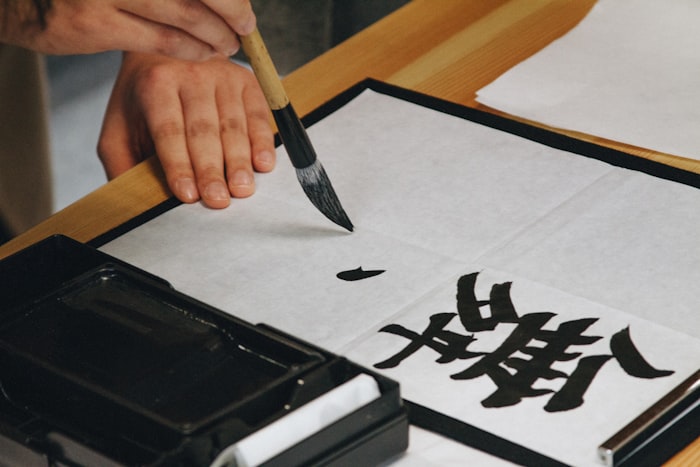
- Handwritten temple stamps and calligraphy in the nokyocho — impossible to obtain without physically visiting the temple
- Photo or video of the visit at each temple — ideally with date and GPS metadata
- A pilgrimage log with dates and the route order — all 88 temples with timestamps
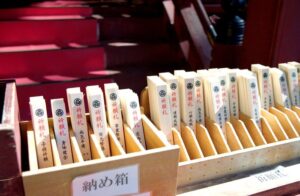
- The actual or duplicate osamefuda (pilgrim name slip) left in each temple’s offering box
Put those four together and you have a deliverable set that only exists if someone actually walked Shikoku. The nokyocho in particular can’t be faked — the monk at each temple’s stamp office writes the calligraphy by hand, one at a time, and applies the vermilion seal on the spot. You can’t get that without being there (short of outright forgery).
“Couldn’t they just reuse someone else’s photos?” Fair question. A real operator will hand you a continuous photo series with the same walker, wearing the same white robe, at recognizable spots across all 88 temples. That kind of consistency can’t be faked with stolen images.
Ask before booking whether you’ll receive a named folder of photos for each temple, in order. Real operators typically organize the album with the temple number, the temple name, and the visit date — so you can cross-check against the visit log at a glance, one row at a time. If the photos arrive as an unsorted dump with no temple labels attached, that alone is a signal worth pausing on. A professional operator who walked all 88 temples has zero reason to hand you a disorganized archive.
If you want the cultural context for why proxy pilgrimage is a legitimate tradition in the first place, our guide to daisan, the centuries-old proxy pilgrimage custom walks through the history. Once you understand daisan, “proxy = shady” stops feeling accurate. It’s closer to “proxy = tradition, as long as the proxy actually walks.”
Why the Nokyocho and Visit Log Function as Real Proof
The nokyocho and the visit log work as proof because they carry information only someone who physically pilgrimaged could have.
Look closely at the stamps: the red ink color, the darkness of the calligraphy, the brushwork — every temple is slightly different. The handwriting varies monk by monk, stamp by stamp. Getting all 88 genuine is effectively impossible without actually visiting them.
- Do the 88 temple dates form a physically possible sequence and spacing?
- Do the photo EXIF timestamps and GPS match the pilgrimage log?
- Is the walker in the same white robe, sedge hat, and with the same staff across every temple?
- Does the weather, foliage, and crowd match the season each log entry claims?
Even the fastest driving route takes around 10 days. So be skeptical of any operator whose timeline is suspiciously short. At Ohenro Gift-Bin we plan 14 days for our Light course, 21 days for Standard — physically reasonable timelines, by design.
Before You Book — Three Questions and Five Checkpoints to Vet a Proxy Operator
The single best defense against shady operators is to ask serious questions before you send any money. Fake operators can’t answer specifics. Their replies get vague, or slow, or both. Run the checklist below and you’ll filter most of them out before you ever hit “pay.”
Three Questions to Send in Your First Inquiry
Send these three over email or the contact form. The way they answer tells you everything about the operation.
- “How many days do you plan for the 88 temples?” — can they give a concrete schedule and route?
- “What evidence will I receive at the end?” — can they list the nokyocho, photos, log, and osamefuda upfront?
- “Can we stay in touch during the pilgrimage?” — do they offer LINE or email check-ins along the way?
If the answer to the first is “about ten days, roughly” or “leave the schedule to us,” they probably don’t have a real plan. A serious operator will say something like, “We depart on [date], routing Tokushima → Kochi → Ehime → Kagawa, 22 days total,” before you book.
For the second question, a real operator rattles off the deliverables without hesitation — nokyocho, per-temple photo album, visit log, osamefuda duplicates. Watch out for hedged answers like “we’ll stamp the nokyocho, photos depend on weather.” That’s wiggle room they want to keep.
The third — “can we communicate during the pilgrimage” — is more revealing than it sounds. An operator actually walking Shikoku has no problem telling you which temple they visited today. One who refuses, citing “we’re too busy on the road,” is giving you a reason to question whether they’re on the road at all.
The bar here is genuinely low. A single photo a day — the walker standing in front of that day’s temple gate with a visible date and temple sign — is enough to confirm progress. Any operator physically out there can send that in under a minute. If the answer comes back as “we don’t offer progress updates” or “we’ll send everything together at the end,” treat it as a signal rather than a policy preference. Silence during a 20-day pilgrimage is a lot to ask of a grieving client.
What Their Website Tells You Before You Even Ask
Even before your first inquiry, a few minutes on the operator’s website will flag most bad actors. Scan for these in order.
- Commerce disclosure page (operator’s legal name, address, phone, email — legally required in Japan)
- Founder or lead guide’s face photo and bio
- Office address (check on Google Maps that it’s actually in Shikoku)
- Plan-by-plan pricing with line items (temple fees, transport, lodging)
- Past client voices or testimonials — and whether any are published at all
The first one — the commerce disclosure page — is legally mandatory for online sales in Japan. Buying anything from a Japanese site that doesn’t publish one is a bad move on principle; buying an Ohenro Daiko service worth thousands of dollars without one is reckless. No disclosure = scratch them off the list.
The second — a face and a bio — isn’t strictly required, but operators who publish them are meaningfully more trustworthy. Putting your name and face on the service means accepting reputational risk, and that’s exactly the kind of skin in the game you want from someone handling a memorial pilgrimage.
The fourth and fifth checks — itemized pricing and past client voices — aren’t just comfort signals. Itemized pricing tells you the operator has run enough pilgrimages to know what every line really costs; a vague lump-sum quote suggests they might be estimating rather than operating. Client voices, meanwhile, tell you whether anyone’s been through the full process and come out the other side satisfied. Brand-new operators won’t have testimonials yet, and that’s fine — but they should at least be transparent about being new instead of posting stock-photo “happy customer” quotes.
Ohenro Daiko is a service built on mutual trust between client and operator. The operator opens up their information; the client learns what to look at. When both sides do their part, shady operators lose their funding. For the bigger picture on hiring a proxy pilgrimage service, our guide to Ohenro Daiko and what to know before booking covers the whole decision.
![[Ohenro]Shikoku Pilgrimage Proxy Service: Costs and How to Choose a Trusted Provider](https://ohenro-gift.com/en/giftohenro369/wp-content/uploads/2026/03/agency_thumb-300x200.jpg)

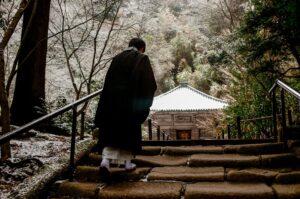
FAQ: Common Questions About Trusting an Ohenro Daiko
- Does the spiritual merit actually transfer if someone walks the pilgrimage for me?
-
Yes — that’s the core idea behind daisan, a tradition going back to the Edo period. Shingon Buddhism, which shapes the Shikoku pilgrimage, holds that a proxy walker’s prayer carries merit to the person it’s dedicated to. What matters is that the operator genuinely carries your intention — so when you book, confirm how they’ll write your name and prayer on the osamefuda (name slip) left at each temple.
- What if the nokyocho never arrives — can I get a refund?
-
An operator who publishes a proper commerce disclosure will also publish cancellation and refund terms. Read those carefully before you book. If things go wrong regardless, Japan’s Consumer Affairs hotline (188) is the right escalation. Keep every receipt, bank transfer record, and screenshot of your correspondence — they’re essential if a dispute escalates.
- If I switch operators mid-pilgrimage, can I get my nokyocho back?
-
In principle, yes — the nokyocho belongs to you, so you can ask for it back. But once the pilgrimage has started, expect to pay for temples already visited. Check the operator’s contract and terms of service for how mid-route cancellations are handled before you commit.
- I’ve heard Ohenro Daiko is illegal. Is that true?
-
No. Ohenro Daiko itself isn’t illegal. Proxy pilgrimage (daisan) has been an accepted practice since the Edo period, and the Shikoku 88-Temple Reijo-kai doesn’t explicitly prohibit it today. What is illegal is forging nokyocho stamps or misusing temple seals — which is why booking only operators who actually visit the temples is non-negotiable.
- Do I have to use an operator officially certified by the Reijo-kai?
-
The Reijo-kai certifies individuals as “official guides” (sendatsu), but it doesn’t run a company-level certification program. So any operator claiming to be “Reijo-kai certified” deserves a follow-up question. What actually matters is whether they follow the proper temple procedure — visit, sutra recitation, stamp — at every temple.
Ohenro Daiko Isn’t Shady — But Picking the Wrong Operator Can Be
Thanks for reading this far. To close, one line I want to restate: Ohenro Daiko itself is not a shady service. What’s shady is dishonest operators — and once you know how to tell them apart, you’ll find operators who carry your intention faithfully to all 88 temples.
- Ohenro Daiko stems from the Edo-era tradition of daisan — it’s not illegal
- The “shady” feeling comes from thin verification paths and zero industry licensing
- Shady operators share three markers: cheap pricing, anonymous operation, no deliverable evidence
- Real operators always provide the four proofs: nokyocho, temple photos, visit log, osamefuda
- Three pre-booking questions — schedule, deliverables, mid-pilgrimage contact — reveal the operator’s true posture
- Five website checks — commerce disclosure, founder info, address, itemized pricing, client voices — tell you most of what you need
Picture a family who recently lost a spouse and wants to collect nokyocho stamps from all 88 temples as a memorial — a real scenario someone considering Ohenro Daiko might be in. “Will they actually walk it?” is the first question anyone would ask, and it’s the right one. That’s exactly why, at Ohenro Gift-Bin, we’ve built the service around daily LINE updates during the pilgrimage and a full post-completion report — so the client actually feels “yes, my spouse’s prayer made it.”
Or imagine someone whose own health no longer allows long travel, but who still feels the pull of the pilgrimage their parents once walked — wanting to complete the route their family started decades ago. That kind of intention deserves an operator who treats “did you actually walk it?” not as an accusation, but as the most important question in the room. Our job isn’t to make the client stop asking; it’s to answer so completely that the question resolves itself.
Building that “I can trust this” feeling is the entire reason we do this work the way we do.
- Real base in Tokushima, Shikoku — Hajime lives in Shikoku; the office address is public
- Daily LINE updates during the pilgrimage — which temple we visited, with photos
- Full deliverables: nokyocho + photo album + visit log + osamefuda duplicates — every time
- Commerce disclosure and full pricing published on the public site
- Free pre-booking consultation, as many rounds as you need before you decide
The best way to check whether we’re trustworthy is to ask us directly — as many questions as you want, before any commitment. Take a look at our plans and reach out through the contact form for anything that still feels unclear.
Your prayer — the one you can’t carry yourself — we’ll deliver it to Shikoku’s 88 temples on your behalf.