
What Is Daisan? The Centuries-Old Ohenro Custom of Walking on Someone Else’s Behalf
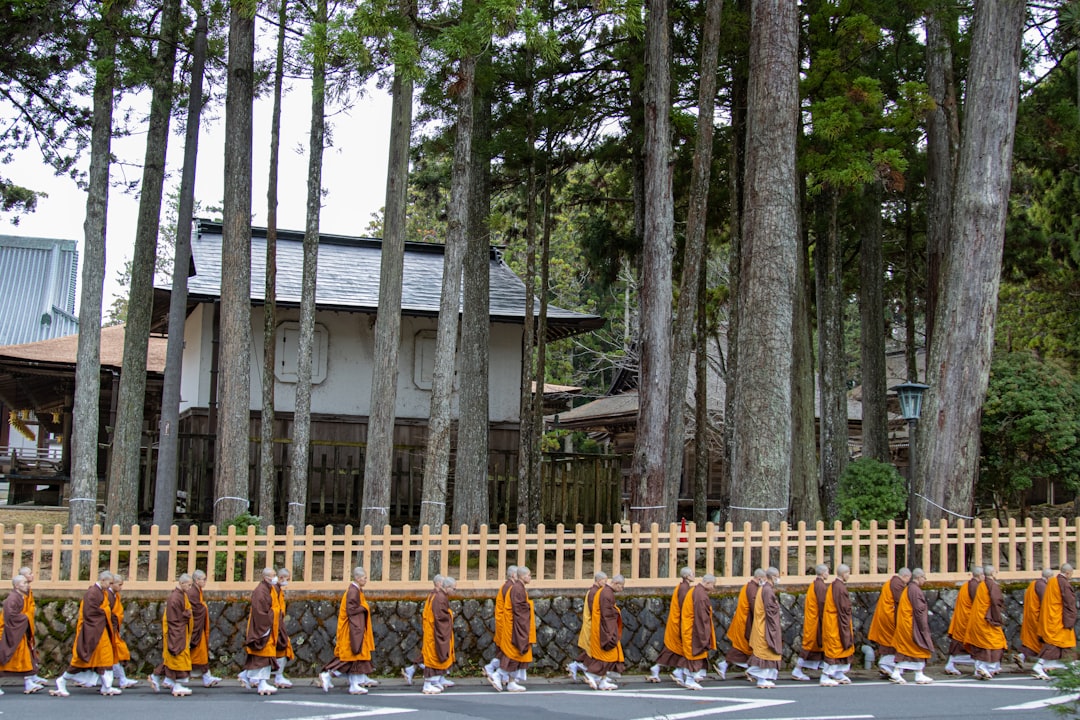
Daisan is the centuries-old Japanese practice of walking a pilgrimage — Shikoku’s 88 temples specifically — on behalf of someone who can’t physically go, so that their wish still gets carried and delivered.
Here’s why that matters: ever since Kobo Daishi Kukai is said to have laid out the Shikoku route, the idea that “a person who can’t walk it themselves can still have their prayer carried there by someone else” has always been part of the tradition — not a workaround, not a compromise.
If the word “daiko” (proxy/agent) felt too modern or too transactional to you, that’s fair. But once you realize “daisan” is the older, more honest word for the same human thing, the discomfort tends to dissolve.
In this article, I’ll walk you through:
- What daisan actually is — the Edo-period roots of “walking on someone else’s behalf” and why ordinary families started doing it
- Daisan vs. daiko: two words that overlap but mean different things, cleanly sorted out
- Whether daisan actually carries merit — and what Kobo Daishi and 1,200 years of pilgrimage history have to say about it
- How to read whether a provider actually has the “daisan spirit,” or whether they’re just selling a service
- The most common questions people ask about Ohenro daisan, answered straight
I run an Ohenro proxy-pilgrimage service, so I’ll write this the honest way. Daisan is a real, tested, centuries-old way to carry someone’s prayer to the place they can’t reach anymore — you don’t have to apologize for it.
What “Daisan” Actually Means — The Centuries-Old Custom of Walking on Someone’s Behalf
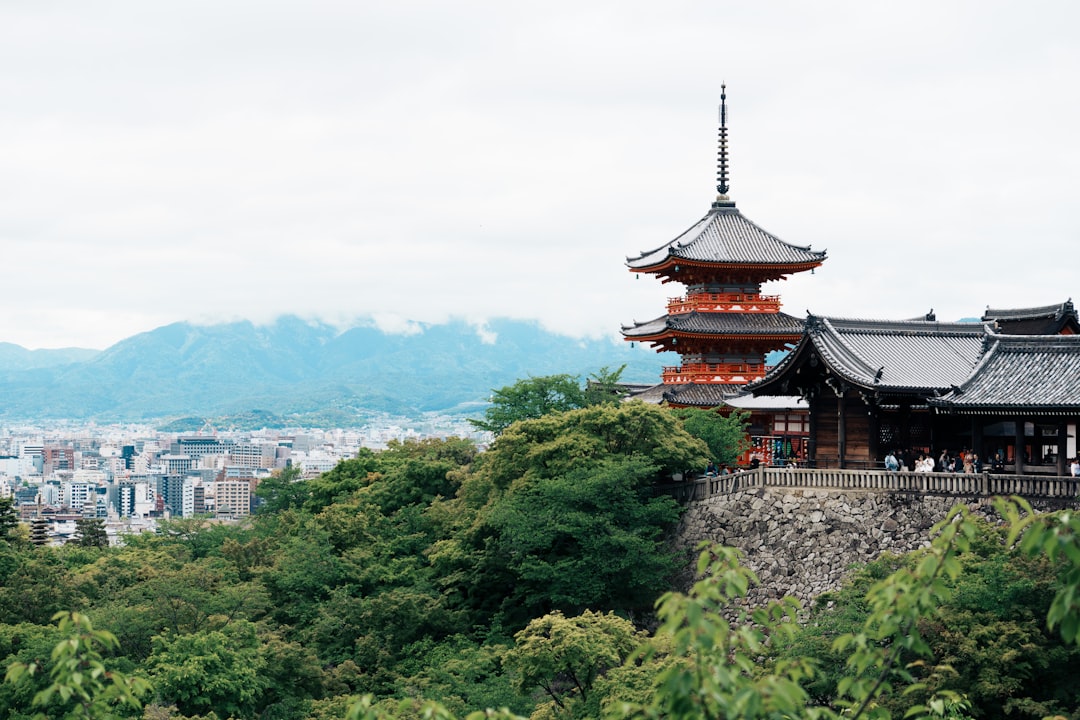
Ohenro daisan (代参) is, at its core, the practice of walking the 88-temple Shikoku pilgrimage on behalf of someone who can’t physically go, so the prayer they carry still arrives where it’s meant to.
“Daisan” is a two-character word. First character: “replace / on behalf of.” Second character: “to visit (a sacred place).” Put them together and you get, very literally, “to visit on behalf of someone.” Plain, direct, and old.
And that “old” part matters. Daisan isn’t a contemporary spin-off. It grew organically out of ordinary Japanese life during the Edo period, as a way regular families solved a very human problem.
- Pronunciation: “dai-san”
- Meaning: visiting sacred ground on behalf of someone who can’t go
- Origin: Edo period Japan (1600s onward), among everyday households
- Classic examples: Ise pilgrimage, Shikoku Ohenro, Fuji-ko, Saigoku Kannon route
- Modern form: the core spirit now lives inside what’s called “Ohenro daiko” (proxy pilgrimage service)
Which is another way of saying: daisan is what happens when people who can’t travel refuse to let that fact take the prayer away from them. It’s one of the quietly clever inventions of Japanese folk faith.
What “Daisan” Means — Its History and How It Took Root
The reason daisan spread as a household concept at all is mostly thanks to the Edo-period Ise mairi — the mass movement of ordinary Japanese people trying to make it to Ise Grand Shrine at least once in their lives.
For Edo-era commoners, walking to Ise, or doing the Shikoku 88, was the once-in-a-lifetime trip. And the painful truth was: not everyone got to go.
The people Edo-period daisan was invented for:
- Anyone too frail or ill to walk long distances
- Householders who couldn’t leave the farm or the shop for weeks
- Families who couldn’t fund a pilgrimage for one person, let alone multiple
- Anyone tied to caring for a parent or a child with no one to hand them off to
- Elderly people for whom the road itself had already become impossible
So villages improvised. They formed what were called “ko” — small mutual-aid societies where everyone chipped in money so one representative could walk the pilgrimage each year on behalf of the whole group. When the representative came home, they’d hand out the blessings, the charms, and sometimes the stamped pilgrimage books to the people who’d funded them.
Ise-ko, Shikoku-ko, Fuji-ko — they weren’t vending clubs. They ran on something much more human: trust, shared prayer, and the belief that one person’s walk could carry many people’s hopes.
Daisan vs. Daiko — Sorting Out Two Words That Sound Alike but Mean Different Things
The key difference between daisan and daiko is the mindset underneath each word. Short version: daisan is a cultural and spiritual practice; daiko is a modern service.
“Aren’t they basically the same word?” — I hear that a lot, and the two do overlap, but at the root they’re different.
Daisan = Culture, Daiko = Modern Service
Here’s the cleanest side-by-side I can offer:
| Daisan (代参) | Daiko (代行) | |
|---|---|---|
| Meaning | Visiting sacred ground on behalf of someone who can’t go | Doing something on someone else’s behalf, broadly |
| Scope | Sacred sites — shrines, temples, pilgrimage routes | General daily life and business |
| History | Edo period onward; centuries of cultural and spiritual use | Modern era, as the service economy grew |
| Who does it | A family member, a village rep, sometimes a priest | Professional service providers and companies |
| What’s underneath | Prayer, faith, the weight of carrying someone’s wish | A service being delivered for convenience |
Read it like this: daisan is the old, spiritual shape of “I’ll carry your prayer for you.” Daiko is the broad, modern word for “I’ll handle this task for you” — you’ll see it on driving-service signs, house-cleaning menus, even grocery-delivery ads.
So the clean mental split is: daisan belongs to the religious / spiritual side of life. Daiko belongs to the service-industry side of life.
Modern Proxy Pilgrimage as the Continuation of Daisan
“So, is Ohenro daiko just a business, then?” — that’s the next question, and it’s a fair one.
The honest answer: any proxy provider worth hiring is running modern daiko as a faithful continuation of Edo-period daisan, not as a replacement for it.
Concretely, that continuation shows up like this:
- Writing the client’s prayer onto the white pilgrim’s robe — byakue (白衣) — before setting out
- Writing the client’s name and intention onto the nōsatsu pilgrim slip, and offering one at each temple
- Actually walking — or in some routes, driving — the full 88 temples in sequence, not skipping
- Receiving the temple stamps into a real nōkyōchō, and handing the physical book to the client at the end
- Returning the byakue, sacred sand, and a charm at the completion of the journey
All of that is mechanically the same as what an Edo-period daisan representative would have done for their ko — same sequence, same objects, same weight of responsibility. The core act didn’t change; only the way it gets arranged did.
If the “but isn’t daisan disrespectful?” worry is still sitting on you, I cover that in detail in Is Proxy Pilgrimage Disrespectful? The 1,200-Year Tradition Behind Walking Ohenro on Someone’s Behalf.
Does Daisan Actually “Deliver” the Merit? — What Kobo Daishi and 1,200 Years of Tradition Say
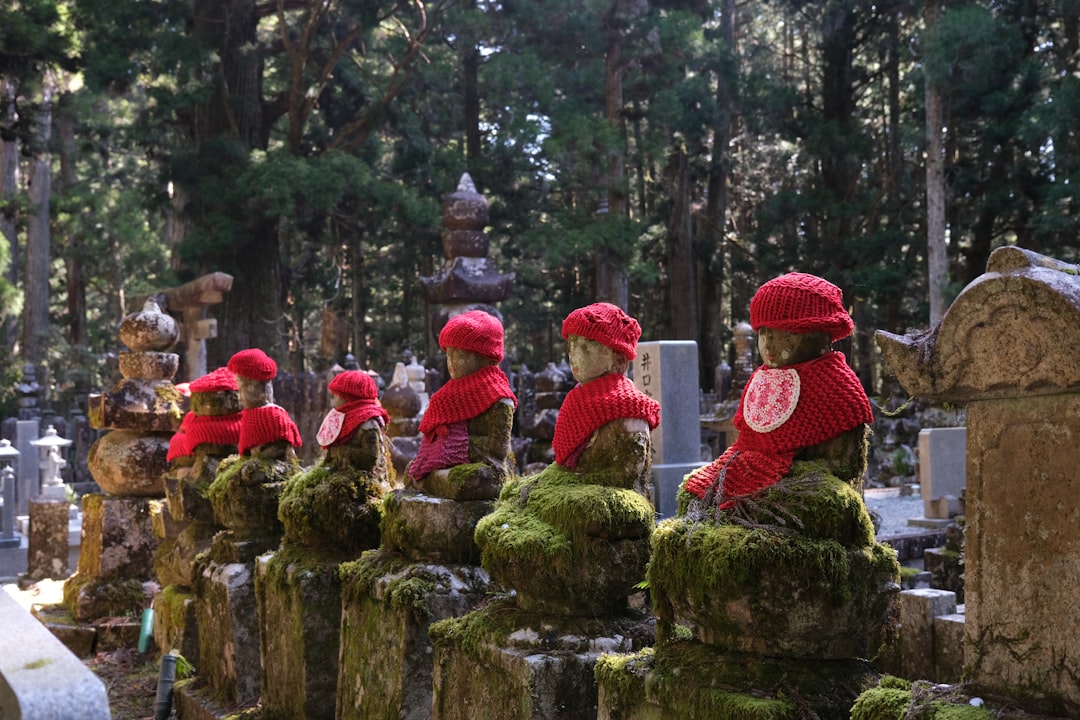
The number-one question I get on daisan is: “Does the merit actually reach the person who asked? Or is this just a nice gesture with no real spiritual weight?”
Straight answer: the idea that daisan does carry real merit isn’t wishful thinking — it’s a position that Japanese Buddhism and 1,200 years of pilgrimage practice have steadily backed up.
Daisan isn’t a comforting myth. It isn’t a modern convenience dressed up in old clothes. The logic that makes daisan work is baked right into Ohenro itself from the top.
Kobo Daishi and Daisan — The “Dogyo Ninin” Idea at the Root of Ohenro
At the spiritual center of the Shikoku pilgrimage sits one phrase: “dogyo ninin” (同行二人) — “we walk as two.”
Dogyo ninin means: no matter how alone the pilgrim looks on the road, Kobo Daishi Kukai is always walking with them. The solo pilgrim is, by definition, never really solo.
The pilgrim’s gear makes this explicit:
- The white byakue robe has “dogyo ninin” written large across it
- The kongo-zue walking staff is said to be Kobo Daishi himself
- The nōsatsu slip opens with “Namu Daishi Henjo Kongo”
- The sugegasa straw hat usually carries “dogyo ninin” too
That’s the exact logic that makes daisan work. It’s not really one stranger walking in your place — it’s that stranger walking with Kobo Daishi, and your prayer traveling alongside them both until it reaches the honzon — the enshrined deity — of each temple.
I’ve written a full piece on the “dogyo ninin” idea if you want to understand it in depth: “Dogyo Ninin”: The Heart of Ohenro — Walking the Pilgrimage Alongside Kobo Daishi.
Why the Merit Is Thought to Reach the Person Who Asks
On top of the dogyo-ninin layer, the formal Japanese Buddhist position — including the Shikoku Reijokai (the 88-temple council) — has never treated “walking on behalf of another” as invalid.
If anything, Japanese pilgrimage culture absorbed daisan early and kept it as the legitimate way to deliver prayer for people who can’t deliver it themselves.
The reasoning breaks into three pieces:
- Dogyo ninin logic: the feet may be the proxy’s, but Kobo Daishi carries the intention to the honzon regardless
- Eko (回向): Buddhism has an explicit, formal practice of “dedicating accumulated merit to another person” — it’s not a workaround, it’s a core technique
- 1,200 years of precedent: daisan was accepted and used as a real prayer form well before the Edo period, and that continuity is itself the endorsement
The key one to sit with is “eko” — the formal dedication of one person’s merit to another. It isn’t exotic. Eko is happening every time a Japanese family holds a memorial service or a funeral rite — merit gets accumulated on one side and pointed at someone on the other side, on purpose.
Daisan merit travels on the same framework. It’s the same mechanism, applied to a living person instead of a deceased one.
What to Look For Before You Ask Someone to Walk for You — How to Spot a Trustworthy Provider
Even once you’re solid on the history and the merit question, a fresh problem shows up the moment you go hire someone: “Okay — who do I actually trust with this? Who’s going to treat the prayer like a prayer?”
Daisan is a practice where you’re handing someone else your prayer — and that means the “am I trusting the right people” question deserves a real answer, not a hope.
Here’s how to read a provider.
How to Read Whether a Provider Has the “Daisan Spirit”
You can get a pretty clean signal on whether a given operator understands what daisan actually is, or is just using the word as marketing copy, straight from their website and their booking materials. You don’t need to meet them first.
Watch for these specifically:
- They clearly state that they walk — or at minimum visit — all 88 temples, in sequence, without skipping
- They describe writing the client’s intention onto the byakue and the nōsatsu before setting out
- They return the real, physically stamped nōkyōchō to the client at the end
- They log the journey — photos, a written record, something concrete — and share it
- They do not promise locked-in outcomes or miracle results — they’re specific about what they do and don’t claim
- Their pricing is itemized: you can see what each part of the service cost s and whys and why
- The operator — name, face, background — is visible on the site, not hidden behind a logo
On the flip side, if the site is leading with extreme discounts, or with absolute claims like “your blessing is assured” or “luck will rise,” that’s a tell that the operator isn’t really working inside the daisan tradition.
Frequently Asked Questions About Ohenro Daisan
- What’s the actual difference between daisan and daiko?
-
Daisan (代参) is the old, spiritual word — a centuries-old Japanese practice of visiting sacred ground on behalf of someone who can’t go themselves. Daiko (代行) is the broad, modern word for any “done on someone else’s behalf” service, from driving to house-cleaning. They aren’t in opposition. A real Ohenro proxy-pilgrimage operator runs their daiko business as a direct continuation of the daisan spirit — same prayer-carrying, same act, just arranged as a service you can book.
- Does daisan really carry merit to the person who asks?
-
Yes, inside Japanese Buddhist logic it does. There’s a formal practice called “eko” — dedicating accumulated merit to another person — and it’s used constantly in memorial rites and other standard Buddhist ceremonies. On top of that, Ohenro itself rests on “dogyo ninin” (“we walk as two”), the idea that Kobo Daishi is always walking alongside the pilgrim. Put the two together and the prayer moves from the client, through the proxy, through Kobo Daishi, to the honzon of each temple. This framework is 1,200 years old — not a modern justification.
- Is it really true that daisan goes back to the Edo period?
-
Yes. Edo-period Japanese commoners badly wanted to complete journeys like Ise mairi or the Shikoku 88, but most people couldn’t — too poor, too ill, too tied down caring for family. So villages formed mutual-aid groups called “ko,” pooled money, and sent one member to walk on behalf of everyone. That member came home with charms and stamped pilgrimage books and handed them out. That’s the root of daisan. Modern Ohenro proxy services are the inherited form of exactly that.
- Would asking for a daisan be disrespectful to my parent?
-
No. Daisan exists precisely for situations where someone you love can’t make the journey themselves — health, age, distance, whatever — and you don’t want their wish to just die there. If anything, the “leave the wish unfulfilled” option is the less respectful one. The one real move is: tell your parent directly. Don’t book it silently. When they understand that someone will walk Shikoku carrying their prayer on their behalf, most parents don’t feel disrespected — they feel held.
- What does a daisan-style Ohenro proxy typically cost?
-
It varies a lot depending on how fully the route is walked, whether a real nōkyōchō is returned, whether you get a written/photo record, and whether a worn byakue is included. For a faithful service that actually walks all 88 temples and returns the real artifacts, the floor tends to sit in the mid-hundreds-of-thousands of yen and up. Be careful with pricing that sits dramatically below the rest of the market — very low prices often mean skipped temples, no real stamped book returned, or a hollowed-out version of the ritual. The rule is: a provider who can clearly itemize “what you’re paying for, and why” is the one you want.
Daisan Is a Living Tradition — So Please Only Entrust It to Someone Who Treats It That Way
I’ve walked you through what daisan means, where it comes from, how it’s different from daiko, whether it actually carries merit, and how to tell a real provider from a fake one.
The one thing I want you to leave with is this: daisan is not a new thing, it’s not a weird thing, and it’s not a workaround. It’s a 1,200-year-old Japanese practice for carrying prayer to a place the person can’t reach themselves.
If your parent once said they wanted to walk Ohenro — that wish is still alive inside you. Daisan is one clear, honest way to give that wish a shape and actually deliver it to them.
- Daisan = “visiting sacred ground on behalf of someone who can’t go” — an Edo-period Japanese practice
- Daisan (the cultural/spiritual practice) and daiko (the modern service word) are continuous, not opposed
- Daisan merit rests on dogyo ninin and eko — both are legitimate inside Buddhism, not improvised
- A real provider walks all 88 temples, writes your prayer in, returns a real nōkyōchō, and avoids guarantees
- Daisan is a way to carry your parent’s wish without apologizing for it — you can stand fully behind it
“Okay — but how do I actually arrange a daisan? Who do I ask?”
Ohenro Gift-Bin exists exactly for that. I run it as a direct continuation of Edo-period daisan, translated into a modern booking format so a family anywhere in the world can use it today.
- Your wish — and your name, if you want it — are written into the byakue and nōsatsu before I leave
- All 88 temples, walked (or, where needed, visited) in sequence — never skipped
- A real nōkyōchō stamp book, carried with me through every temple, and handed back to you at the end
- A written and photographed record of the journey, returned with the physical artifacts
- No absolute promises, no luck-up claims — just the faithful delivery of the prayer, which is what daisan is
If your parent’s once-spoken “I want to walk Shikoku someday” is still sitting on your shoulder — daisan is how you lay it down the right way.. I’ll carry it the way it’s meant to be carried, with 1,200 years of practice standing behind the work.
Initial consults are free. Start wherever you are — even just “I’ve got this feeling, and I wanted to ask if daisan can hold it” is a perfect opening line.
For full service details, pricing, and the flow, see Ohenro Gift-Bin: Ohenro Proxy Pilgrimage Service — How It Works.
![[Ohenro]Shikoku Pilgrimage Proxy Service: Costs and How to Choose a Trusted Provider](https://ohenro-gift.com/en/giftohenro369/wp-content/uploads/2026/03/agency_thumb-300x200.jpg)