Walking Shikoku on Someone’s Behalf: 4 Ways to Have Ohenro Done For You (With Real Costs)
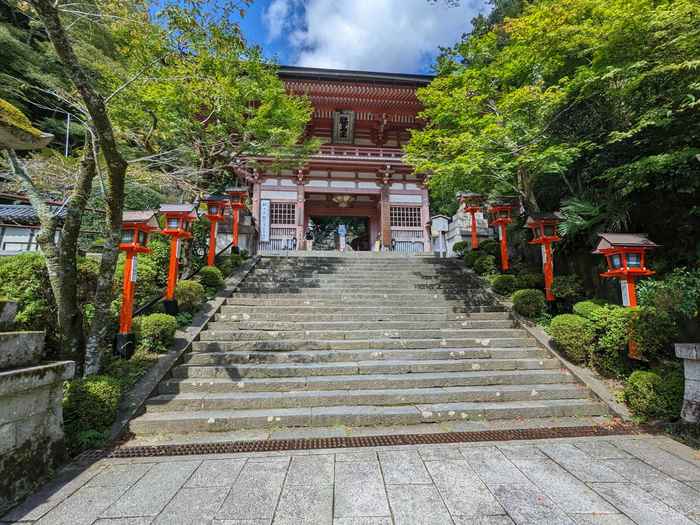
A parent who always wanted to walk Ohenro.
You’d love to go with them. But age, health, work — the math just doesn’t work out.
That’s usually when people first stumble onto the idea of having someone else walk it on their behalf.
Here’s the thing most people outside Japan don’t know: Ohenro has a built-in answer for exactly this situation. It’s called daisan (代参) — the tradition of proxy pilgrimage, and it’s been around for centuries. You can ask a family member, a friend, someone you loosely know, or a proxy operator. But the choice you make changes the cost, the effort, and what you end up holding in your hands at the end.
- Why having someone walk on your behalf is a real, accepted option (not a workaround)
- The four kinds of people you can ask — and when each one actually fits
- Realistic costs for each path, and the hidden price of the “free” ones
- How to bring it up with your family, and the seven things to check before you hire
By the end, the option that fits your situation should feel obvious.
Let’s start with why this exists as an option at all — because the history is more interesting than you’d expect.
Why You Can Ask Someone Else to Walk Ohenro for You — And It’s Not a Shortcut
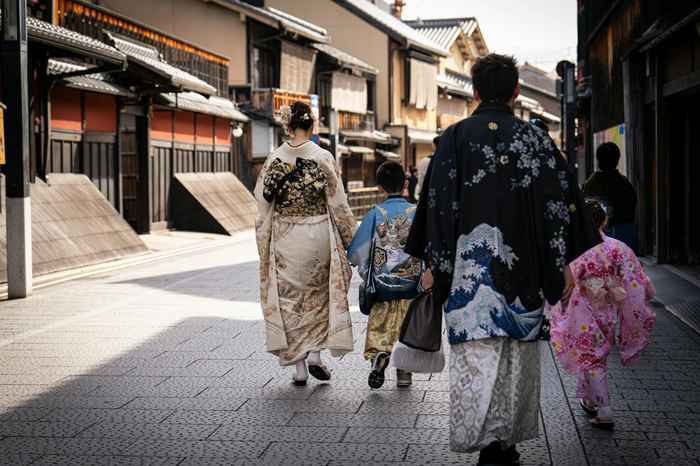
First reaction most people have when they hear “have someone walk Ohenro for you”?
“Is that even allowed?“
Pay someone to do the spiritual part for you. Doesn’t that sound a little off?
It’s a fair reflex. But here’s the answer up front.
Asking someone to walk on your behalf is a long-standing, fully accepted option inside Ohenro — not a workaround, not a shortcut.
Back in the Edo period, villages routinely pooled money to send one strong walker to carry everyone’s prayers around the 88 temples. The sick, the elderly, young mothers — they couldn’t walk 1,400 km themselves, so a trusted representative went for them.
This is what daisan means: a proxy pilgrimage, built into the culture of Shikoku for more than a thousand years.
- A parent always wanted to go but can’t physically manage it anymore
- A family member is ill or hospitalized and needs a prayer carried for them
- Work and kids make a 40-day trip impossible to justify
- A parent passed away with “I wish I’d done Ohenro” left unsaid
- You live outside Japan and flying back repeatedly just isn’t realistic
Every one of those situations has the same shape underneath.
“The wish is real. I just can’t physically do it myself.“
Once you’ve accepted that — but refuse to let the wish quietly die — daisan becomes a live option again, the same way it was for families 300 years ago.
If the history side of this is new to you, our piece on daisan and how proxy pilgrimage actually works goes deeper on the tradition and why it’s still valid today.
Why “Asking Someone Else” Isn’t Cheating
“Shouldn’t I be the one walking?”
“Isn’t paying someone basically cheating?”
A lot of people hit this wall — it feels like low-grade guilt more than a logical objection.
But asking someone to walk on your behalf isn’t lazy and it isn’t disrespectful.
If anything, “having someone carry a prayer I can’t carry myself” is one of the oldest forms of Japanese faith there is. That idea predates modern Ohenro by centuries.
The thing that actually matters is who the prayer is for, and what’s behind it — not whose feet touched the ground.
If your walker writes your name and intention on each osamefuda and places one at every temple, that’s a legitimate daisan. No asterisk.
You’re not sneaking around the system. You’re doing what generations of Japanese families have done — sharing a prayer across two people who both care about it.
So put the guilt down. The real question isn’t whether to ask. It’s who to ask, and how to ask them well. That’s where this gets interesting.


Four People You Could Ask — And Who Each One Actually Suits
When you start thinking about who to ask, the candidates break down into four groups.
Each group has a sweet spot and a disaster scenario. Knowing which is which up front saves a lot of awkward conversations.
- Family — a spouse, adult child, or sibling walks on behalf of someone in the household
- A close friend — someone who loves travel or is drawn to pilgrimage, walking out of goodwill
- An acquaintance — a looser connection (a coworker, someone from social media, a friend of a friend)
- A professional proxy operator — a company that walks Ohenro on behalf of clients as a service
Here’s the quick scan. Match it against your family situation, your calendar, and your budget.
| Who you ask | What it’s like | Best fit | Bad fit |
|---|---|---|---|
| ① Family | Shared feeling, inherent trust | Someone in the family has time and the body for it | Everyone is busy, elderly, or far away |
| ② Friend | Warm, but honorarium norms are fuzzy | A close friend who genuinely loves travel or faith | The 40-day ask would wreck your friendship |
| ③ Acquaintance | Money is basically required; less trust to lean on | They have real, verifiable pilgrimage experience | You don’t actually know them very well |
| ④ Proxy operator | A contract, a price sheet, and a process | You want verifiable records and a finished nokyocho | You want to keep this inside the family |
There’s no universal right answer here.
If a family member has the time, option ① is the most beautiful version. If you want paperwork, receipts, and no awkward money conversations, ④ is the realistic one.
Costs come next, then the family conversation. One step at a time.
When an Acquaintance Gets Risky, and When a Pro Just Fits Better
Of the four, option ③ — an acquaintance — is where people most often get talked into a bad decision.
Maybe a friend’s uncle has walked Ohenro a few times. Maybe someone on social media offered. On paper, it looks ideal: cheaper than a company, more structured than asking a friend.
On paper. In practice, there are holes.
- Have they actually walked all 88 temples before? How many times, and on foot or by car?
- Who pays for the nokyocho fees, transport, and lodging across 40-plus days?
- Is the honorarium and how it’s paid written down — not just “we’ll figure it out”?
- What’s the plan if they get sick or injured mid-route?
- How will you actually verify all 88 temples were visited?
Loose relationships have a specific problem.
“You can’t quite bring yourself to ask for proof.” “You don’t want to seem like you don’t trust them.” The harder questions quietly never get asked.
When nothing is on paper, only the friendship is holding it together — and if anything goes sideways, both sides walk away hurt.
Flip the situation around. If any of these sound familiar, a proxy operator probably fits your situation better:
- No one in your family or friend circle realistically has 40+ days open
- You want concrete deliverables — a nokyocho, photos, a visit report
- You want to be able to show someone, later, that all 88 were actually visited
- You’d rather move through contracts and invoices than favors
- You don’t want to mix money into a close relationship
“Asking a person you know” and “hiring a company” are two different things entirely.
Neither is morally better. The only question is which version of this will let you sleep at night.
What It Actually Costs — The Price of Each Option, Honestly
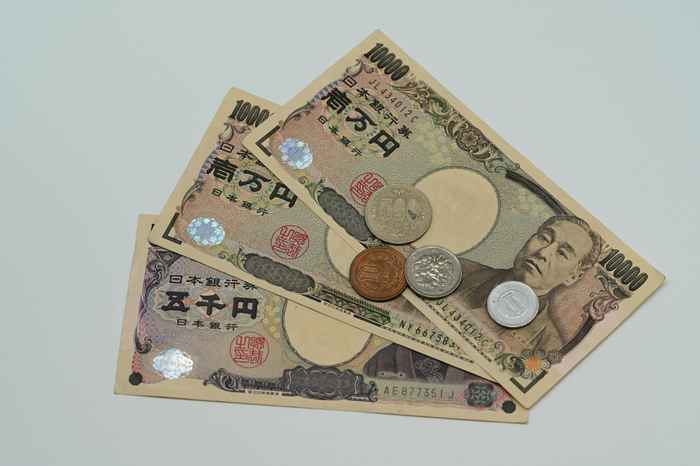
Once “I want someone to walk it” is decided, the next question is money.
How much does this actually cost? That answer changes drastically depending on who walks.
Here are realistic numbers for each of the four paths.
- ① Family — often “free,” but transport, lodging, and lost wages add up fast
- ② Close friend — travel costs plus an honorarium of roughly ¥100,000–¥300,000 ($700–$2,100)
- ③ Acquaintance — payment is basically required; total often ¥300,000–¥600,000 ($2,100–$4,200)
- ④ Proxy operator — formal pricing, typically ¥500,000–¥2,500,000 ($3,500–$17,000) depending on plan
Start with option ① — family.
On paper, nobody exchanges money.
But someone still has to pay for transport, lodging, and food across either 10 days (by car) or 40 to 60 days (on foot). Plus every day they’re off work is a day they’re not earning. “Free” here really means “the whole household absorbs the cost quietly.”
It’s a legitimate option. Just not actually free.
Option ② — a close friend. Here the honorarium norms are genuinely fuzzy.
Usually the client covers transport and lodging outright, then adds roughly ¥100,000–¥300,000 (about $700–$2,100) as an honorarium.
The awkward part: there’s no right number. How much this person feels it was worth depends on your relationship and how much the walk interrupted their life.
Option ③ — an acquaintance. Here, payment stops being optional and becomes necessary.
You cover transport, lodging, and nokyocho fees (around ¥44,000 / $300 total for all 88). On top of that, an honorarium of ¥200,000–¥400,000, putting the full bill at ¥300,000–¥600,000 ($2,100–$4,200).
For the level of effort — 40-plus days of someone’s life — that’s honestly not a generous rate.
Option ④ — a proxy operator. This is where formal pricing takes over.
For a full breakdown of what these numbers actually cover, see our honest breakdown of Ohenro Daiko cost.
Prices vary by operator, but the big advantage is every line item is visible. No guessing what your friend is thinking.
The Real Price Tag on the “Free” Options
Look at the table above and the cheap options look like no-brainers.
This is where I have to be honest with you.
The cheaper the option looks, the more the cost gets hidden somewhere else. That’s not a sales pitch — it’s just how this plays out.
- Relationship strain — the person asking and the person walking end up with different reads on how much was “owed”
- Uncertainty — it’s very hard to verify from the outside whether every temple was actually reached
- Uneven nokyocho — the stamps and handwriting come out inconsistent, and the finished book reflects it
- No contingency plan — if the walker gets injured, there’s rarely insurance or a backup
- No second chance — if a friend gives up halfway, asking them to restart isn’t realistic
That first one — relationship strain — deserves real attention.
When someone says “sure, I’ll do it,” they almost always mean it in the moment.
But 40 days of walking in Shikoku is harder than anyone who hasn’t done it imagines.
They get sick. Their knees go. Something blows up at their job. And when that happens, the friendship itself takes damage — long after the pilgrimage is over.
Yes, hiring a proxy operator costs actual money.
But when you add up the contract, the insurance, the progress reports, and the quality-controlled nokyocho, what you’re really paying for is a version of this where no one you love gets hurt.
Choosing a proxy operator also means filtering out bad operators — our guide on spotting shady Ohenro Daiko operators walks through exactly what the red flags look like. Read it before you send money anywhere.
How to Bring It Up With Your Family — And What to Check Before You Book
Say you’ve landed on “I want to hire a proxy operator.”
There’s still one step most people get stuck on.
Talking to the rest of the family.
Ohenro Daiko isn’t cheap. Deciding alone and telling the family later is the fastest way to create resentment you didn’t need.
Before you even contact an operator, run through this checklist.
- Who the prayer is for, and what exactly you’re asking for
- A budget ceiling the family has actually agreed to
- The route method — on foot, by car, or mixed — and whether that’s acceptable to you
- What physical deliverables come back: nokyocho, photos, report?
- How often you’ll get progress updates, and through what channel
- Cancellation policy, insurance, and the plan for unexpected trouble
- A written quote, shared with whoever else has a stake
The one that matters most is “what physically comes back.”
Not whether it satisfies you. Whether it means something to the person you’re doing this for — your parent, your spouse, your family members.
That’s the right test.
An officially certified nokyocho from the Shikoku Reijokai. A byakue (white pilgrim’s vest) stamped at every temple.
Older generations in Japan see those and immediately know: this was the real thing.
How to Explain This to a Spouse or Sibling Without It Becoming a Fight
Where family conversations go wrong is almost always the order.
Open with “I want to spend $5,000 on Ohenro Daiko” and you’ve already lost.
All the other person hears is the dollar amount. The “why” never gets a fair hearing.
- Start with what triggered this — “I was thinking about how mom kept saying she wished she’d walked Ohenro…”
- Add your own feeling — “I think I’d regret it if I let this quietly slide.”
- Show the full option set — “There are basically three paths: go ourselves, ask family, hire someone.”
- Explain why a proxy operator is the realistic one — “Given time, health, and distance, hiring is the only version that actually happens.”
- End with the numbers and what comes back — “Roughly $5,000. Here’s what we physically get at the end.”
Run it in that order and the conversation reframes itself.
Your spouse or sibling stops hearing “spending money” and starts hearing “giving a parent their wish in the only shape we still can.”
What really lands is showing you’ve looked at the alternatives and the proxy option survived comparison — not that you went straight to the most expensive choice.
If you’re still worried about pushback, here’s a trick that works surprisingly often.
Sit in on the free consultation with the operator together. When a third party walks your family through the process calmly, the “this feels like a scam” worry usually dissolves on its own.



Common Questions Before Asking Someone to Walk Ohenro for You
- Is it religiously okay to have someone walk Ohenro on my behalf?
-
Yes. Daisan — proxy pilgrimage — has been part of Ohenro’s culture for centuries. The Shikoku Reijokai (the association of the 88 temples) has never rejected it. As long as the walker writes your name and intention on the osamefuda (prayer slip) at each temple, it counts as a legitimate pilgrimage. What matters is who the prayer is for and the intention behind it — not whose feet did the walking.
- Is the nokyocho quality really different between a family member and a professional operator?
-
It can be. Someone without much Ohenro experience often doesn’t know the right way to present the book for stamping, or how to arrange the 88 entries so the book reads as a single coherent piece. Operators use staff with real pilgrimage experience, so the stamping and calligraphy across all 88 temples end up consistent and balanced. If the physical nokyocho is the keepsake you care about, an operator has a real advantage here.
- What’s the normal honorarium to give a friend who walks Ohenro for me?
-
Typically the client covers all transport, lodging, and the nokyocho fees (about ¥44,000 / $300 for the full 88 stamps) outright, and adds an honorarium somewhere between ¥100,000 and ¥300,000 ($700–$2,100). There’s no firm rule though — how it’s received depends on the relationship and whether the walker went on foot (40–60 days) or by car (about 10 days). Talk it through openly before committing.
- What does the process look like when I hire a proxy operator?
-
A typical flow: ① free consultation or inquiry → ② intake call about who the prayer is for → ③ plan selection and written quote → ④ contract and payment → ⑤ pilgrimage starts → ⑥ progress updates (photos, video, messaging) → ⑦ delivery of the finished nokyocho and a visit report. Operators vary, but one that sends the whole flow in writing before you commit is the one you want.
- Can I just ask for a quote without committing?
-
Of course — and honestly, you should get quotes from more than one operator before booking. Trustworthy operators are the ones who walk you through the details patiently during the free-consultation or quote stage. Messages like “I haven’t decided yet, I just want to understand my options” or “I need the numbers before I can talk to my family” are exactly the kind a good operator responds to professionally.
When You Can’t Walk It Yourself, a Prayer Can Still Reach Every Temple

We’ve covered the options, the costs, and what to check before you hire.
The four paths (family, friend, acquaintance, proxy operator) each have a situation they fit and a situation they don’t.
The right answer depends on your life, not on anyone else’s opinion.
- Having someone walk on your behalf is daisan — a centuries-old, fully legitimate option
- You have four realistic choices (family, friend, acquaintance, proxy operator), each with a different fit
- Cost changes drastically depending on who walks, and “free” options carry hidden costs
- Those hidden costs mostly show up as relationship strain, uncertainty, and uneven keepsakes
- Before hiring a proxy operator, clear the seven-item checklist with your family
- When talking to family, lead with “why,” end with “how much” — not the other way around
Picture this kind of scenario.
A parent who said for years they wanted to walk Ohenro.
They physically can’t anymore, and you genuinely can’t carve out 40 days to help.
“Taking them yourself” is off the table — but letting their wish quietly die doesn’t sit right either.
In that specific kind of situation, someone carrying the walk on their behalf is a way to deliver a prayer that can’t be delivered any other way.
- Real on-foot pilgrimage — not bus-based, not car-based; the 88 temples walked step by step
- Live video and GPS tracking — your family can follow the walk as it happens
- An officially certified nokyocho — stamped in person at each of the 88 temples
- A written visit report — where each temple was, what intention was carried there
- A real consultation step — talking through the family conversation with you, before you sign anything
You don’t have to decide today.
If nothing else, I hope you leave this piece knowing this option exists and is legitimate.
When you’re ready — or just want to ask questions — you can reach us through our plans and pricing page. Pricing, route details, how to explain it to your family — anything is fair game.
You don’t need to have it all figured out before you start.
A parent’s wish — anyone’s wish — can still be carried, even when the person who wanted it can’t go themselves.
![[Ohenro]Shikoku Pilgrimage Proxy Service: Costs and How to Choose a Trusted Provider](https://ohenro-gift.com/en/giftohenro369/wp-content/uploads/2026/03/agency_thumb-300x200.jpg)