
Is Proxy Pilgrimage Disrespectful? The 1,200-Year Tradition Behind Walking Ohenro on Someone’s Behalf
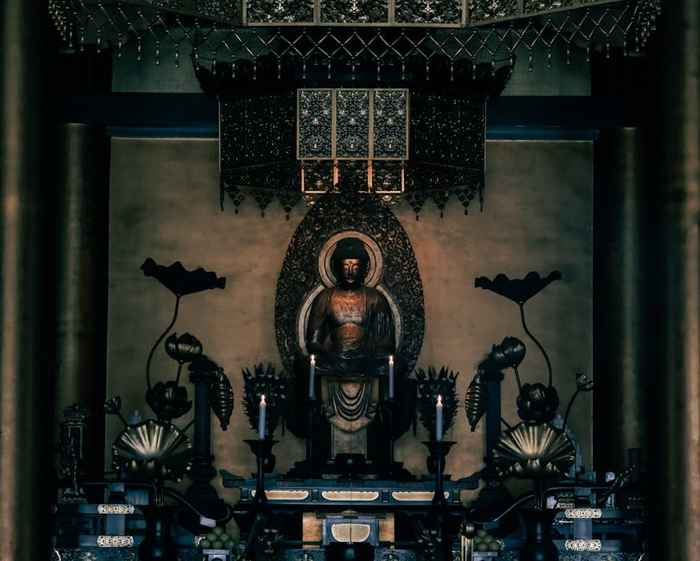
Proxy pilgrimage (daisan, 代参) is a 1,200-year-old, fully recognized form of the Shikoku pilgrimage, going back to the age of Kobo Daishi himself.
In the Edo period, proxy pilgrimage was a common practice across Japan — Ise Shrine visits, Fuji-ko mountain climbs, and more. Even today, the Shingon temples of Shikoku officially accept nokyo-cho (stamp books) completed through proxy pilgrimage.
So why do so many people still feel guilt about it? Because three common misconceptions cloud the picture.
In this article, you’ll learn:
- The 3 reasons proxy pilgrimage is misunderstood as disrespectful
- How Kobo Daishi’s “Dogyo Ninin” teaching and Edo-era Ise pilgrimage validate the practice
- The specific mechanism by which merit reaches the person being prayed for
- 5 checkpoints for choosing a proxy pilgrimage service that isn’t disrespectful
All grounded in historical record and Buddhist thought. This article is for letting go of guilt and taking a sincere step toward delivering a loved one’s prayer.
Proxy Pilgrimage Is Not Disrespectful: The 1,200-Year Answer Up Front
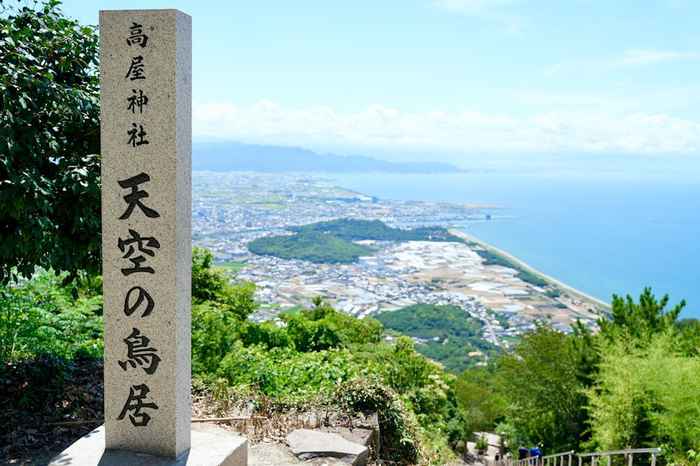
Let me state the conclusion clearly. Proxy pilgrimage is not pilgrimage is not disrespectful.
Daisan (代参) means “worshipping on someone’s behalf.” It’s an old tradition going back to the age of Kobo Daishi (Kukai, 774–835), and in my view, there is no need to carry guilt about it.
What Daisan Means — and 3 Reasons It’s Respected
The character dai (代) means “on behalf of,” and san (参) means “to visit/worship.” So daisan literally describes entrusting one’s prayer to another person when you cannot walk the pilgrimage yourself.
There are three core reasons this practice is considered legitimate:
- Kobo Daishi’s teaching of Dogyo Ninin (“walking together with two”) already assumes the presence of others beyond the physical walker
- Proxy pilgrimage has been deeply woven into Japan’s religious culture for centuries — Ise-mairi, Fuji-ko, and more
- The Shikoku temple association and Shingon temples today still officially accept proxy pilgrimage nokyo-cho
In short, proxy pilgrimage is a 1,200-year-old form of pilgrimage recognized both institutionally and culturally.
“Proxy Pilgrimage” vs. “Proxy Service” — The Right Distinction
In modern conversation, the terms daisan (proxy pilgrimage) and “proxy service” sometimes get blurred. Here’s how I distinguish them:
| Term | Meaning | Context |
|---|---|---|
| Daisan (Proxy Pilgrimage) | The tradition of worshipping on someone’s behalf | Centuries-old cultural and religious practice |
| Proxy Service | A modern business that offers daisan as a service | Contemporary commercial form |
Daisan is the concept; the proxy service is its modern form — that’s the clearest way to think about it.
If you’d like to compare proxy pilgrimage to walking and bus-tour options, see our Shikoku Pilgrimage Tour Guide.
Why Proxy Pilgrimage Feels Disrespectful: 3 Common Misconceptions
Even when proxy pilgrimage is recognized pilgrimage is recognized as legitimate, many people still feel a lingering guilt. In my client conversations, this guilt surfaces again and again.
Here are the three most common misconceptions that make proxy pilgrimage feel disrespectful — and why naming them often dissolves the guilt.
Misconception #1: “It Only Counts If I Walk It Myself”
The first wall people hit is the belief that “pilgrimage only has meaning if I walk it with my own feet.”
It’s true that a fully walked pilgrimage has its own special value. But assuming it’s the only correct form is simply inaccurate.
- Seniors or those with health issues who cannot walk
- People whose caregiving, childcare, or work leaves no time
- People living abroad or too far from Shikoku to go
Telling these people that “walking is the only right answer” would actually contradict the spirit of Ohenro, in my view.
Misconception #2: “Asking Someone Else Is Cutting Corners”
The second concern is a social one: “If people find out I asked someone else, they’ll think I’m taking the easy way.”
But once you actually walk Shikoku, you see that mutual support — osettai — is built into the spirit of the pilgrimage. Strangers handing out tea, food, and lodging to pilgrims is itself a form of “supporting someone on behalf of another.”
Misconception #3: “Merit Only Belongs to the Person Who Walks”
The third misconception is the idea that “merit only accrues to the person physically doing the walking.”
In Buddhist thought, merit is not a reward hoarded by whoever moved their body — it spreads through the sincerity of the prayer.
Kobo Daishi’s Teaching and 1,200 Years of History: Why Proxy Pilgrimage Is Legitimate
Now let’s look at why proxy pilgrimage has been recognized as legitimate for so long — from both Kobo Daishi’s teaching and the broader history of Japanese pilgrimage.
The short version: proxy pilgrimage has been preserved for 1,200 years as a “pilgrimage of compassion”.
What “Dogyo Ninin” Teaches Us About Proxy Pilgrimage
A defining phrase of the Shikoku pilgrimage is Dogyo Ninin (同行二人) — “walking together with two.” It means you are never walking alone; Kobo Daishi is always with you.
The words “Dogyo Ninin” written on the sedge hat and white robe (byakue) remind us that pilgrimage is never a solo act. It is an act always carried out in the presence of another — a prayer, a person, a teacher.
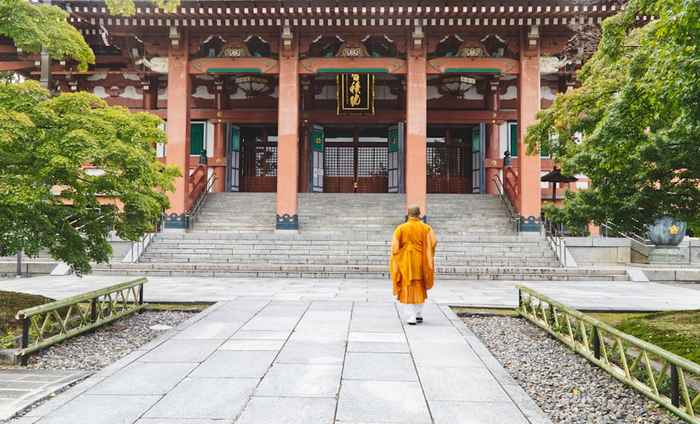
Proxy pilgrimage sits on exactly this foundation. The proxy carries the requester’s prayer and walks with Kobo Daishi — you might even call it “Dogyo Sannin,” walking together with three.
For a deeper look at Dogyo Ninin itself, see The True Meaning of “Dogyo Ninin”.
Ise-mairi, Fuji-ko, and Edo-Era Proxy Culture
Proxy pilgrimage is not a Shikoku-only phenomenon. In Edo-period Japan, proxy pilgrimage was the normal way many communities participated in pilgrimage — Ise-mairi, Fuji-ko, Ontake-mairi, and more.
- Ise-mairi: A village representative carried everyone’s prayers to Ise Shrine
- Fuji-ko: A chosen member climbed Mt. Fuji on behalf of those who couldn’t
- Inu-mairi: Dogs were even sent with coins tied to their backs to make pilgrimage for their owners
All of this is a reflection of a distinctly Japanese culture of mutual support — “someone carries the prayer for those who cannot go”. Proxy pilgrimage is not a modern shortcut.
Why Proxy Pilgrimage Has Survived 1,200 Years
Records of proxy pilgrimage appear throughout the Shikoku temple archives: an Edo merchant’s foreman sent to walk on his elderly master’s behalf, children walking on behalf of a sick parent, memorial pilgrimages for the deceased.
Proxy pilgrimage has endured for 1,200 years because people have always wanted to honor the prayers of those who cannot go themselves.

Do Merits Reach You Through Proxy? How Nokyo-cho and Prayer Work
Next, the deep question: “Does merit actually reach the person being prayed for through proxy pilgrimage?” This touches the core of Buddhist thought, so I’ll answer as honestly as I can.
How the Nokyo-cho Carries the Connection Back to You
At each temple, pilgrims receive calligraphy and a red seal in their nokyo-cho (pilgrimage stamp book). The nokyo-cho is not a souvenir stamp book — it’s a record of the connection (goen) between the pilgrim and the temple.
In proxy pilgrimage, the nokyo-cho is delivered to the original requester, so the connection is transferred to them. The calligraphy and seals earned by the proxy walker reach the requester’s hands, and that is how the merit is completed.
- The requester entrusts their prayer to the proxy walker
- The proxy walker prays and receives the nokyo entry at each temple
- The nokyo-cho is returned to the requester
- The connection between the requester and the temples is formed
This sequence is recognized by the Shikoku temple association as one of the legitimate forms of pilgrimage.
The nokyo fee was revised in 2024: 500 yen per temple for nokyo-cho entries — 44,000 yen total for all 88 temples. Proper payment of the nokyo fee is a baseline courtesy in proxy pilgrimage too.
The Real Source of Merit Is Sincerity, Not Physical Action
In Buddhism, merit isn’t measured purely by the volume of physical activity.
Kobo Daishi himself, in works like the Hannya Shingyo Hiken, is said to have taught that the heart of pilgrimage lies in the purity of one’s prayer and the strength of one’s thought for others.
Put simply:
That seriousness itself is what generates merit. Proxy pilgrimage isn’t “cutting corners” — it’s a form chosen precisely because the prayer is so urgent, in my view.
For the full picture of how proxy pilgrimage works in practice and what it costs, see our Ohenro Proxy Service Guide.
![[Ohenro]Shikoku Pilgrimage Proxy Service: Costs and How to Choose a Trusted Provider](https://ohenro-gift.com/en/giftohenro369/wp-content/uploads/2026/03/agency_thumb-300x200.jpg)
5 Checkpoints for a Proxy Pilgrimage That Is Not Disrespectful
While proxy pilgrimage itself is not disrespectful, depending on whom you hire and how, it can end up becoming disrespectful. Here are five checkpoints for requesting a proxy pilgrimage with peace of mind.
- Whether the service actually performs a full walking or driving pilgrimage
- Whether the nokyo-cho and white robe are authentic
- Whether photos or reports verify the pilgrimage was made
- Whether your prayer intent can be conveyed to the proxy walker
- Whether the pricing is transparent
1. Verify the Service Actually Walks or Drives All 88 Temples
The first thing you must check is whether the provider actually visits all 88 temples.
Some operators only visit a single temple and fake the rest of the stamps. That’s disrespectful to both the Buddha and to you. Choose a provider who can prove they visited all 88 temples.
2. Verify the Nokyo-cho and White Robe Are Authentic
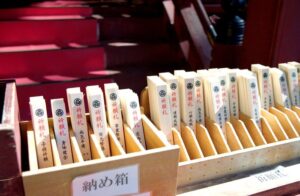
Confirm that the nokyo-cho and byakue (white robe) you receive are authentic items actually purchased and stamped at the Shikoku temples.
- Nokyo-cho: The official red seal of each temple is present
- Byakue: Shows signs of actual use and carries red seals
- Osamefuda: Your name is written on it
3. Photo and Report Verification
A serious proxy pilgrimage service will share photos and written reports from each temple.
This exists to give the requester peace of mind that the pilgrimage actually happened. Providers without this system are not recommended, frankly.
4. You Can Share Your Prayer Intent with the Proxy Walker
Proxy pilgrimage is not mechanical labor — it is an act of carrying a specific prayer. Check whether the service provides a clear way to share your prayer intent.
- The content of your prayer — health, safety, success, etc.
- The name of the deceased (if memorial pilgrimage)
- Temples you especially want attention paid to (e.g., Temple 21 Tairyuji)
If a provider lets you share these, the pilgrimage becomes a pilgrimage of real intention, not form.
5. Pricing Must Be Transparent
Finally, check whether the pricing is transparent.
Proxy pilgrimage involves real costs: nokyo fees (44,000 yen for 88 temples), transport, labor, accommodation. Providers who refuse to disclose a breakdown are best avoided.
FAQ: Common Questions About Proxy Pilgrimage and Disrespect
- Is proxy pilgrimage really not disrespectful?
- How do I explain to family or friends that I used a proxy service?
- Does merit still reach me through proxy pilgrimage?
- What does a proxy pilgrimage service typically cost?
- If I am later able to walk myself, should I walk the pilgrimage again?
Let Go of the Guilt: Proxy Pilgrimage Is a Sincere Way to Deliver a Loved One’s Prayer
We’ve covered why proxy pilgrimage is not disrespectful, Kobo Daishi’s teaching and the 1,200-year history, how merit actually reaches you, and the five checkpoints for a sincere request.
To summarize:
- Proxy pilgrimage is a 1,200-year tradition going back to Kobo Daishi
- It is deeply rooted in Japanese religious culture — Ise-mairi, Fuji-ko, and more
- The Shikoku temple association officially accepts proxy-pilgrimage nokyo-cho
- Merit is carried by the sincerity of the prayer, not just physical movement
- Following the 5 checkpoints turns proxy pilgrimage into a sincere pilgrimage
In other words, choosing proxy pilgrimage is not “taking a shortcut” — it’s a sincere way to deliver the prayer of a loved one who cannot go.
Pricing, temples you’d especially like attention paid to, how to convey your prayer — any question is welcome. A free consultation is fine too. Having someone carry the prayer, I believe, fits the original spirit of Ohenro rather than going against it.
▼Related Articles
- Ohenro Proxy Service: Complete Guide — Fees, Flow, and Choosing a Trustworthy Provider
- The True Meaning of “Dogyo Ninin”: Walking With Kobo Daishi
- Shikoku Pilgrimage Tour Guide: Bus Tour, Proxy, and Walking Compared