
Meaningful Gifts for Aging Parents: How to Show Gratitude Before Words Run Out

For aging parents, gratitude lands deepest not as a thing or a speech, but as a gesture they can hold — proof that someone spent real time and effort on them.
Here’s the thing: the older our parents get, the less a shiny gift moves them. What moves them is the simple fact that somebody used their hours, their body, their days — for them.
And still, between work, the kids, the running of a household, turning that feeling into an actual act is brutally hard. I get it.
In this article, I’ll walk you through:
- Why the “I want to do something” feeling so often stalls — and how that paralysis turns into regret
- What real gratitude looks like when it isn’t a thing and isn’t a speech
- A true-style story of a parent who wept over a gift they never saw coming
- What you can actually do right now, before “someday” runs out
I’m writing this as someone who runs an Ohenro pilgrimage-by-proxy service, so I’ll speak plainly. This article is for turning that vague “I want to do something” into a concrete first step.
Why You Keep Putting Off That “Thank You” to Your Parents — and Why Waiting Turns Into Regret

You want to tell your parents “thank you.” You want to do something meaningful. And yet you can’t seem to move on it. This isn’t because you’re a cold or careless child — it’s a pattern I see over and over, in people who care deeply.
Work. Dinner. School runs. Your own life. Before you know it, you’re telling yourself, “I’ll talk to them next time I’m home.” But that quiet kind of postponement is exactly what tips over into regret you can you can’t undo.
Your parents’ time is finite — everybody knows that in the abstract. What sneaks up on you is the specific week when it turns out they can’t travel anymore, and the window quietly closes.
That Late-Night Phone Moment When Your Parent’s Face Drifts Into Your Mind
You know the moment: dishes are done, the house is quiet, you’re scrolling on your phone, and out of nowhere your mother’s or father’s face flickers across your mind. Ever had that?
“I haven’t called in a while.” “I wonder how they’re doing.” “When should I go home next?” The thought surfaces — and then the feed keeps scrolling, and the thought dissolves with it. In the morning, the day takes over.
What that late-night moment really is, is a small, scratchy layer of guilt: the feeling of carrying love for your parents without being able to translate it into anything you actually do.
You’ll probably recognize a few of these.
- You want to call, but you don’t know what to say.
- You want to visit, but work and the kids’ schedules keep blocking it.
- You want to send a gift, but you have no idea what would actually land.
The longer that “I want to, but I can’t move” state goes on, the quieter and bigger the guilt gets. That’s just how it works.
Take a woman in her fifties, juggling a career and a household, with her parents sitting somewhere in the back of her mind most of the week — that’s not a personal failing, that’s most of the people I talk to. It’s what being a serious, responsible adult looks like while parents are aging in another city. Nobody’s to blame for it.
The One Thing Daughters Who Cried and Said “I Should’ve Moved Sooner” All Had in Common
Over the years of taking proxy-pilgrimage requests, I’ve sat with more than a few clients who said, through tears, “I should’ve done this sooner.”
Picture it through one of them — a woman in her fifties, recounting how it went:
That phrase — “if I’d only moved back then” — is one I’ve heard in different words from more people than I can count.
The through line is always the same: “Someday” dragged on just long enough for the parent’s body and energy to stop keeping up with it.
- When the parent first says “I’d love to try that,” they’re still vigorous — so it feels safe to postpone.
- Months turn into a year, then two. Everyday life eats the calendar.
- Next visit home, the parent’s balance or stamina has noticeably slipped.
- By the time you’re ready, the parent starts saying, “I don’t think I can manage it anymore.”
Parents age invisibly, until one day it’s all visible at once. That’s exactly why acting the moment you notice is the single biggest thing you can do to shrink your future regret.

Looking for the Answer to “How Do I Show Gratitude?” — It Isn’t a Thing, and It Isn’t a Speech
When people start thinking about how to thank their parents, the first instinct is almost always “what should I buy them?” Clothes. A nice dinner. A trip. Health gadgets. And somewhere in the search, a small voice keeps saying, this isn’t quite it. Ever felt that?
From listening to my clients, I’ve landed on something I’m pretty sure of: what aging parents genuinely respond to isn’t a thing, and isn’t a line. It’s evidence — physical proof — that somebody spent their own time and energy on them.
The Gift an Elderly Mother Said “Meant More Than Anything I’ve Ever Been Given”
Picture a scene: an 80-something mother holding something her daughter has given her, and saying something like this.
What she’s holding is a real Nokyocho — a stamp book her daughter’s proxy-pilgrim completed over all 88 temples.
The weight isn’t in the object itself — it’s in the fact that someone’s hours, steps, and effort went into it, on her behalf.
The older a parent gets, the more they respond to the weight of the intention over the object. They’ve been handed a lifetime of things already, and they know, better than anyone, which parts of life things can’t reach.
- Time spent for them beats money spent on them, every time.
- A lasting record — something they can keep — moves them more than a gift they’ll eventually set aside.
- Gratitude in motion reaches deeper than gratitude in words.
Put plainly — thanking a parent isn’t about what you buy. It’s about the time and intention you shape into something they can hold.
That Offhand Thing Your Parent Once Said They’d Love to Try
One thing almost every client eventually mentions is something their parent once let slip — a place they’d always wanted to go.
“I’d love to walk the Shikoku pilgrimage while I’m still in good shape.” “I want to see that temple in Kyoto one more time.” “I want to go back to that hot spring we used to go to as a family.”
These lines come out sideways, in the middle of some regular conversation. You let them pass at the time. And then one day — usually when your parent can no longer make the trip — the memory comes back and you wish you’d held onto it.
A “I’d love to try that” from an aging parent is very often a wish they’ve quietly filed away as something that won’t happen anymore. Which is exactly why giving it a form — making it real somehow — carries weight that no off-the-shelf gift can match.
For parents whose bodies aren’t up to the full walk anymore, there’s a companion piece on how seniors in their 70s and 80s can still receive the Ohenro — worth a look if you’re thinking about an older parent.


There’s a Service That Walks for You — and the Unspoken “Thank You” That Finally Took a Shape
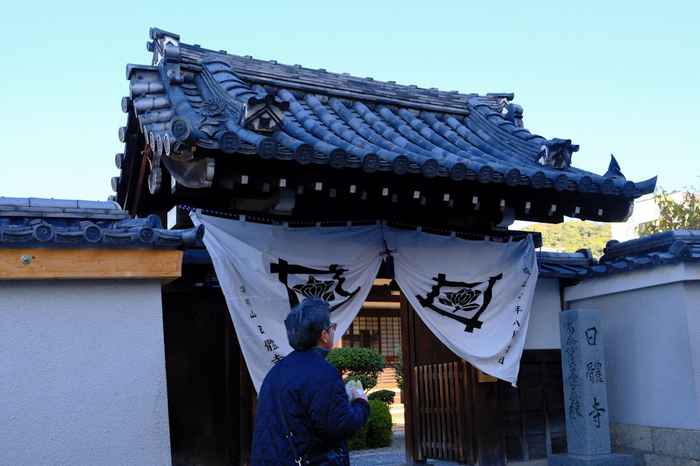
“I want to turn this gratitude into something real.” “I want to grant my parent’s wish.” For anyone holding that intention, there’s a concrete option out there: the Ohenro proxy-pilgrimage service.
Even if you can’t go to Shikoku yourself, someone can walk the 88 temples in your place, offer the prayers you hand them, and deliver a real, completed Nokyocho to your parent.
Why a “Walk-For-You” Service Exists in the First Place
A proxy pilgrimage — daisan — is a service where someone walks the 88 temples of Shikoku on your behalf. It isn’t a modern workaround; it’s the continuation of a 1,200-year-old tradition in Japan.
- Someone else makes the full 88-temple circuit in your place when you can’t go.
- At every temple, a real hand-brushed inscription and vermilion seal are entered in the Nokyocho.
- You can entrust specific prayers — for a parent, a loved one, someone who’s passed — before the walk.
The reason the service exists at all is simple: there have always been people who wanted to walk the Ohenro and physically couldn’t.
In the Edo period, ordinary people sent proxies to Ise Shrine and to Mount Fuji through community groups called ko. Proxy pilgrimage is an old Japanese answer to a very human problem — when one person can’t go, another person can carry their wish there.
If you’re worried a proxy could feel disrespectful, the historical context is worth a few minutes. Why proxy pilgrimage isn’t rude — the 1,200-year tradition behind it is covered in its own piece.

Eighty-Eight Seals, One Book — and Why It Becomes the Gift
The Nokyocho your proxy-pilgrim brings back is the real thing: every one of the 88 temples’ hand-brushed calligraphy and red seals, in a single book.
It’s worlds away from a souvenir sold in a shop. Each seal was received by an actual pilgrim, at an actual temple, with the proper offering made. Nothing on the page is printed — every character and every seal was placed by hand.
- It only exists once all 88 temples are complete — it’s literally proof of a finished pilgrimage.
- It’s usable in funeral and memorial rites — a practical, lifelong object, not decoration.
- Families keep it across generations, treating it as an heirloom.
For more on what sets a Nokyocho apart from a regular Goshuincho and why it carries the weight of a proper gift, take a look at the companion piece when you’ve got a moment.

“I Never Dreamed I’d Be Given Something Like This” — The Moment a Mother Cried
Picture the kind of moment clients have told me about.
The reason she cries, every time, is the sheer weight of realizing someone actually walked Shikoku for her — on foot, temple by temple, for her specifically.
Usually the daughter — the gift-giver — is taken aback too. “I didn’t expect her to react like that” is something I hear almost every time. Gratitude that couldn’t make it into words suddenly finds a channel through a stamp book passing between two hands.
For aging parents, the realization that “someone treated me — the person who spent my whole life taking care of others — as worth their time” is what breaks the dam. They’re used to receiving objects. What they’re not used to is someone dedicating days of their own life to them.
For anyone who doesn’t quite know how to say “thank you” to a parent, the Nokyocho becomes one workable answer. After enough of these deliveries, I’ve stopped being surprised by it — and started trusting it.

Frequently Asked Questions About Meaningful Gifts for Aging Parents
- My parent is too frail to travel. What kind of gesture actually lands for someone in that position?
- I want to do something meaningful for my parents, but I have no idea where to start. How should I think about it?
- I freeze up when I try to thank my parents face to face. What do I do instead?
- My parents always say “you shouldn’t have spent money on me.” How do I get past that?
- My biggest fear is my parent dying before I’ve done anything. What can I do this week?

Before “Someday” Runs Out: How to Put Your Gratitude Into a Form That Lasts

We’ve covered a lot of ground — the reasons we stall, the reason things and speeches often miss, the existence of a proxy-pilgrimage service, and the real moments in which parents break down and let it show.
A few things are worth pulling out.
- “I want to do something for my parents” is a feeling most adult children carry — and most let everyday life bury.
- Postponing until your parent’s body can no longer keep up is a regret that catches most of us, not just a careless few.
- Elderly parents respond most to time and effort someone has spent for them, not to the price of a thing.
- An offhand “I’d love to try that” is almost always a real wish worth taking seriously.
- Proxy pilgrimage — daisan — is a 1,200-year-old Japanese answer to “someone else can carry your wish there.”
Put it together and it comes out like this: gratitude to your parents doesn’t happen “someday.” It happens the moment you decide to act — and when you do, it takes a form that lasts.
Why “Now, While They’re Well” Is the Real Window
A parent’s decline isn’t something they can predict, and it isn’t something you can either. The week they’re tending a garden and the week they start full-time hospital visits can be startlingly close together. I hear versions of that story from clients regularly.
“Once they’re feeling a little stronger.” “Next year, around their birthday.” The problem is, between now and that soft future date, parents often slip past the point where they can physically receive the thing you planned. Which is why the best window is the one you’ve actually got: while your parent is well, and still able to take it in.
“Will they actually walk it?” “Is this proxy service trustworthy?” “Will my parent feel weird about it?” Those questions are fair and normal. A free consultation is completely fine, no commitment required. We’ll help you think through how to shape your feelings into the right form for your parent.
And — the fact that “someone went all the way to Shikoku and walked the whole thing for me” becomes, for an aging parent, a kind of lifelong treasure. Objects wear out. That kind of memory doesn’t. Ten or twenty years from now, your parent may look up and say, “That gesture stayed with me” — and mean it. That’s the kind of gift worth placing into their hands while they’re well enough to feel it.
If you’d like the practical details — how the Ohenro Gift-Bin proxy pilgrimage works and what it costs — that’s a good place to start before anything else.
![[Ohenro]Shikoku Pilgrimage Proxy Service: Costs and How to Choose a Trusted Provider](https://ohenro-gift.com/en/giftohenro369/wp-content/uploads/2026/03/agency_thumb-300x200.jpg)
▼ You might also like
- Ohenro After 70: Can Seniors Walk the Shikoku Pilgrimage? 4 Ways to Visit by Age
- Is Proxy Pilgrimage Disrespectful? The 1,200-Year Tradition Behind Walking Ohenro for Someone Else
- Nokyocho vs Goshuincho: What Sets the Shikoku Pilgrimage Stamp Book Apart