
[Complete Guide] Is There a Dress Code for the Shikoku Pilgrimage? White Robe, Pilgrim Outfit, and Casual Clothes Explained
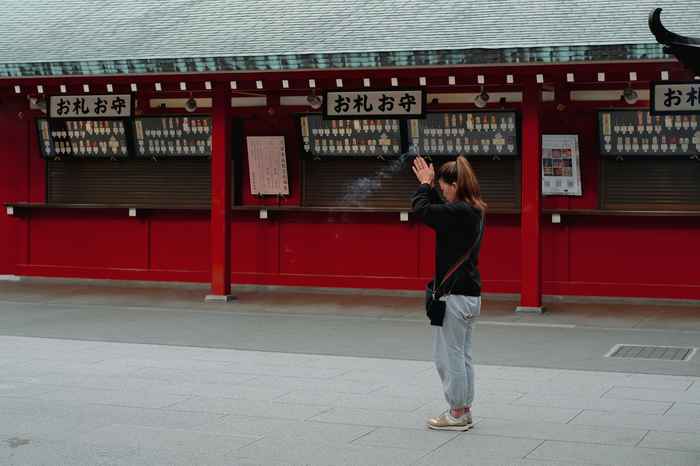
If you feel that way, you are far from alone.
The Shikoku pilgrimage (Ohenro) has a long tradition when it comes to clothing. At the same time, modern pilgrims walk the route in a surprisingly wide range of outfits, and there is actually no “absolute rule” you must follow. That is exactly why so many people get confused before they start.
This article will walk you through the following:
- Whether the Shikoku pilgrimage has any strict dress code
- The meaning behind the formal outfit (white robe, sedge hat, walking staff) and how to gather it
- Practical gear you need for walking pilgrimage (hiking shoes, rain gear)
- What to wear by season and situation
- Casual clothes, rentals, and the proxy pilgrimage option

Is There a Dress Code for Ohenro? Why Both the Formal Outfit and Casual Clothes Are Welcome
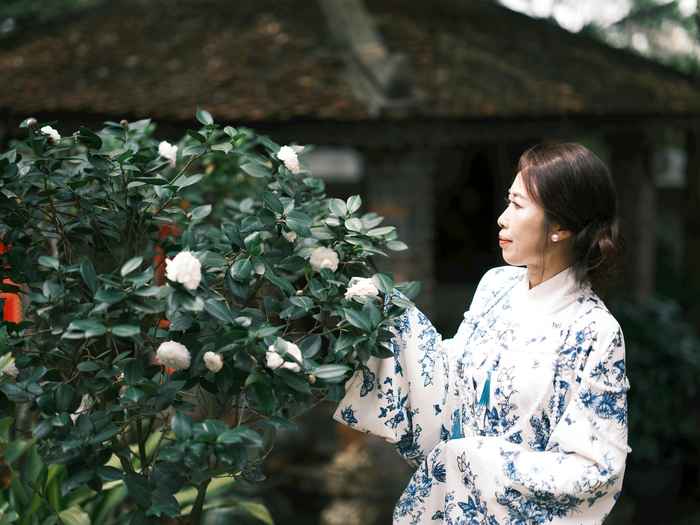
The short answer is, there are no strict clothing rules for the Shikoku pilgrimage. Even if you don’t wear a white robe or carry a walking staff, you are absolutely free to visit the temples and pray.
That said, there really is a traditional outfit that has been valued for centuries. Since the Edo period, pilgrims have walked Shikoku dressed in white. Each item carries meaning, so it is worth knowing the basics even if you decide not to use them.
| Style | Description | Best for |
|---|---|---|
| Full traditional outfit | White robe, sedge hat, walking staff, stole, and more | People who want to feel the meaning of the pilgrimage; first-timers |
| Minimal outfit | White robe + stole + stamp book | Those who want a respectful look but also practicality |
| Casual clothes | Comfortable everyday clothing | People who want to start lightly or visit as sightseers |
You will never be told at any temple, “You can’t pray here because of what you’re wearing.” Any outfit is welcome at the temples — that is part of the deep generosity of Shikoku pilgrimage.
However, some people say “It just doesn’t feel right without the robe”. Wearing the traditional outfit really does give you a sense of mental shift.
When you put on the white robe and bow to the principal Buddha, your back straightens up naturally, and even your chanting voice settles down. The outfit might be sold like a casual souvenir, but once you wear it, you become “a pilgrim” — that change really happens inside you.
This is probably the reason the tradition from the Edo period has survived almost unchanged into the modern day. In the next section, we will look at the meaning of each item in the formal outfit and how to gather them.
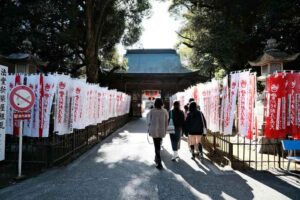
The Full Ohenro Outfit Explained: Meaning and How to Get the White Robe, Sedge Hat, and Walking Staff
The traditional Ohenro outfit is, in fact, a set of religious items, each with its own meaning. It is not just a costume to “look like a pilgrim”.
Here is a summary of the main items, with their meaning and rough price.
| Item | Meaning / Role | Rough price |
|---|---|---|
| White robe (oizuru) | Originally a burial garment. Symbol of “I’m ready even if my life ends today” | 2,000 – 4,000 JPY |
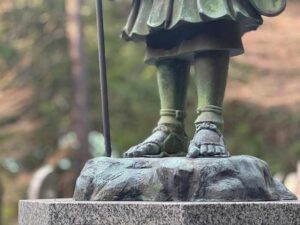
| Walking staff (kongo-zue) | The body of Kobo Daishi himself. A walking aid and proof you walk with the master | 2,000 – 3,000 JPY |
| Sedge hat (sugegasa) | Protects from sun and rain. Bears the words “Dogyo Ninin” (two of us, walking together) | 3,000 – 5,000 JPY |
| Stole (wagesa) | A simplified monk’s stole. The basic formal wear during prayer | 2,000 – 3,000 JPY |
| Prayer beads (juzu) | Held during prayer. Symbol of dispelling earthly desires | 1,500 – 3,000 JPY |
| Sutra book / pilgrim’s slip | Used for chanting and offered at each temple | 1,000 – 2,000 JPY |
| Stamp book (nokyocho — book itself) | The book that holds the temple seal and calligraphy from each temple | 2,500 – 5,000 JPY |
| Shoulder bag (zudabukuro) | Bag for carrying the stamp book and sutra book | 2,000 – 3,000 JPY |
If you gather everything, the total comes to around 25,000 – 30,000 JPY. Pilgrim shops near Temple 1 (Ryozenji) often offer starter sets, sometimes around the late teens of thousands of yen.
If You Pick Just 3 Most Important Items
For first-timers, these three are usually enough to start.
- White robe: Gives a respectful look during prayer. A symbol of pilgrimage along with the stamp book
- Stole: Minimum formal wear during prayer. Compact and easy to carry
- Stamp book: The record of your visit to all 88 temples — the pilgrimage itself in physical form
The walking staff is essential for walking pilgrims, but car, motorcycle, and taxi pilgrims often go without one. The same goes for the sedge hat — many people now use a regular sun-and-rain hat instead.
The walking staff and the sedge hat both bear the words “Dogyo Ninin”, meaning that your pilgrimage is a journey with Kobo Daishi by your side. Even if you walk alone, the master is always next to you. This idea has been passed down for over a thousand years, and it lies at the heart of Ohenro.
Knowing the meaning behind each item turns the outfit from a “costume” into a real companion that adds depth to your journey.
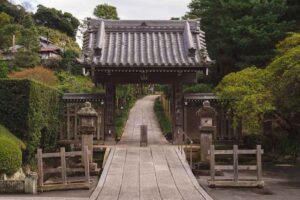
Walking Pilgrim’s Outfit Is About Mobility: Hiking Shoes, Rain Gear, and Practical Equipment
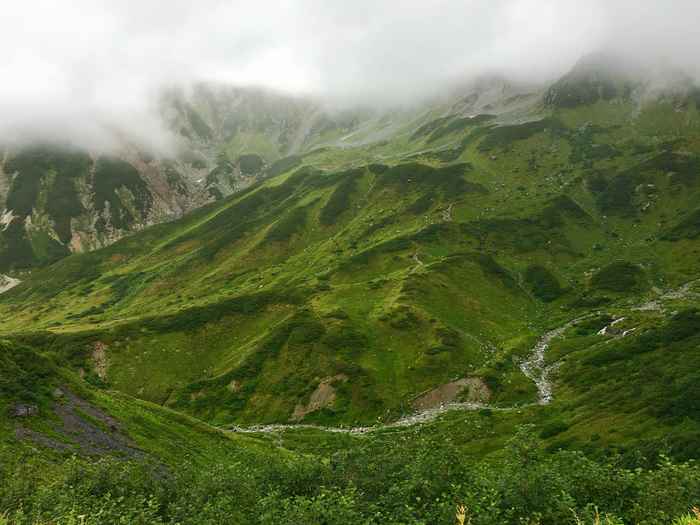
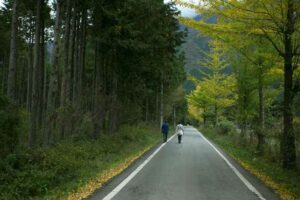
The walking pilgrimage covers about 1,200 km, with 20 – 30 km of walking per day on average. More than the formal outfit, what matters first is practical gear that protects your body.
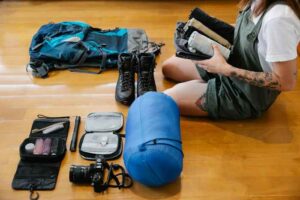
The standard equipment carried by walking pilgrims looks roughly like this.
- Hiking boots / trekking shoes: Mid-cut models that protect the ankle are recommended
- Quick-drying underwear and T-shirts: Wick away sweat, prevent skin trouble
- Long-sleeve shirt and light jacket: For sun and temperature changes
- Long pants / trekking pants: Protect from bushes and insects
- Hat (sedge hat or cap): Sun protection is a lifesaver
- Rain gear (jacket and pants): Don’t cut corners on rain gear
- Backpack (30 – 40 L): Distribute the load properly
- Hiking pole or walking staff: Reduces strain on the knees
- Headlamp: For early mornings and dark mountain trails
- First aid kit and bandages: You will get blisters, guaranteed
The two most important items are hiking boots and rain gear. Plenty of pilgrims start in everyday sneakers and have to give up by day three with destroyed feet. Spend your budget here before the formal outfit.
For details on how many days the walking pilgrimage takes, see our article How Many Days Does the Shikoku Pilgrimage Take?
Ohenro Outfit by Season and Situation: Beating the Summer Heat and the Winter Cold
Shikoku is often imagined as a warm southern region, but the temperature gap between seasons is bigger than you might think. The route also goes through mountains, so you need to change your outfit for each season.
| Season | Temperature | Recommended outfit |
|---|---|---|
| Spring (Mar – May) | 10 – 20°C | Long sleeves + light jacket. The most comfortable season for walking |
| Summer (Jun – Aug) | 25 – 33°C | Quick-dry T-shirt + sun hat. Salt candy and electrolyte drinks are essential |
| Autumn (Sep – Nov) | 10 – 23°C | Long sleeves + vest. Both rain gear and warm layers |
| Winter (Dec – Feb) | 3 – 10°C | Down jacket and warm gloves. Mountain trails may have snow and ice |
Things to Watch Out for in Summer
Summer in Shikoku, especially on the mountain trails, is tougher than you might imagine. With heat reflected off the asphalt, the felt temperature can easily go beyond 40°C. Bring salt candy and electrolyte drinks, and choose white or light-colored clothing for a noticeable difference.
You will sometimes see pilgrims wearing samue (a breathable Japanese-style work garment worn by monks and craftspeople) in this season. It breathes well and has a Japanese atmosphere, which can be a fitting choice for a more sightseeing-style pilgrimage.
Things to Watch Out for in Winter
Winter is less talked about, but on the trail between Temple 11 (Fujiidera) and Temple 12 (Shosanji), snow does fall in some years. You may not need full crampons, but light chain spikes are a good thing to bring for safety.
Cold feet are another problem. After hours on a mountain trail, your toes lose heat first. Switching to heated insoles and thick mountaineering socks alone — upgrading the basics for winter — can hugely change the distance you can cover.
Buy, Rent, or Wear Casual? Sustainable Ways to Choose Your Pilgrimage Outfit
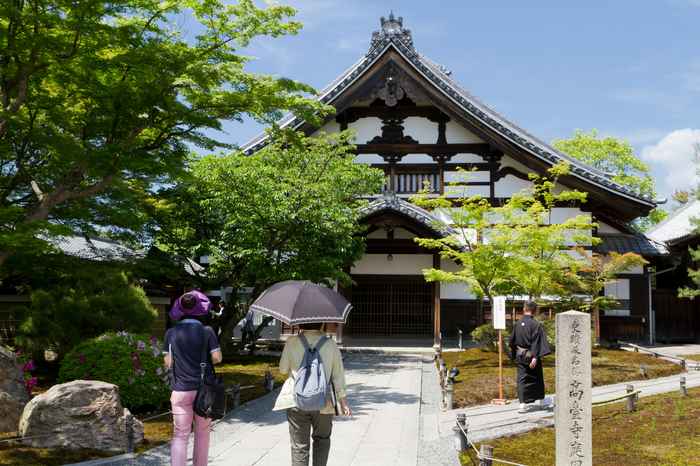
For people who feel “Buying the full outfit is too much, but going in casual clothes doesn’t feel right either,” here are three realistic ways to choose.
Option 1: Minimum kit — White robe and stole only
The easiest way to start is to buy just the white robe and stole. For about 5,000 JPY in total, you get a respectful pilgrim look. Add the stamp book, and you have a complete minimum 3-piece set.
Option 2: Rent the full outfit
Some pilgrim shops offer full outfit rentals. They are often available near Temple 1 or through travel agencies, with a typical price of 2,000 – 3,000 JPY per day.
This works well for short trial pilgrimages or section walks. However, if you plan to do the full route, buying is usually cheaper in the long run.
Option 3: Go fully in casual clothes
It is also perfectly fine to say “I don’t own the outfit and don’t plan to buy it.” Temples welcome any kind of outfit. In fact, more than half of the participants on sightseeing bus tours visit in their everyday clothes.
Just avoid tank tops, very short shorts, and sandals as a matter of basic manners. As with any temple or shrine visit, dress neatly with covered shoulders and knees.
What truly matters is to choose an outfit that fits your stamina, budget, and purpose. Whether you start from the form or prioritize practicality, finding a sustainable style is the shortest path to completing all 88 temples.
Frequently Asked Questions About Ohenro Outfit and Pilgrim Clothing
- Is it really not disrespectful to walk Ohenro in casual clothes?
- Is the white robe alone enough, or should I get the full set?
- Do I have to carry the walking staff?
- Is it OK to wear samue (Japanese work garment) in summer?
- Will my elderly parent be happy if I gift them a pilgrim outfit?
Avoid Regret in Choosing Your Ohenro Outfit: An Easier Way to Get Ready
Let’s review the main points so far.
- There are no strict clothing rules for the Shikoku pilgrimage
- The full outfit costs about 25,000 – 30,000 JPY; the minimum (white robe + stole + stamp book) about 5,000 JPY
- For walking pilgrims, prioritize hiking boots and rain gear over the formal outfit
- Change clothes by season. Midsummer and midwinter are for experienced pilgrims
- Casual clothes are welcome, and rentals are also an option
Looking at this, you can see that the Ohenro outfit is more flexible than most people imagine.
Even so, we constantly hear from people saying things like “Gathering the full outfit is too much trouble,” or “I want to give it as a gift to my parent, but they’re physically unable to walk.”
The stamp book contains the real seals and calligraphy stamped at all 88 temples. We also send you photos from the route, so the recipient feels the journey was truly walked.
Whether you cannot find the energy to gather the outfit yourself, or you want someone to walk on behalf of a family member, just talk to us first and we’ll work out the best form together. We also support people who simply want to give the outfit as a gift, including consultations on cost and schedule.
Outfit choice, route planning, ideas for a family gift — anything is fine. Even just a consultation is welcome.
» Learn more about Ohenro Gift Service
▼ Related articles
- [2026 Update] How Much Does the Shikoku Pilgrimage Cost? A Full Comparison of Walking, Driving, and Taxi Tours
- [Definitive Guide] How Many Days Does the Shikoku Pilgrimage Take? Duration by Walking, Section, and Mode of Transport
- [Compared] Shikoku Pilgrimage Tours: How to Choose Bus Tours, Proxy Pilgrimage, and Walking
![[Ohenro]Shikoku Pilgrimage Proxy Service: Costs and How to Choose a Trusted Provider](https://ohenro-gift.com/en/giftohenro369/wp-content/uploads/2026/03/agency_thumb-300x200.jpg)