What is Osettai in Ohenro? Meaning, Origins, Spiritual Benefits & Etiquette Explained
In Shikoku, there is a tradition called Osettai that has been passed down for over a thousand years. Put simply, it is “the heart of supporting unknown pilgrims as if they were family, without expecting anything in return.” It is absolutely not a tourist service.
Accepting Osettai without understanding it can unintentionally waste the kindness being offered to you, because this is such a delicate tradition.
This article will guide you through the meaning, origins, spiritual benefits, and proper etiquette of Osettai so even a first-time reader won’t get lost. By the end, you’ll see the true heart of the Shikoku pilgrimage.
- The meaning, origins, and cultural background of Osettai — a tradition over 1,000 years old
- The concept of spiritual merit and how to properly return kindness using the “osamefuda” slip
- How “daisan” (proxy pilgrimage) carries the same spirit of Osettai into the modern era

What is Osettai? A Snapshot of the 1,000-Year “Culture of Giving” in Shikoku
Osettai is the practice of freely offering food, drink, lodging, and other support to pilgrims traveling the Shikoku 88 Temple Pilgrimage. It is not mere hospitality toward tourists.
Rather, it is a faith-rooted cultural tradition that has been woven into the fabric of Shikoku for more than a thousand years.
Here’s a quick overview of what we’ll explore in more detail throughout this guide.
| Aspect | Summary |
|---|---|
| Meaning | Hosting pilgrims without expecting anything in return |
| Origins | Rooted in Kobo Daishi faith and the legend of Emon Saburo |
| Cultural Background | The “giving” spirit embedded in the Shikoku pilgrimage culture |
| Spiritual Benefits | Merit for the giver, karmic connection for the receiver |
| Receiving Etiquette | Don’t refuse; offer an “osamefuda” (name slip) in thanks |
Each of these topics will be unpacked in the sections that follow.
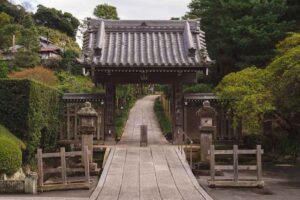
The Meaning and Spirit of Osettai: Why Shikoku Locals Serve Strangers
At the core of Osettai is one simple principle: “expect nothing in return.” Even when locals offer food or rest, they may never learn the pilgrim’s name and will likely never see them again.
So why do people in Shikoku extend such kindness? Two key philosophies are at work here.
The essence of Osettai is the spirit of giving without expecting anything in return
It is often said that Osettai doesn’t even require a “thank you.” The act of giving itself is the goal. Words of gratitude are almost incidental.
This mindset is entirely different from the modern “give and take” mentality. Setting aside self-interest and helping someone in need — that posture is the very foundation of Shikoku’s pilgrimage culture, a posture one could even call a quiet form of prayer.
Dogyo Ninin: seeing the pilgrim as Kobo Daishi himself lies at the root of Osettai
You’ll often find the words “Dogyo Ninin” (同行二人) inscribed on pilgrim hats and walking staffs. It means “even walking alone, I travel together with Kobo Daishi.”
Flip this perspective, and you get another truth: the pilgrim’s figure is itself a manifestation of Kobo Daishi. So when locals give Osettai, they are offering devotion to Kobo Daishi through the pilgrim before them.
The concept of “Dogyo Ninin” is explored in greater depth in another article. If you’d like a broader introduction to Ohenro, please see the link below.
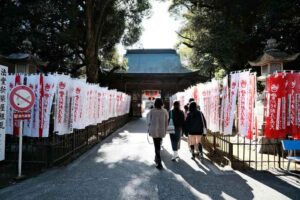
Osettai’s Origin Lies with Kobo Daishi: 1,000-Year-Old Legends and Historical Background
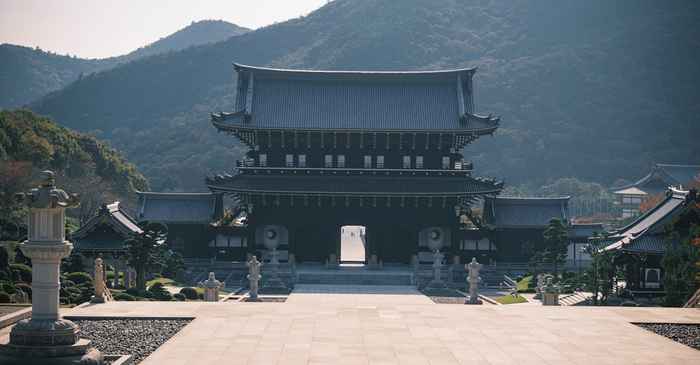
The culture of Osettai can be traced back more than a thousand years, to the Heian period. At its origin stands a legend still widely told across Shikoku — the story of Emon Saburo.
The Emon Saburo legend: a story of atonement born from Kobo Daishi’s encounter
Emon Saburo was a wealthy but greedy landlord in Iyo Province (present-day Ehime Prefecture). One day, he drove away a humble monk who came to beg for alms and smashed his bowl.
That monk was none other than Kukai (later revered as Kobo Daishi). As karmic punishment, Emon Saburo lost his eight children in quick succession.
Consumed by remorse, he is said to have walked around Shikoku more than twenty times searching for Kobo Daishi. This journey became the prototype of the Ohenro pilgrimage, and the people who supported Emon Saburo along his path are remembered as the earliest practitioners of Osettai.
When did the pilgrimage culture take root — a look at the Edo and Meiji eras
Osettai truly spread among ordinary people during the Edo period. By that era, the 88 temple circuit had taken on roughly its modern form, and travel had become more accessible to common folk.
From the Edo into the Meiji era, Ohenro was not only a religious practice but also a refuge for the sick, the troubled, and the destitute. Many pilgrims couldn’t even afford food or a roof for the night.
Unable to turn away such travelers, locals offered tea at the roadside, a night’s lodging, or a handful of rice and coins. Across Shikoku, this became “just the way things are done.”
Osettai Rooted in Shikoku’s Pilgrim Culture: The Living Spirit of Giving Without Expectation
So how is Osettai actually practiced in modern Shikoku? Some assume it’s a relic of the past, but the truth is that it’s still a living tradition you can encounter today.
Osettai in Shikoku ranges from food and lodging to even monetary gifts
The forms Osettai takes vary dramatically by region and individual. Here are some of the most common examples.
- Food: sweets, mikan oranges, onigiri rice balls, bread
- Drinks: tea, coffee, sports drinks
- Rest spots: a bench by the entrance or a seat on the veranda
- Lodging (zenkon-yado): free overnight stays offered by private homes or small shelters
- Monetary gifts: a few hundred yen handed over as a “temple offering”
- Rides: being driven to the next temple
For walking pilgrims especially, Osettai offers profound support for body and spirit alike. A single cup of tea offered by a stranger at an exhausted moment carries an indescribable weight.
If you want to know what walking the pilgrimage is actually like, take a look at this detailed guide.
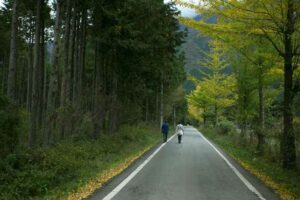
Zenkon-yado and rest huts: scenes unique to Shikoku that are still alive today
Zenkon-yado (善根宿) refers to private homes or small cabins where pilgrims can stay for free or for a symbolic token. You’ll still find them scattered along the traditional pilgrim routes, run by volunteers.
In addition, rest huts (settaisho) dot the roadsides near temples. Local residents run them voluntarily, keeping tea and snacks ready to revive weary pilgrims.
The Spiritual Benefits of Osettai: Karmic Merit for Both Giver and Receiver
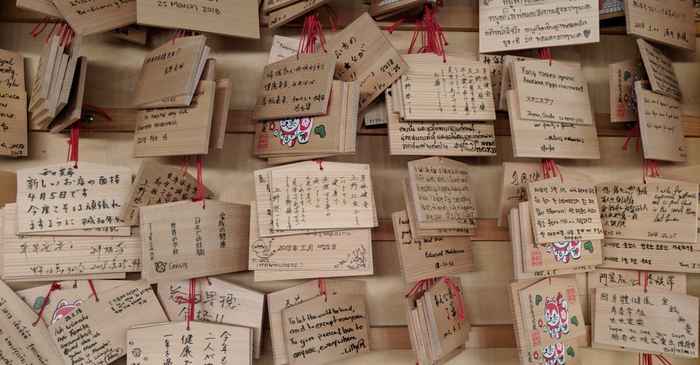
Osettai brings blessings to both “the giver” and “the receiver.” It isn’t a one-sided good deed — a karmic bond called “ketsuen” is formed between the two parties.
Why giving earns spiritual merit: Osettai is seen as devotion to Kobo Daishi
For the giver, the benefit of Osettai is called “kudoku” (功徳), or the accumulation of spiritual merit. In Buddhism, virtuous acts build merit that brings good fortune to the doer and to their family.
Rooted in the “Dogyo Ninin” philosophy, supporting a pilgrim equals supporting Kobo Daishi himself. Osettai can thus be understood as the shortest possible pilgrimage — available to anyone, even without ever stepping onto the pilgrimage route.
- Supporting a pilgrim = supporting Kobo Daishi
- It is an act of prayer, much like joining hands outside one’s own home
- Anyone can accumulate merit with their own hands, within their own community
This is precisely why — even without wealth or spare time — the people of Shikoku have continued to practice Osettai in whatever way they can.
Receivers also gain the gift of karmic connection: encounters on the road nurture the heart
Those who receive Osettai benefit greatly too. That benefit is “ketsuen” (結縁) — the formation of a karmic bond with a deity or with a stranger.
Receiving kindness from an unknown person in an unfamiliar land reaches deeper than logic — it touches the heart directly. One traveler recalled how, soaked to the skin in a downpour, a grandmother in a small truck pulled over and said, “Use this towel, dear.” That single act brought tears he couldn’t stop.
What to Do When You Receive Osettai: Etiquette and the Proper Way to Offer an Osamefuda
This is where first-time pilgrims worry most. Don’t refuse Osettai — accept it, and offer an osamefuda slip in return. That’s the core rule of Shikoku’s pilgrimage etiquette.
The traditional return gift is an osamefuda — a simple way to express gratitude
An osamefuda (納札) is a small paper slip that pilgrims place at each temple. Although it is originally meant to be offered at temples, handing one to the person who gave you Osettai has long been an established practice.
Osamefuda come in different colors depending on how many times the pilgrim has completed the circuit.
| Color | Pilgrimage count |
|---|---|
| White | 1–4 times |
| Green (blue) | 5–6 times |
| Red | 7–24 times |
| Silver | 25–49 times |
| Gold | 50–99 times |
| Brocade (nishiki) | 100+ times |
First-timers, of course, use a white slip. Writing your name and a wish, then handing it over, tells the other person, “I’m grateful you were part of my journey” — and this is how the karmic bond is sealed.
You can read more about osamefuda and pilgrim attire in our detailed attire guide.
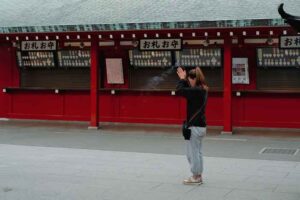
Why accepting without refusal matters more than repaying with money
Trying to “pay back” Osettai with money misses the spirit entirely. The reason is that Osettai is fundamentally a non-transactional act.
Repaying with cash turns someone’s kindness into a transaction — which undermines the essence of Osettai itself. Accepting the gift with gratitude is the greatest form of courtesy.
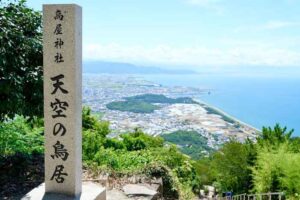
5 Frequently Asked Questions About Osettai: Clearing Up the Confusing Bits for Newcomers

- Can you really still receive Osettai in modern times?
- I heard you shouldn’t refuse Osettai — is that really true?
- Does Osettai include the exchange of money?
- Can someone who isn’t walking the pilgrimage participate as a giver?
- What words should I say when I receive Osettai?
Daisan and Ohenro Proxy: A Modern Form of the Osettai Spirit — Delivering Wishes for Those Who Cannot Go
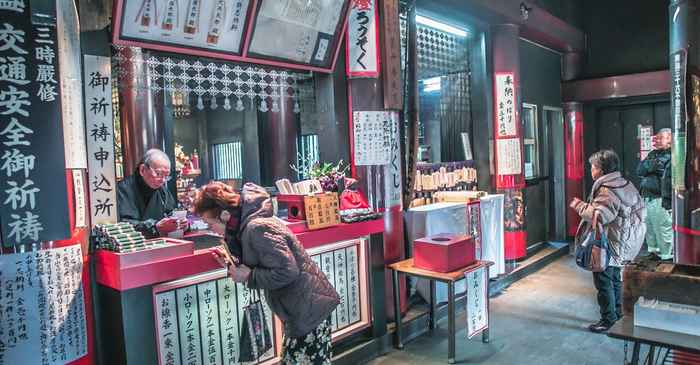
The philosophy at the root of Osettai is “supporting someone else’s wishes as your own.” Today, that same philosophy lives on in the form of daisan (代参) — proxy pilgrimage pilgrimage.
An elderly parent may say, “I wanted to walk Ohenro, but my body can’t handle it anymore.” A late father may have spoken, while still alive, of wanting to visit Shikoku one day. Carrying those wishes to Shikoku on their behalf is exactly what daisan is about.
Ohenro Gift is a service in which we, Hajime’s team, carry the wishes of those who can’t make the journey themselves to all 88 Shikoku temples. At each temple, we dedicate a hand-copied sutra, receive a vermillion seal in the nōkyō-chō (pilgrimage stamp book), and send you the story of the journey through letters and photographs.
Whether as a gift of filial piety to parents, as a memorial offering for someone who has passed, or as a prayer for healing — Ohenro Gift stands as a modern expression of the Osettai spirit.
» Learn more about our Ohenro proxy service
![[Ohenro]Shikoku Pilgrimage Proxy Service: Costs and How to Choose a Trusted Provider](https://ohenro-gift.com/en/giftohenro369/wp-content/uploads/2026/03/agency_thumb-300x200.jpg)
▼Related articles
- [Beginner’s Guide] How to Start Your First Ohenro: Etiquette, Preparation & Everything You Need to Know
- [Comprehensive Comparison] Ohenro Tour Options: How to Choose Between Bus Tours, Proxy Services, and Walking
- [Walking Pilgrim Guide] Is Walking 1,200km Tough? A Complete Guide to Costs, Duration & Difficulty