Non-Religious or Other Faith? Ohenro Proxy Pilgrimage Is Religiously Fine — No Hesitation Needed
You’re far from alone in feeling that way.
You’re interested in Ohenro proxy pilgrimage, but the question “Is this okay religiously?” keeps catching you. Whether you’re non-religious or follow another faith, this is where many people stop in the same place.
Bottom line: Ohenro proxy pilgrimage is a service you can use without religious hesitation. The reason lies in the unique inclusiveness Ohenro carries as a cultural tradition.
In this article, I’ll lay out — as honestly as I can — what’s actually behind the religious concern about Ohenro proxy pilgrimage, and why there’s no real problem.
- The real reason you might feel religious worry about Ohenro proxy pilgrimage
- What’s actually behind the resistance from non-religious or other-faith readers
- How Ohenro is fundamentally a “prayer culture” rather than a sectarian one
- The difference between Kobo Daishi devotion and religious coercion
- The fact that non-religious folks are already booking proxy pilgrimages
For Those With Religious Concerns About Ohenro Proxy Pilgrimage — Why That Worry Even Comes Up
If you’re worried about religion when it comes to Ohenro proxy pilgrimage, you’re someone seriously engaging with this topic. Hesitating because “this might conflict with my worldview” is, if anything, a sincere posture.
But that worry often contains some misunderstandings, in my view. Let me sort out what’s behind the unease first.
The misunderstanding behind “isn’t this a Buddhist thing?”
The first impression many people get is the misconception that “Ohenro is a Buddhist ceremony, so as a non-religious person, it doesn’t apply to me.” Sure, the 88 temples of Shikoku are Buddhist temples — but the pilgrimage itself sits in a wider cultural space.
The misunderstanding comes from a few specific perception gaps.
- “Buddhists only” image: Reality is anyone can visit, no filter
- Belief that you need to convert to a sect: No profession of faith or conversion is required
- Image of forced participation in religious rituals: If you don’t want guidance on practice, none is given
- Misconception that it conflicts with other religions: Many pilgrims of other faiths visit too
- “Proxy = religious proxy” image: It’s actually proxy of the act of visiting, not religion
So the framing of “Ohenro = forced religion” is itself a misunderstanding. Shikoku is an open pilgrimage route — tourists, people of other faiths, anyone can walk it.
The 88 temples of Shikoku do have deep ties to Shingon Buddhism (the sect founded by Kobo Daishi Kukai). But the temples don’t require visitors to be Shingon believers — they’ve functioned as a space where anyone can offer prayer.
This is a form of “open temple culture” common across Japanese Buddhism. Buddhism itself has a tradition of lowering sectarian walls and welcoming everyone, fundamentally.
Reality check: the 88 Shikoku temples are visited by international tourists and people of other faiths regularly. It’s not a Buddhists-only zone — it’s recognized internationally as a cultural pilgrimage route.
In recent years, it’s drawing attention as a global pilgrimage route alongside the Camino de Santiago in Spain. With efforts pushing toward UNESCO World Heritage status, the positioning as “cultural heritage” rather than “religious facility” keeps strengthening.
Christians walk the Camino de Santiago in Spain. People of other faiths walking the Shikoku pilgrimage follows the same global pattern. Religious affiliation isn’t a reason to stop yourself, in my view.
What’s actually behind the resistance for non-religious or other-faith readers
For non-religious people or those following another faith, the resistance often comes from “this might conflict with my own belief system.” The more sincere you are, the stronger this feeling tends to be.
Let me unpack what’s actually inside that resistance.
- “I’m non-religious — is it okay?”: Discomfort having someone pray on your behalf when you don’t have faith yourself
- “What about other religions?”: Concern about Christianity, Shinto, new religions co-existing
- “My family’s sect is different”: Resistance to a Buddhist temple from a different sect than your family’s
- “Does this convert me?”: Wondering if booking makes you Buddhist
- “Disrespect to ancestors and the deceased“: Concern about honoring deceased of other sects with Buddhist methods
These are all anxieties from “assumptions”. In reality, booking an Ohenro proxy pilgrimage doesn’t change your faith — and nothing is forced on you.
The concern about “praying for deceased of other sects in Buddhist style” is especially easy to misread. What proxy pilgrimage actually does isn’t a sect-specific ritual — it’s dedicating the deceased’s name and delivering prayer, which is an act that transcends religion.
Religious-binding worries don’t really resolve through repeated family discussions. Just keep the basic fact “booking doesn’t trigger anything” in mind, and the worry will fall into place much more clearly than you’d expect.
Holding the resistance itself shows you’re “taking your own beliefs seriously,” which is something to be respected, in my view. There’s no need to deny that.
The key is recognizing that the resistance is rooted in “image” rather than “fact”. Once you know the actual situation, the unease will naturally subside.
Stopping to ask “is this okay religiously?” is never wrong. Engaging carefully is exactly why fact-based decision material matters.
If anything, deciding on impulse and having doubts later actually lowers post-booking satisfaction. “Move forward once you’re convinced” tends to be the order that lets you deliver prayer with the cleanest feeling.
From here, I’ll lay out the grounds for why Ohenro proxy pilgrimage isn’t a religious problem, as honestly as I can. By the time you’re done reading, the vague worry should be largely cleared up.
Ohenro Proxy Pilgrimage Is Religiously Fine — Honest Grounds, Laid Out
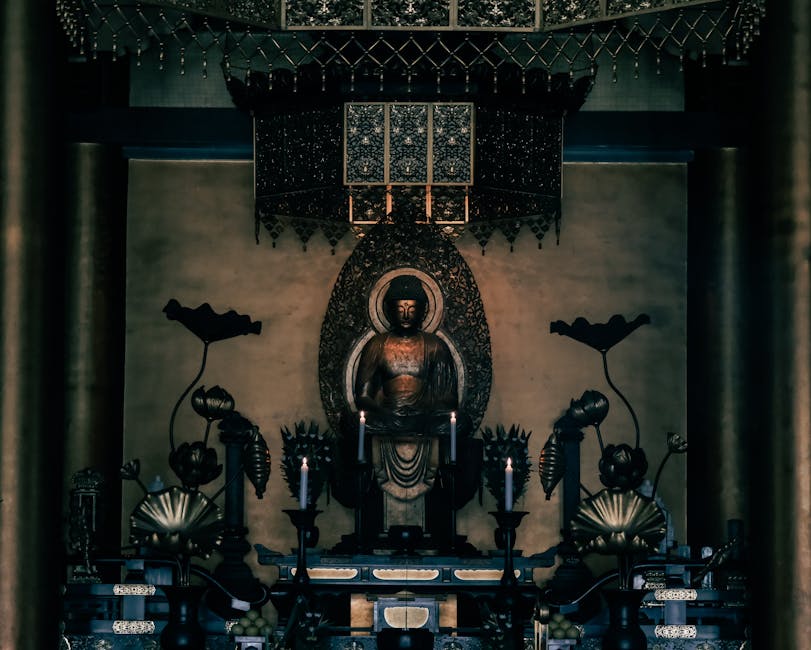
Here are the grounds for “religiously fine,” explained from three concrete angles. Once you understand the essence of Ohenro proxy pilgrimage pilgrimage, the worry should resolve significantly.
I’ll organize this through three lenses: historical, cultural, and the actual reality.
Ohenro is a “prayer” culture more than a religious one, fundamentally
The essence of the Shikoku pilgrimage lies in “delivering prayer” as a culture, more than devotion to a specific sect. It happens at Buddhist temples, but the act of visiting is essentially “entrusting a wish” — that crosses religion.
Let me organize the characteristics of what Ohenro carries as a culture.
- The essence of pilgrimage is “prayer”: Centered on conveying intent, more than sect or doctrine
- An open path anyone can walk: Visitable regardless of faith
- Spirit of dōgyō ninin (walking with two): Walking with Kobo Daishi — a culture of consolation
- Cultural heritage as a pilgrimage route: Targeting World Heritage status, internationally recognized
- Coexistence of tourism and cultural experience: Religious act and tourism standing side-by-side
So Ohenro is “a place of prayer” more than “a place of religion”. Functioning as a vessel that holds people’s intentions rather than transmitting doctrine — that’s the historical pattern.
This sense actually maps onto the typical Japanese person’s relationship with Shinto shrines. Going to a shrine for hatsumode (New Year visit) or shichi-go-san doesn’t make you “Shinto.” Ohenro carries the same kind of cultural openness over religious strictness.
The Edo-era Ohenro-kō also worked by entrusting an entire village’s wishes to one person. “Carrying everyone’s prayer” was the role of pilgrimage — not propagating doctrine.
Villagers back then weren’t necessarily all Shingon believers. Yet sending the village representative to Shikoku felt natural. That’s because pilgrimage was a shared prayer space transcending sect.
The difference between Kobo Daishi devotion and religious coercion
“Kobo Daishi devotion” sounds like it might require some special profession of faith. But in practice, all you need is respect toward Kobo Daishi (Kukai).
Let me organize the difference between Kobo Daishi devotion and what’s typically called “religious coercion.”
- No initiation ceremony at all: Just visiting requires no procedure
- No agreement on doctrine required: There’s no profession-of-faith moment
- Coexistence with other religions is possible: Many examples alongside Shinto, Christianity
- No concept of conversion: Visiting ≠ becoming a believer
- Only respect is asked of you: Cultural and historical respect is enough
Kobo Daishi is a “symbolic figure of Japanese Buddhism” and at the same time a historical and cultural luminary. The same way you might respect Tokugawa Ieyasu or Sakamoto Ryoma — cultural respect alone is sufficient, in my view.
In fact, the Shikoku pilgrimage sees plenty of Zen, Jodo, Jodo Shinshu, Nichiren, and other non-Shingon believers visiting. “My sect is different, so I can’t” simply isn’t true.
The reason for that lies in the Buddhist tradition of “Hasshu Kengaku” (the eight schools study together). Japanese Buddhism, even with sectarian differences, has a culture of mutual respect rather than exclusion. Inter-sect respect exists naturally on the pilgrimage ground.
Christian readers booking proxy pilgrimage isn’t unusual lately either. With motivations like “the deceased was from Shikoku” or “I want to leave a Japanese-cultural experience for the family,” it’s increasingly chosen across religious lines.
The fact that non-religious folks are already booking
Looking at the actual booker mix, a meaningful portion identify as non-religious. Many who initially worried “we’re non-religious, so…” end up satisfied after booking.
Let me organize the motivations that lead non-religious folks to book.
- Want to fulfill family or deceased’s wish: Less about your own religious view, more about someone else
- As an action for milestones: 60th, 70th, life milestones
- Want to experience it as Japanese culture: More cultural meaning than religious
- The nokyocho format itself appeals: Interest in the physical record
- As an entry point: Sometimes becomes a doorway into religious exploration
So “non-religious = no Ohenro” is just not the reality. If anything, people with flexible views on religion can connect more easily with the cultural and commemorative aspects, in my view.
For folks booking a proxy pilgrimage for family, the motive is more “someone else’s wish” than “my religious view”. Some say “exactly because we’re non-religious, we want to deliver prayer purely, transcending the religious wall.”
People whose family converted to other religions in their generation, but who book proxy pilgrimage to their ancestor’s hometown of Shikoku, aren’t rare cases. The choice to value the family story over the religious frame, in other words.
Also, the act of visiting and devotion to a specific sect are completely separate things. Considering how Japanese people just put their hands together at temples in everyday life, booking doesn’t change anything — that’s how you can read it.
People going to a shrine for hatsumode aren’t “becoming Shinto.” Same with Ohenro proxy pilgrimage — booking doesn’t make you “a Shingon believer”. Religious binding stays at zero from start to finish.
If anything, people with flexible religious views can enjoy “savoring it as culture” more easily. Without sticking to sects, why not approach it as touching Japan’s thousand-year culture?
If you’re stuck on family conversation, how to explain Ohenro proxy pilgrimage to family is also worth a read.

For spotting religiously-suspicious operators, how to identify questionable proxy services is also useful. Honest providers don’t push religion at all — that’s the marker.
The historical grounds for daisan being religiously fine are explained in why daisan isn’t disrespectful. Worth confirming the thousand-year-old cultural legitimacy.
For Those With Lingering Religious Hesitation — Honest Answers to Common Questions
- I’m non-religious. Does anything change if I book an Ohenro proxy pilgrimage?
- My family is Jodo Shinshu, but is there a problem booking the Shingon-aligned Shikoku pilgrimage?
- I’m Christian. Does booking conflict with my faith?
- Does Ohenro proxy pilgrimage count as proxy of a Buddhist ritual?
- Family is calling it “religiously suspicious.” How do I explain it?
Religion Doesn’t Matter — What’s Meaningful Is Delivering Prayer to Someone You Love
If you feel religious worry about Ohenro proxy pilgrimage, you’re someone sincere and conscientious. Stopping to ask “this might conflict with my view” is fundamentally a precious posture.
But Ohenro as a culture has continued for over a thousand years as a vessel that holds prayer transcending religious frames. It’s an open pilgrimage route both non-religious and other-faith folks can use with peace of mind.
- Religious worry about Ohenro proxy pilgrimage often comes from “assumptions”
- Ohenro is an open “prayer culture” more than a sectarian one
- Kobo Daishi devotion isn’t religious coercion — it’s just respect
- Non-religious and other-faith folks are actively booking
- Booking doesn’t change your faith at all
What matters is the feeling: “Who is this for, and what do you want to deliver.” You can put your family’s or someone you love’s wish ahead of the religious frame.
If “I’m still bothered religiously” describes how you feel, no need to push forward. Start with a simple consultation if anything’s on your mind — that’s totally fine.
Ohenro Gift Bin, which walks Shikoku’s 88 temples to deliver prayer, runs with a sincere stance of zero religious push. The real nokyocho and visit records get delivered to the requester or the gift recipient.
If a family member holds a different religious view, telling them about Ohenro’s nature as an “open pilgrimage route” tends to ease the friction. Framing it as “not devotion to a specific sect, but a cultural prayer experience” makes consensus easier within the family.
Confirming facts tends to dissolve most of the worry. Non-religious or other-faith — Ohenro proxy pilgrimage is fine. I’d love for you to take that conclusion home with you.
If you’re stuck on the family conversation, how to explain Ohenro proxy pilgrimage to family pairs well with this article. Religious worry and family understanding go hand in hand — easier to tackle together.
What matters is the feeling: “Who is this for, and what do you want to deliver.” The religious frame doesn’t have to override your wish for family or someone you love.
“Dad always wanted to go” or “I want to honor mom’s wish.” That kind of plain, honest feeling is exactly what the thousand-year Ohenro culture has held dearest. Whether or not you have a religion isn’t going to get in the way of that.
If “I’m still bothered religiously” describes you, there’s no need to push it. Reach out for consultation when something’s on your mind — that’s where to start.
Same idea when booking proxy pilgrimage. If “delivering intentions” rather than “devotion to doctrine” sits at the center of why you’re booking, you can use the service regardless of religious view.
For pricing, structure, how to think about the religious side. Reach out via the plans and LINE consultation page for any of it. Asking is fine — no commitment.
“We’re non-religious, so I’m not sure if booking is okay” / “Our family sect is different — is it fine?” — to every fine-grained question, we’ll respond honestly one by one. Move forward when you’re fully convinced — that’s what makes this work.
Non-religious or other-faith — the wish to deliver prayer to someone you love doesn’t change. To that pure feeling, transcending the religious frame, Ohenro proxy pilgrimage is positioned to respond, in my view.
▼ Related reads
- Convincing Family About Ohenro Proxy Pilgrimage: How to Get Your Husband and Siblings on Board
- Is Ohenro Proxy Service Sketchy? An Honest Take on Spotting Trustworthy Providers
- Daisan Isn’t Disrespectful — Why Kobo Daishi and a Thousand Years of History Affirm Proxy Ohenro
![[Ohenro]Shikoku Pilgrimage Proxy Service: Costs and How to Choose a Trusted Provider](https://ohenro-gift.com/en/giftohenro369/wp-content/uploads/2026/03/agency_thumb-300x200.jpg)