Ohenro Memorial: Walking Shikoku for Someone You’ve Lost — A 1,000-Year-Old Buddhist Tribute
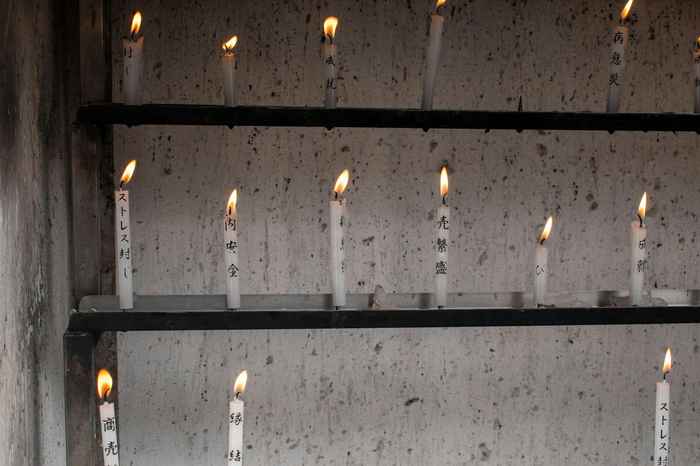
You want to carry a wish your loved one never got to fulfill.
That feeling, in my experience, is one of the most natural things a grieving family can have.
As the 49th-day memorial or the first anniversary approaches, a lot of families quietly start asking themselves: “Isn’t there something more we can do for them at this milestone?”
But actually walking all of Shikoku yourself — that’s a 40- to 60-day commitment most people simply can’t make.
This is where an option most people outside Japan don’t know about comes in: having someone walk the 88 temples on behalf of the deceased. It’s called daisan — proxy pilgrimage.
And it isn’t new. It’s a memorial practice that’s been part of Ohenro culture for more than a thousand years.
- Why proxy Ohenro has been a legitimate form of Buddhist memorial practice for over a thousand years
- The milestones — 49th day, first anniversary, third anniversary — where families most often choose this
- The three keepsakes the family actually receives: nokyocho, goshuin, and byakue (pilgrim’s robe)
- Honest answers to the questions bereaved families ask most often — denomination, cost, the practical flow
By the end, Ohenro as a memorial tribute should sit calmly on the table as one real option for honoring the person you’ve lost.
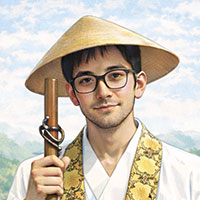
Why Proxy Ohenro Is Chosen as a Memorial: A Thousand-Year Buddhist Tradition of Honoring the Dead
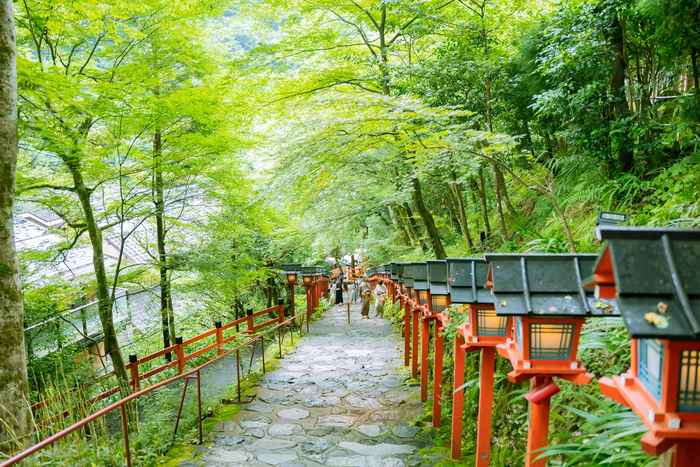
Let’s start by getting the basic premise straight.
Daisan — proxy pilgrimage — is when one person walks the 88 temples of Shikoku on someone else’s behalf.
In Ohenro’s case specifically, it means the proxy walker carries the wishes or memory of another person — often the deceased — through all 88 sites.
The word daisan (代参) literally reads as “participate on behalf of.” Simple enough.
But inside those two characters sits more than a thousand years of accumulated practice.
Daisan Has Been Part of Japanese Memorial Culture for Centuries
By the Edo period (17th–19th century), daisan was already a mainstream cultural institution.
Village-based “kō” groups — think Ise-kō, Fuji-kō — would pool funds so that one strong walker could carry the prayers of the entire community to major shrines and temples.
For centuries this was simply how prayer worked when not everyone could physically travel.
Ohenro inherited the same logic. When you can’t walk it yourself, someone else carries your intention on your behalf — that structure was woven into the pilgrimage early on, and it never really left.
This is the key point I want to land.
Daisan isn’t “a compromise when you can’t go yourself.”
It was built into pilgrimage culture from the start as a real, recognized option in its own right.
- Edo-period “kō” culture formally supported one representative carrying the prayers of many — memorial prayer was already part of this model
- The Shikoku Reijokai (the official federation of the 88 temples) accepts nokyocho stamps collected through daisan
- Dōgyō ninin already assumes a pilgrim isn’t walking alone — extending that structure to include the deceased is a natural fit, not a stretch
You don’t need to feel any guilt about choosing this path as a memorial.
If the history and cultural roots of daisan itself are new to you, our deeper piece on what proxy pilgrimage actually is covers it in more detail.
And if you specifically worry about the “is it appropriate?” question, our piece addressing whether proxy pilgrimage is disrespectful tackles that head-on.
The Buddhist Logic That Ties Proxy Walking to Memorial Practice
The reason proxy Ohenro works as a memorial sits in a specific Buddhist concept: tsuizen (追善) — merit transfer on behalf of the deceased.
In plain language: the living accumulate merit through good deeds, and dedicate that merit to someone who has passed.
The 49th-day rite, the first anniversary (isshūki), the third anniversary (sankaiki) — all of these are structured around exactly this logic.
- The living perform a meritorious act — sutra recitation, copying scripture, pilgrimage
- The merit from that act is formally dedicated to the deceased
- The dedication supports the deceased in the next world and gives the family a concrete way to grieve
Seen through this lens, walking Ohenro on behalf of someone who passed is tsuizen in its most embodied form.
Every step taken by the proxy walker is a prayer for the person being honored.
Every stamp collected across the 88 temples becomes a piece of merit dedicated to them — eventually bound into a single nokyocho.
Historically and doctrinally, this is one of the more orthodox memorial practices still available in modern Japanese Buddhism.
Daisan as a memorial isn’t “going in their place because they can’t.” It’s “giving a shape to the love and grief that outlived them.”
When Families Choose It: The 49th Day, the First Anniversary, and Why Those Moments Matter
Once families decide proxy Ohenro is something they want to do, the next question is almost always: when should we actually do it?
The honest answer: the 49th day or the first anniversary is by far the most common window.
Let me explain why those specific moments carry so much weight, and how the other memorial dates fit in.
Why the 49th Day and the First Anniversary Are the Most-Chosen Moments
The 49th day (shijūkunichi) is considered, in Japanese Buddhist tradition, the milestone where the deceased transitions to the next world.
Buddhism holds that in the 49 days after death, the deceased undergoes a sequence of seven weekly judgments, with the final one determining their destination.
Dedicating memorial merit at that specific window carries a weight other moments don’t quite match — both for the deceased and for the family’s own grieving process.
- The transition moment itself calls for merit dedication more strongly than any other point after death
- By then the immediate rush of funeral arrangements has calmed, and the family can think about memorial choices with a clearer head
- A nokyocho containing prayers from all 88 temples becomes a physical, shareable record of the memorial intention
The first anniversary (isshūki) is the first annual return of the date of death.
More than half a year after the 49th day, a family’s grief usually has a different texture — raw edges smoothed, but not gone.
It’s common for people to think: “There’s a wish they mentioned — let me turn it into a shape before the first year closes.”
When the nokyocho shows up aligned with the memorial date, the family can open it together right there at the service.
“Someone walked all 88 temples on our behalf” — that simple fact tends to shift the room in a way I’ve seen repeatedly.
The Third, Seventh, and Beyond: Memorial Ohenro Isn’t Bound to One Date
Proxy Ohenro isn’t restricted to the 49th day or the first anniversary.
The third anniversary, seventh anniversary, thirteenth anniversary, Obon, or just around the date of death — any of these milestones work just as well.
And if years have already passed — if there’s a quiet regret of “I never got to really do anything for them back then” — it’s not too late. Memorial intent doesn’t expire.
- 49th day (shijūkunichi): dedicating the merit of 88 temples at the transition milestone
- First anniversary (isshūki): turning a wish they voiced while alive into a concrete shape
- Third and seventh anniversaries: memorial done with more settled emotion and deliberate intention
- Obon or around the date of death: an annual practice of refreshing the prayer each year
- No particular date: simply wanting to act on “I never got to do enough for them” whenever it hits
What actually matters: when and in what form the family wants the prayer delivered.
Proxy Ohenro is flexible enough to serve as the vessel for that intention, regardless of what date you pick.
For the “am I doing this wrong?” family of worries, our piece on whether proxy pilgrimage is disrespectful works as a companion read.
What the Family Actually Receives: 88 Temples of Prayer, Made Physical
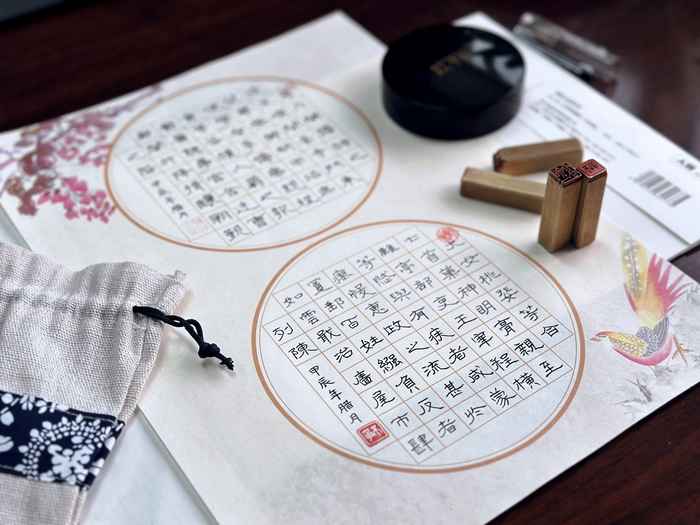
Let’s get concrete.
When a family commissions proxy Ohenro as a memorial, what actually arrives in their hands at the end?
This is where daisan diverges from a lot of other memorial options: something physical remains, not just a record of an event that already happened.
Nokyocho, Goshuin, and Byakue: The Three Keepsakes That Carry the Memorial
Three main objects come out of a full daisan pilgrimage:
- Nokyocho: a book filled with hand-brushed calligraphy and vermilion seals collected in person at all 88 temples
- Goshuin (go-ei): honzon imagery cards issued at each temple, collectively forming a second visual record
- Byakue (read: byakue): the white pilgrim’s robe worn throughout the walk, stamped with all 88 temple seals
The nokyocho is hand-brushed and hand-stamped at every single temple, which means no two copies on earth are identical.
At each of the 88 temples, a monk or trained staff member picks up a brush and writes the characters in real time.
Two vermilion seals get pressed on top of the ink — one for the temple, one for the honzon.
This is what a real nokyocho actually is.
As of 2024, the per-temple stamp fee was officially set at 500 yen per temple per temple.
Across all 88 temples, that comes to 44,000 yen in stamp fees alone (roughly $300 USD).
That figure is published by the Shikoku Reijokai, and a proxy pilgrimage incurs the same fees as a walked one.
The byakue is technically the robe that living pilgrims wear — but there’s a long-standing tradition that the pilgrim’s robe is the garment they’ll be laid to rest in. A byakue stamped with all 88 temple seals, brought back in the deceased’s name, functions as a tribute robe with a weight almost impossible to replicate.
If you want to go deeper into how a nokyocho differs from a regular goshuincho, our comparison piece walks through every distinction.
Bringing an Ihai or Kaimyō on the Walk: How the Practical Side Works
In proxy memorial Ohenro, the walker usually carries some representation of the deceased through every temple.
Families typically provide something from the following list:
- The deceased’s kaimyō (Buddhist posthumous name), if one was given — or the legal name
- A portrait or photograph of the deceased
- An ihai (memorial tablet) — either entrusted physically to the walker, or replaced by a photograph
- A letter from the family or a specific wish, which the walker can recite during the temple prayers
- A short written message from the family, stored alongside the nokyocho
These function as the walker’s anchor — a way to pray for a specific person at each of the 88 sites, not in the abstract.
At the main hall (hondō) and the Daishi hall of each temple, the walker recites sutras while quietly holding the deceased’s name in mind.
That specific act, repeated 88 times, is what ends up recorded in the nokyocho.
Families uncomfortable with entrusting an ihai usually go with a photograph plus the kaimyō written on paper. Works just as well.
At the core of it: what’s being delivered is the intention. The objects are vessels for that, not the thing itself.
Common Questions Bereaved Families Ask About Proxy Ohenro
These are the questions I hear most often from families considering a memorial daisan.
Denomination, cost, timeline — the honest answers to the things that usually get in the way of deciding.
- Does our family’s Buddhist denomination need to match?
- What does the cost actually cover?
- How long does a memorial daisan actually take?
- I’m uncomfortable entrusting the ihai or portrait — is that okay?
- After the walk, can the family look at the nokyocho together?
Giving Your Grief Somewhere to Go: Memorial Tribute, Made Real
We’ve covered proxy Ohenro as a memorial tribute from several angles now.
Looking back, the core of the piece is straightforward.
- Proxy Ohenro is a legitimate thousand-year-old form of pilgrimage — not a disrespectful substitute
- Buddhist merit transfer is the logic that ties proxy walking directly to memorial practice
- The 49th day, first anniversary, third anniversary, and beyond are all natural windows to commission it
- The family physically receives nokyocho, goshuin, and byakue — each carrying the walk’s prayers
- Handing over an ihai is optional; what matters is that the walker carries the person in mind, 88 times
“I couldn’t do anything for them” is a quiet weight a lot of bereaved families end up carrying for years. You don’t have to keep carrying it that way.
Simply knowing this option exists — that’s enough for today. The decision itself can wait until you’re ready.
- Real walked Ohenro: all 88 temples on foot, not driven or skipped
- Live video and GPS tracking: the family can see the walker’s progress in real time
- A real nokyocho: calligraphy and seals collected in person at every one of the 88 temples
- Pilgrimage report: a written record of how the deceased was prayed for, temple by temple
- Free consultation: we talk through denomination, cost, and timing before any commitment
There’s no rush on this.
Honestly, just holding “this kind of memorial exists as an option” in the back of your mind is enough for now.
If you do reach the point where you want to look at it seriously, our plans and pricing page lays it all out — cost breakdown, timeline, what the family receives. Everything else can be handled through a free consultation.
▼Related reading
- What Is Daisan? The Centuries-Old Ohenro Custom of Walking on Someone Else’s Behalf
- Is Proxy Pilgrimage Disrespectful? The 1,200-Year Tradition Behind Walking Ohenro on Someone’s Behalf
- Nokyocho vs Goshuincho: What Sets the Shikoku Pilgrimage Stamp Book Apart
![[Ohenro]Shikoku Pilgrimage Proxy Service: Costs and How to Choose a Trusted Provider](https://ohenro-gift.com/en/giftohenro369/wp-content/uploads/2026/03/agency_thumb-300x200.jpg)