Grave-Visit Proxy vs. Ohenro Proxy: A Comparison and How to Pick
If that’s where your head is at, you’re far from alone — more people sit with this than you’d think.
The “delivering prayer on someone’s behalf” part is the same, but what each service actually does is wildly different. Picking without understanding the difference can land you something other than what you expected.
Living far away, deep in caregiving, physically unable to make the trip, considering serious memorial. “Which one fits my situation?” — getting stuck on this is normal.
In this article, I’ll lay out the difference between grave-visit proxy and ohenro proxy, plus how to pick, the way I see it.
- What each service actually does, side by side
- A comparison across 6 axes: purpose, cost, duration, what you receive
- How to pick when the goal is memorial for the deceased
- How to pick when the goal is prayer for family or yourself
- How to think about combining the two

What’s Actually Different Between Grave-Visit Proxy and Ohenro Proxy?
“Praying on someone’s behalf” sounds the same. In reality, the target and the purpose are completely different services. Mixing them up leads to regret.
Let me start by sorting out what each one actually does.
What grave-visit proxy actually does
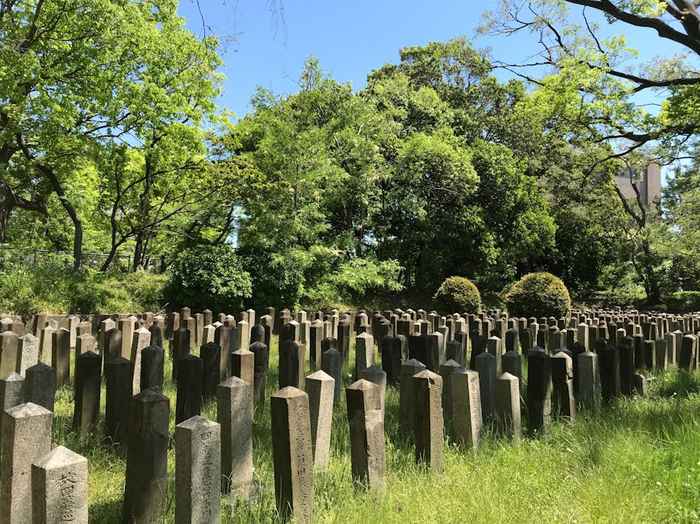
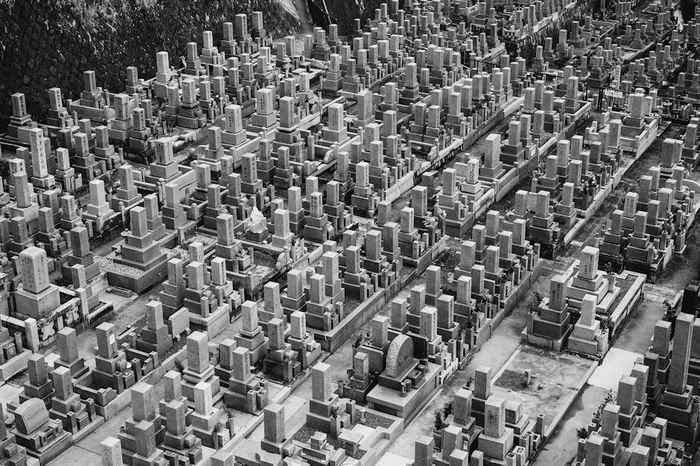
Grave-visit proxy means means going to the cemetery on the client’s behalf — cleaning the grave, paying respects, making offerings. It exists for people who can’t reach the grave themselves due to distance or physical limits.
Here’s what’s typically included.
- Cleaning the grave: polishing the stone, weeding, clearing fallen leaves
- Incense and flowers: offerings the client provides, or flowers the provider brings
- Hands clasped: stating the client’s name and praying on their behalf
- Photo and video report: post-visit images and footage sent to the client
- Cemetery admin tasks: paying management fees, checking the grave’s condition
So grave-visit proxy is “a proxy service for the specific place where ancestors rest.” The thing you’d normally do yourself — visiting the grave — gets handled in your place.
The essence is “keeping the family grave maintained.” At seasonal turning points like Obon and ohigan, it covers the cleaning and respect-paying that you can’t do yourself.
What ohenro proxy actually does
Ohenro proxy (daisan) means walking the 88 temples of Shikoku on the client’s behalf and delivering prayer at each one. Not a single temple — the whole 88-temple route, as a single act of prayer.
Here’s the typical scope.
- Pilgrimage of all 88 temples: the route tied to Kobo Daishi, walked in order
- Nōkyōchō (pilgrimage book): real seals and calligraphy stamped at each temple
- Sutra recitation and prayer: formal prayer at the main hall and the daishi-dō
- Pilgrimage report: photos, video, and GPS records from each temple
- Dedicating the byakue (white pilgrim’s coat): with the client’s name on it
- Kobo Daishi tradition: prayer carried under the “dōgyō ninin” framework
So ohenro proxy is “a service that delivers serious prayer at a specific set of sacred sites in Shikoku.” Not the grave — the 88 temples, on a pilgrimage route with over a thousand years of history.
For more on the concept of ohenro daisan, “What is ohenro daisan? The difference from proxy services and the meaning” goes into it. Worth pairing with this read.
Comparing Grave-Visit Proxy vs. Ohenro Proxy on 6 Axes
The “praying on someone’s behalf” surface is shared, but there are plenty of differences when you look closer. Let me work through the 6 axes that matter most.
Here’s the at-a-glance comparison.
| Axis | Grave-visit proxy | Ohenro proxy |
|---|---|---|
| Target location | The client’s family grave (local) | The Shikoku 88 temples |
| Main purpose | Maintenance / ancestral memorial | Serious prayer / special memorial |
| Price range range | ¥5,000–¥30,000 / visit | ¥700,000–¥2,980,000 |
| Duration | Half a day to one day | 45–60 days (full route) |
| What you receive | Photos and video report | Real nōkyōchō, byakue, full pilgrimage report |
| Best fit | Regular grave maintenance | Turning-point prayer, special memorial |
Even from this table, the two services point in completely different directions. Let me dig in deeper, axis by axis.
Difference in purpose and prayer content
The biggest difference is “why are you praying” — the purpose itself.
Here’s the breakdown.
- Grave-visit proxy purpose: regular visits to the specific place where ancestors rest
- Ohenro proxy purpose: delivering serious prayer at the 88 temples for a turning point
- Daily vs. special: grave-visit is daily-rhythm; ohenro proxy is once-in-a-while
- Target difference: grave-visit targets a specific deceased; ohenro proxy can be for anyone
- Frequency: grave-visit happens multiple times; ohenro proxy is typically once
Grave-visit proxy is “keeping daily memorial going.” Obon, ohigan, anniversaries — regular cadence. Ohenro proxy is “serious prayer at a life turning point,” with weight placed on a single act.
If “I want to keep maintaining my family grave” describes the situation, grave-visit proxy is realistic. If it’s “I want to deliver special memorial for a 49-day or 1-year anniversary”, ohenro proxy fits the color of that moment better.
Differences in cost, duration, and process
Cost and duration are orders of magnitude apart. Worth seeing the gap with the reasons.
| Item | Grave-visit proxy | Ohenro proxy |
|---|---|---|
| Lowest price | ~¥5,000 | ~¥700,000 |
| Standard price | ¥10,000–¥20,000 | ¥1,200,000 (full route) |
| Work duration | Half a day to one day | 45–60 days |
| Travel distance | To the local cemetery | Walking ~1,200 km across Shikoku |
| People involved | 1–2 | 2+ (multi-person team) |
| Lead time | Can book same-day | Plan 3 months ahead |
The price gap reflects “physical workload” and “scale of prayer.” Ohenro proxy is a real walking pilgrimage, participation in a thousand-year tradition, so the cost lands accordingly.
For more on the cost breakdown, “The cost structure behind ohenro proxy” walks through why the price is what it is. Worth a look if the number raises questions.
Differences in what you receive (nōkyōchō, omamori, etc.)
What actually lands in your hands is also completely different. The quality and form of the record changes.
Here’s the receivables comparison.
| Item | Grave-visit proxy | Ohenro proxy |
|---|---|---|
| Photos / video | ○ (before/after cleaning shots) | ◎ (footage from all 88 temples) |
| Nōkyōchō | × | ◎ (real seals and calligraphy from 88 temples) |
| Omamori / ofuda | △ (depends on provider) | ○ (available as add-on) |
| Byakue (white coat) | × | ◎ (with the client’s name, dedicated) |
| Pilgrimage report | ○ (brief report) | ◎ (detailed report) |
| GPS tracking record | × | ◎ (real-time stream) |
Grave-visit proxy delivers “a cleaning result report” as the main output. Ohenro proxy delivers “a real nōkyōchō — proof of prayer in physical form.”
The real nōkyōchō is the strength only ohenro proxy can deliver. Real seals and calligraphy from all 88 temples — a physical record of the prayer that stays with you for life.
Which Should You Pick? A Use-Case Guide by Goal
“So which do I pick?” Sorting by goal is the cleanest axis. Let me lay it out simply.
When the goal is memorial for the deceased
For memorial, splitting along “daily memorial” vs. “turning-point special memorial” is the natural move.
Here’s the breakdown by situation.
- Obon and ohigan regular memorial: grave-visit proxy fits
- Anniversary visits: grave-visit proxy fits
- Distance keeps you from the grave: grave-visit proxy
- 49-day, 1-year, 3-year memorial: ohenro proxy is also on the table
- Honoring an unfulfilled wish (like an unfinished pilgrimage): ohenro proxy
- Special turning-point memorial: ohenro proxy delivers deeper prayer
Grave-visit proxy works as “continuing regular memorial.” Ohenro proxy works as “a one-time, weighted special memorial” at a turning point.
If the situation is “my father’s 3-year memorial is coming up, and he always said he wanted to walk the Shikoku route” — ohenro proxy fits the color of that moment.
When the goal is prayer for family or yourself
If the goal isn’t the deceased but family or yourself, the choice shifts hard. Grave-visit proxy assumes “prayer for the deceased” by default, so the fit changes.
Here’s the breakdown by goal.
| Prayer goal | Grave-visit proxy | Ohenro proxy |
|---|---|---|
| Family member’s healing | × | ◎ |
| Personal yakuyoke | × | ◎ |
| Personal life turning point | × | ◎ |
| Family exam wishes | × | ◎ |
| Family safety prayer | × | ◎ |
| Gratitude / report to ancestors | ◎ | ○ |
For prayer goals, ohenro proxy fits overwhelmingly better. Grave-visit proxy is centered on the deceased — it doesn’t function for prayers about the living.
For serious prayer for yourself or family, ohenro proxy at the Shikoku 88 is on the table. A 1,200 km route with a thousand years of prayer-history behind it.
For broader guidance on choosing a proxy provider, the complete ohenro daisan guide is also worth a look. The criteria for not picking the wrong one are laid out there.
![[Ohenro]Shikoku Pilgrimage Proxy Service: Costs and How to Choose a Trusted Provider](https://ohenro-gift.com/en/giftohenro369/wp-content/uploads/2026/03/agency_thumb-300x200.jpg)
FAQ on Grave-Visit Proxy and Ohenro Proxy
- Can I use both grave-visit proxy and ohenro proxy?
- Why is ohenro proxy so much more expensive?
- If distance keeps me from the grave, which one’s the right pick?
- Does grave-visit proxy come with a nōkyōchō?
- Which is “more correct” as memorial for ancestors?
Pick the Form of Prayer That Best Fits the People You Love
Grave-visit proxy and ohenro proxy each play a different role. The right framing isn’t “which is correct” but “which fits the goal.”
Daily grave maintenance with grave-visit proxy; turning-point serious prayer with ohenro proxy. That split is the simplest decision axis.
- Grave-visit proxy: local grave, regular maintenance
- Ohenro proxy: 88 temples, turning-point serious prayer
- Cost: ¥5K–¥30K vs. ¥560K–¥2.48M — orders of magnitude apart
- What you receive: photo report vs. real nōkyōchō
- Combining both is a natural way to use them
For memorial, the ideal is grave-visit proxy for daily, ohenro proxy for turning points. For prayer about family or yourself, ohenro proxy fits overwhelmingly better.
If you’re sitting with “I want to deliver special memorial for a turning point” or “I’m thinking about serious prayer” — Ohenro Gift Bin, walking the 88 temples to deliver prayer, is one option to consider.
A real nōkyōchō and a record of the pilgrimage land as proof of the prayer. Something grave-visit proxy can’t deliver — a thousand-year-old form of prayer in tangible form.
If you’re considering ohenro proxy, the move is to talk through prayer content and timing with a provider first. Confirm pricing, the process, and what they cover, then move forward only when you’re convinced.
For pricing, the mechanics, or how to combine grave-visit proxy with ohenro proxy — anything worth asking, please reach out via the plan and LINE consultation page. Even just a question is fine.
“Which one fits our situation?” “How would I combine the two?” — specific questions get straight, honest answers, one at a time. Moving forward only when you’re convinced is what we want too.
Prayer for the people you love deserves to be delivered through the form that best fits. Honor the role of grave-visit proxy and the role of ohenro proxy, and pick along your situation.
▼Related reads
- What Is Ohenro Daisan? The Difference From Proxy Services and the Meaning
- The Cost Structure Behind Ohenro Proxy
- The Complete Ohenro Daisan Guide: Pricing, Process, and How to Choose a Trusted Provider