
Unusual Kanreki Gift Ideas: Experience-Based 60th Birthday Presents That Actually Get Remembered
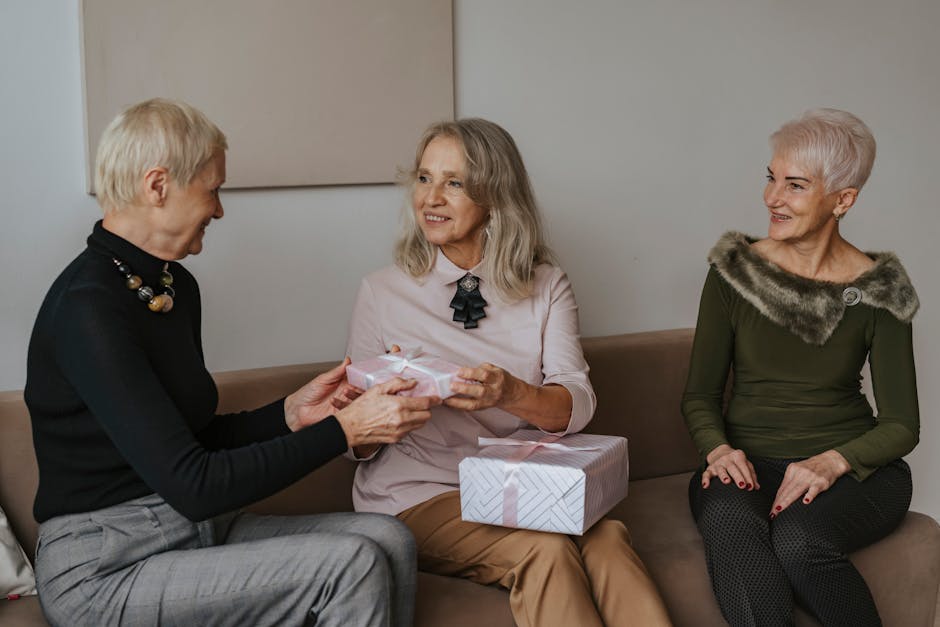
Finding the right 60th birthday gift is harder than it sounds.
Your parent already has enough stuff. They won’t tell you what they actually want. You’d love to surprise them — but with what, exactly? And 60 is a milestone that deserves more than a throwaway present, especially in Japanese culture where kanreki (還暦) marks the completion of a full zodiac cycle — essentially, a second birth.
Here’s what’s shifting: families are quietly moving away from stuff and toward experiences.
Trips, cruises, pottery workshops, pilgrimages. Things you can’t wrap, but things that stay in memory for decades. That’s the new shape of the kanreki gift — and this article walks through the options, how to choose, and what to watch out for.
- Why experience gifts are replacing traditional kanreki presents
- Six unusual experience-gift categories — travel, cruise, pottery, dining, pilgrimage, arts
- The three axes to use when choosing: stamina, taste, distance
- How to gift a memory your parent will talk about years from now

Why Experience Gifts Are Replacing “Stuff” for Kanreki — The Memory-First Shift

The classic image of a kanreki gift is the red chanchanko — a padded red vest worn on the 60th birthday birthday.
But if you try handing one to most 60-year-olds today, you’ll get a polite smile and a drawer it never leaves. The reality is: today’s 60 is not yesterday’s 60. And gift-giving is catching up to that shift.
Red Vests Are Out — Shared Experiences Are In
Today’s 60-year-olds are a different generation.
They use smartphones daily, travel internationally, keep working, go to the gym. They look, move, and think more like the 50-year-olds of the 1990s. Handing them a “grandparent starter kit” reads as tone-deaf, even if the intention is sweet.
That’s why the chanchanko has quietly fallen out of favor — not completely, but as the default, yes.
Gift-givers have picked up on it too. They’d rather skip the formalities and give something their parent actually fits into right now. The modern kanreki gift is about the parent’s current life, not the stereotype of age.
- Parents at 60 already own enough “stuff” — more items crowd, not comfort
- They’re healthy enough to enjoy an actual trip, class, or outing
- The generation is curious — they want to learn, travel, try things
- “Memory” as a value has climbed the ranking vs. ownership
Material gifts have short shelf lives.
Dishes break, clothes fade, electronics get replaced in three years. But the memory of a trip together stays intact for decades. That’s the core argument for the experience gift — and it’s why I see it winning out in almost every conversation I have with families.
There’s also something else going on: experiences have become the new way to “surprise” someone. In a world where stuff is easy to buy and easy to forget, an experience feels genuinely rare — and rarity is what makes a gift memorable.
Why 60 Is the Perfect Milestone to Gift a Memory
In Japanese tradition, kanreki literally means “returning calendar.”
After 60 years, the zodiac cycle completes. You’ve lived a full round, and you’re reborn — symbolically — into your second life. That’s a rebirth moment. And rebirth moments are built for new experiences, not more clutter.
Memory is also re-usable. You can replay it as many times as you want.
A trip once experienced becomes a story told for years. “Remember when the whole family went together for my 60th?” — every time your parent retells it, the gift refreshes itself. That’s something a wrapped box can’t do, no matter what’s inside.
- It doesn’t sit on a shelf — it stays alive in conversation
- The whole family often becomes part of the memory, not just the recipient
- Photos, videos, small mementos can hold the memory in place
- The gift-giver (you) stays present in the memory — “who was there” is part of it
Let’s look at what those experience gifts actually are, in concrete terms.
“Unusual but not weird” is the balance to aim for — you want to surprise your parent, not confuse them.

Six Unusual Experience Gifts That Stick — Categories Worth Knowing for a 60th Birthday

Experience gifts are wildly broad.
Everything from a quiet dinner at a nice restaurant to a two-week cruise counts. The trick is matching the experience to your parent’s personality and body — not just picking whatever sounds exciting to you.
Travel, Cruise, Pottery, Pilgrimage — the Six Categories That Cover Most Kanreki Gifts
Here are the six most common experience-gift types that show up around kanreki. Each has a clear strength — and a clear fit.
- Domestic travel and onsen: The classic. Low risk, wide appeal. Great for parent-child trips or couples-only plans.
- Cruise: Peak “once-in-a-lifetime” vibe. Works for older parents too, because the logistics are handled for them.
- Pottery or craft workshops: Experience plus a physical keepsake. Strong pick for parents who like to use their hands.
- Private restaurant or anniversary dinner: Gathers the whole family. The food, the room, the toast — all become the gift.
- Pilgrimage — especially the Shikoku ohenro: A deeply symbolic “rite of passage” option that pairs well with the kanreki rebirth theme.
- Museum or concert tour: Low physical strain, high cultural depth. Ideal for parents with refined taste and limited stamina.
Domestic travel and cruises are the safest starting points.
If you’re worried “travel” is too predictable, dial up the destination. Somewhere most families haven’t been — a quiet island in the Seto Inland Sea, a hot spring village in Tōhoku, the tropical Ishigaki or Iriomote. “We haven’t been there yet!” is what makes a trip feel like a gift instead of a vacation.
Pottery and craft workshops pull double duty.
The session itself is an experience, and the bowl or cup your parent makes becomes a daily reminder. Every time they use it, the 60th birthday comes back in a small way. That compounding effect is why this category has quietly grown in popularity.
Now — one option I want to mention carefully, because it doesn’t get discussed enough outside Japan.
The Shikoku pilgrimage — the ohenro, a 1,200-year-old circuit of 88 Buddhist temples — is surprisingly well-suited as a kanreki gift. The pilgrimage is literally about “completing a circle,” which mirrors the kanreki concept of a completed zodiac cycle. It’s quieter than a cruise, but far deeper in meaning.
Most people outside Japan haven’t heard about ohenro as a gift option at all.
If you want to understand how a pilgrimage can actually work as a birthday present — including cases where your parent can’t walk it themselves — there’s a separate article I wrote on this.
» Ohenro as a gift — the full breakdown
Whether Your Parent Can Still Move Around Changes Everything
The biggest mistake I see is choosing a gift based on what you think is exciting — without checking whether your parent can actually handle it physically.
Let’s ground this:
- Still very active: Travel, cruise, pottery workshops, walking pilgrimages — participation-based gifts they can fully join.
- Some stamina concerns: Day-trip onsen, anniversary dinner, theater, short-format craft sessions — lower-impact experiences.
- Can’t travel easily: Home-delivered experience kits, streamed concerts, or proxy-style gifts where the family does the experience on their behalf.
At 60, health varies wildly person to person.
Some parents are still running half-marathons. Others are starting to feel their knees every time they climb stairs. Don’t default to “60 = still young and active” — watch your actual parent, not the average.
If your parent has real mobility issues, a long bus tour is a liability, not a gift.
But if your parent is still mobile, staying too conservative can feel underwhelming. Aim one notch above what they’d normally plan for themselves — a small stretch, not a leap. That’s usually where the “wow” lives.
Next — the questions to ask yourself before you actually commit.


Before You Choose: Get Clear on Your Parent’s Situation and What They Actually Like
Experience gifts live or die on the research you do before choosing.
With a physical gift, you can shrug off a miss — it sits in a drawer and nobody cares. But an experience uses your parent’s time and energy. A bad experience-gift turns into a polite but draining obligation — the opposite of what you wanted.
Here are the three filters to run before you commit.
Stamina, Taste, Distance — The Three Axes That Drive the Right Pick
Every experience gift has to clear three bars. Miss any one, and the gift underdelivers.
- Stamina axis: Can your parent handle the walking, standing, and travel time? Any meds or conditions to account for?
- Taste axis: Indoor or outdoor person? Food-focused or learning-focused? Loves groups or prefers quiet time?
- Distance axis: How far from home? Is overnight required? How many hours of travel is acceptable?
On stamina — your parent probably won’t tell you they’re slowing down.
They’ll just quietly skip the second-floor errand, or take the elevator when they used to take stairs. Quiet observation is the best data source. Watch how they walk, sit down, get back up. That tells you more than asking directly ever will.
On taste — your parent has already told you, in passing.
“I’ve always wanted to try that,” “I saw it on TV and thought it looked fun,” “I used to love doing that when I was younger.” Casual comments like these are the real goldmine for gift ideas. Think back through the last year of conversations.
On distance — this one hits hard for parents who live far from you.
A 12-hour round trip is cruel at 60, no matter how thoughtful the destination. Factor in transport class (green car, shinkansen, flight), and whether you’re adding an overnight stay. Travel fatigue can sink even a perfect experience.
- What does your parent actually do on a free weekend?
- What have they said — even casually — about “wanting to try” something?
- Have you noticed them tire more easily than they used to?
- Do they like surprises, or do they prefer to plan ahead?
- Would they be happier doing this with family, or with their spouse alone?
Once you have answers to these, two or three gift candidates usually emerge on their own.
Instead of hunting for the most “unusual” option, you end up with the most right one. Which, in my experience, is always the one parents remember.
Budget Guidelines — What “Too Much” and “Not Enough” Actually Look Like
Experience gifts span a huge price range.
A pottery workshop might run ¥5,000. A luxury cruise can hit seven figures. Cost doesn’t track 1:1 with meaning, which is both the challenge and the opportunity.
- Under ¥10,000 (~$70 USD): Day-trip craft workshop, local restaurant, concert or theater tickets, single-day onsen
- ¥10,000–50,000 (~$70–350 USD): One-night stay, high-end anniversary dinner, family-inclusive workshop
- ¥50,000–150,000 (~$350–1,050 USD): Two-to-three-night domestic trip, premium ryokan, private family event
- ¥150,000+ (~$1,050+ USD): Cruise, international trip, extended stay, daisan (proxy pilgrimage) packages
Here’s something worth knowing: kanreki gifts are often shared between siblings.
A gift that looks expensive alone becomes reasonable when three or four adult children split it. Splitting also reframes the gift — now it arrives “from the whole family” instead of just one person, which many parents prefer.
On the “too much” side — yes, it’s a real problem.
Japanese parents in particular tend to feel uncomfortable receiving extravagant gifts. They’ll say things like “that’s too much, I don’t need that” — and mean it. An over-budget gift can accidentally make your parent feel guilty instead of celebrated.
On the “not enough” side, ultra-low-budget options can read as lazy.
60 is a milestone year. A ¥3,000 gift card, without something else wrapped around it, can feel like you forgot the occasion. The sweet spot is “clearly considered, but not financially uncomfortable” — and that’s where most good kanreki gifts land.
Let’s wrap up with the questions families ask us most about this.
Frequently Asked Questions About Unusual Kanreki Experience Gifts
Here are the questions I hear most often from families planning a kanreki gift.
- Is the red chanchanko still expected at a kanreki celebration?
-
Not anymore, at least not as the main gift. If your parent values tradition, a small red item can still land well — but the chanchanko is no longer the default. Today’s 60-year-olds often resist “looking old,” so experience gifts and meaningful mementos have overtaken it in most households.
- Will a surprise experience gift actually go over well, or flop?
-
It depends entirely on your parent’s personality. Surprise-lovers eat it up. But parents who like to plan ahead can find a surprise stressful, especially if it involves scheduling or travel logistics. The safer move is a “half-surprise” — tell them “keep this weekend free, we’ve got something planned” without revealing what, so they can mentally prepare without losing the joy of discovery.
- My parent lives far away — what experience gifts still work?
-
Start by minimizing travel strain. If they’re mobile, a local overnight stay near their home is better than dragging them halfway across the country. If they’re less mobile, home-delivered experience kits or streamed concert passes are great. And if they genuinely can’t travel anymore, you can even have someone else do a meaningful experience on their behalf — the daisan model for the Shikoku pilgrimage is exactly this.
- Is a pilgrimage gift too unusual for a kanreki present?
-
A few years ago, yes. Today, no. The overlap between kanreki (“second birth”) and ohenro (“completing a circle”) has made this a quietly rising pick, especially among families who want something deeper than standard travel. No religious belief is required — many choose it simply for its symbolism. And if your parent can’t walk it themselves, the daisan (proxy pilgrimage) lets someone else walk it on their behalf, with the completed nokyocho (stamp book) delivered as physical proof.
- Is it okay for siblings to go in on the kanreki gift together?
-
Honestly, it’s ideal. Experience gifts skew higher in price than physical ones, and splitting them across siblings lightens the individual cost without reducing the impact. Parents also tend to love the “from the whole family” framing. Coordinate early, decide together, and let whoever is closest to the parent handle the presentation — it makes everything smoother.
Delivering a 60th Birthday Gift They’ll Actually Remember

Unusual doesn’t mean weird. It just means not the default.
The whole point of an experience gift is to land somewhere your parent actually cares about — not to shock them with originality for its own sake. Let’s recap what we covered.
- “Memory over stuff” is now the dominant frame for 60th birthday gifts
- Six categories cover most options: travel, cruise, pottery, dining, pilgrimage, arts
- Run your parent through three axes first — stamina, taste, distance
- Budget sweet spot: “clearly considered, not financially uncomfortable” — splitting between siblings works well
- If your parent can’t travel anymore, a proxy-style experience (like daisan) is a real option
If you’ve made it this far, you probably have a shortlist forming in your head already.
The thought behind the gift is what your parent will remember — not the price tag. That’s true for every single kanreki scenario I’ve ever been part of.
And if anywhere in the conversation your parent has mentioned the ohenro, the Shikoku pilgrimage, or a wish to “walk it one day” — I’d flag that for serious consideration.
The 60th birthday lines up almost too well with a 1,200-year-old pilgrimage designed around renewal. It’s quiet, deep, and lands differently than any “normal” gift can.
- Symbolic match: “Second birth” (kanreki) + “completing the circle” (ohenro) line up perfectly
- Works even if your parent can’t walk it: Daisan — proxy pilgrimage — lets someone else carry it out in their name
- Tangible record: The nokyocho (stamp book) and byakue (white pilgrim vest) come back as physical proof of the journey
Not sure if this fits your parent? That’s what the conversation is for.
At Ohenro Gift, we help families figure out whether a pilgrimage-based gift makes sense — for kanreki, longevity milestones, memorials, or any other moment that deserves something more than a wrapped box. Tell us the story of your parent and we’ll tell you honestly whether this fits.
![[Ohenro]Shikoku Pilgrimage Proxy Service: Costs and How to Choose a Trusted Provider](https://ohenro-gift.com/en/giftohenro369/wp-content/uploads/2026/03/agency_thumb-300x200.jpg)