
The Gift They’ll Never Forget: Meaningful Ways to Honor Aging Parents
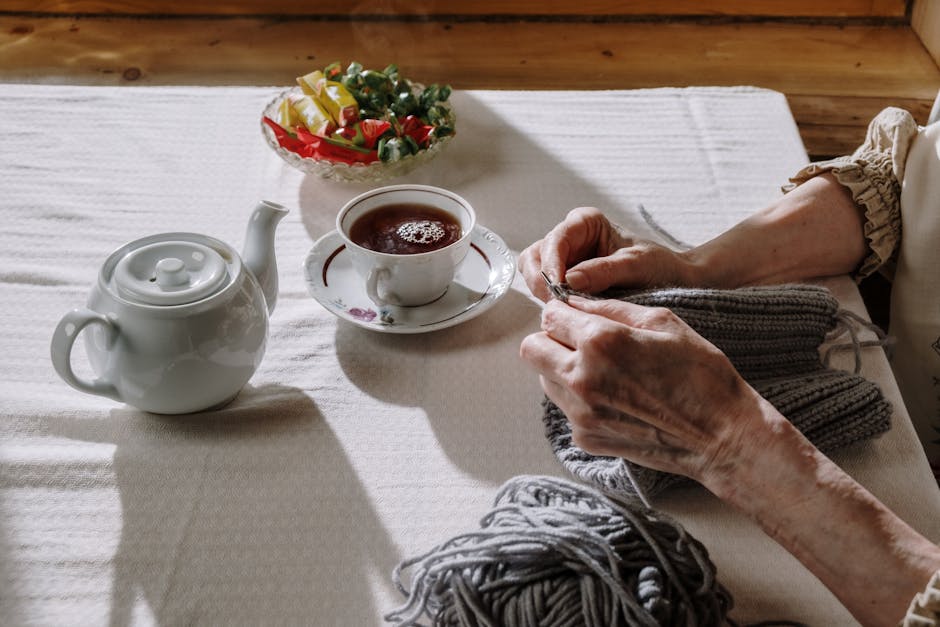
You want to do something real for an aging parent.
And the minute you start thinking about what, you hit a wall.
Their house is already full of things. They can’t easily travel anymore. A department-store gift or a meal voucher feels oddly thin for what this moment actually is.
You want a gift that means something — and nothing on the usual shelf seems to clear the bar.
This piece is for that exact moment of stuck. I’ll walk you through what “a meaningful gift for aging parents” actually looks like — and why a specific kind of gift keeps cutting through when everything else falls short.
- What “a meaningful gift for aging parents” really means — beyond the usual gift-guide noise
- Why gifts that leave behind a symbol or a memory are quietly winning over traditional presents
- The concrete gift formats that aging parents actually hold onto — and why each one works
- Two simple filters for picking a gift you won’t regret a year later
By the end, the direction of a gift you won’t second-guess should be clear enough to actually move on.

What a “Meaningful Gift” Really Means: Memory and Symbol, Not Stuff
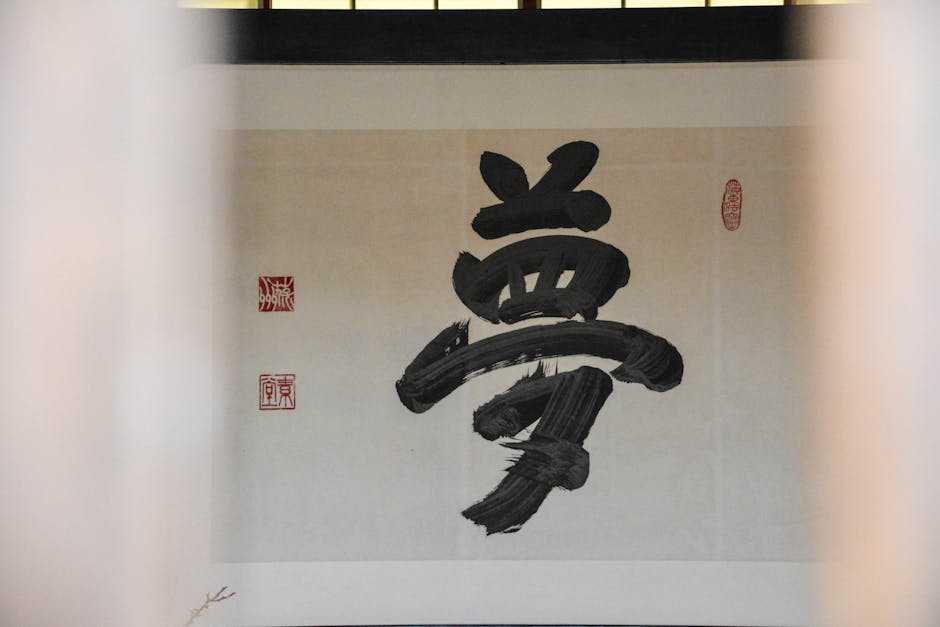
Let’s start by unpacking the phrase itself.
“Meaningful” is one of those words that means different things to different people.
Expensive, useful, trendy, Instagrammable — you can call any of those meaningful and no one’s going to stop you.
But when you line the word up next to “gift for aging parents”, a specific angle comes into focus.
The angle I want to talk about is this: a gift that leaves behind memory and symbol, not just stuff.
That’s what I’ll mean by “meaningful” for the rest of this piece.
Practical Gifts Fade. Symbolic Gifts Don’t.
Practical gifts get used up.
Not a criticism — functional gifts have their place, and a great kitchen knife or a warm robe can bring daily joy for years.
But will you both still remember it as “that gift” in five years? Usually, honestly, no.
Symbolic gifts work differently.
Something that someone put time, thought, and intention into — an experience, a tribute, a prayer carried on someone’s behalf — keeps showing up in the memory long after the object itself has gathered dust.
- Practical: the point is function. The gift gets used, and eventually used up
- Symbolic: the point is meaning. The gift stays in memory long past its physical form
- For an aging parent, the second kind is what turns into “the gift I’ll never forget”
“Symbolic” doesn’t have to mean grand or abstract.
It just means the gift carries a clear answer to “who gave me this, and why” — an answer that stays with the person who received it.
That, in my experience, is the actual core of a meaningful gift.
Saying “Thanks” Lands Differently When It’s Backed by Action
Gratitude delivered as words and gratitude delivered as action don’t land the same way.
“Thanks for everything, Mom” is a real thing to say, and you should say it.
But in my experience, an action your parent can see you took — time carved out, effort spent, something actually done on their behalf — goes deeper, especially with parents from older generations.
Clearing your schedule to visit on a random Tuesday. Arranging something they once mentioned wanting to do. Carrying a wish they never got to fulfill.
These aren’t “gifts” in the department-store sense.
They’re gestures that carry the weight of a gift, because they cost you something to give.
This angle gets missed if you’re only thinking in terms of things to buy. When you broaden the frame to “what action can I deliver as a gift?”, the whole shelf of options changes.


Why “Gifts That Last” Are Winning: The Moment You Notice Time Is Finite
Over the last few years, more families have been gravitating toward gifts that leave something behind for an aging parent.
There’s usually a specific kind of moment that triggers the shift.
You suddenly notice your mother looks smaller than you remembered. Your father’s stride on a walk is shorter than it used to be. On the phone, one parent mentions offhand that long trips are “a bit much these days.”
None of these are dramatic. But each one quietly rearranges how you think about the next gift.
“They’re Still Fine” Stops Being True at Some Point
Once a parent crosses into their 70s, the air around gift decisions shifts.
The “plenty of time, we’ll do it later” frame that worked for years starts to feel less reliable.
Long trips require stamina. Elaborate experiences require stamina. Even when your parent is still healthy, the window of “there’ll be a next chance” is quietly narrowing — whether they say so or not.
Once you feel that, your relationship with gift-giving changes a little.
- 60s: travel and experience gifts still work well — stamina and motivation are usually there
- 70s: choices start narrowing based on the parent’s specific health — shorter experiences land better
- 80s and beyond: mobility-heavy gifts lose ground. Gifts that last — or gifts delivered on their behalf — carry more weight
The tricky part: the shift is easy to miss from the giver’s side.
“My parents are still fine” becomes a quiet default, and years slip by without action.
By the time the shift gets noticed, a lot of families are sitting with “maybe I waited too long” — and that regret isn’t one I’d wish on anyone.
The antidote is simple: choose the kind of gift that actually lands, while your parent is still around to receive it.
Why Milestone Birthdays Make People Reach for Something Bigger
Sixtieth. Seventieth. Seventy-seventh. Eighty-eighth. Milestone birthdays in Japan (and plenty of other cultures) nudge families toward a different kind of gift.
The instinct behind that nudge is simple: “thank you” wants a shape bigger than words.
A milestone is also a natural moment to look at your parent’s whole life, not just their next grocery run.
A nice scarf or a boxed gift set doesn’t quite rise to that.
Which is why a lot of families quietly go searching for a symbol worthy of a once-in-a-lifetime milestone.
“On a birthday like this, I want to give something I won’t regret” — that’s a widely shared feeling, and it’s what sets up the next section.
Let’s get concrete about the formats that actually deliver.

Three Kinds of Meaningful Gifts Aging Parents Actually Hold Onto

When “meaningful gift for aging parents” actually turns into something in the real world, there are three main formats: travel, experience, and prayer.
Each has parents it fits, and parents it doesn’t.
Stamina, interests, outlook — once you factor those in, the difference between “the gift worked” and “the gift fell flat” is mostly about matching the format to the person.
Travel, Experience, Prayer: How the Three Formats Actually Differ
Here’s the quick cut:
- Travel: time spent together is the gift. Requires stamina and open schedules on both sides
- Experience: the day itself — a nice meal, a pottery class, a hot spring, a portrait session — is the gift. Needs some energy, not as much as travel
- Prayer: intention is the gift — daisan (proxy pilgrimage pilgrimage), sutra copying, temple offerings. Receivable at any energy level
No single format is “right” by default.
What matters is matching the format to where your parent actually is.
A healthy 60-year-old parent can still enjoy a domestic trip. That’s great.
But once a parent is in their 80s and long-distance travel isn’t realistic, a gift in the “prayer” column often lands deeper than the other two — precisely because it doesn’t demand anything of them to receive.
- Good stamina, full schedule: travel and experience gifts both work
- Some stamina concerns creeping in: shorter, single-day experiences land better
- Long-distance travel no longer realistic: gifts delivered on their behalf, or prayer-based gifts, fit best
Why Proxy Ohenro Keeps Getting Picked as “The Meaningful Gift”
The gift I keep seeing families quietly converge on for an aging parent: proxy Ohenro — daisan.
Daisan is walking the 88 temples of Shikoku on someone else’s behalf — in this case, carrying a parent’s intention through all 88 sites.
The Ohenro pilgrimage itself dates back to the Heian era over a thousand years ago. The specific custom of walking it on another person’s behalf — daisan — took root among ordinary people during the Edo period and has been part of Japanese culture ever since.
“I can’t walk it myself, but I want the prayer to be delivered” — that’s the ask daisan has answered for centuries.
The proxy walker brings back, at the end of the journey, two physical keepsakes on the parent’s behalf: a nokyocho (the stamp book filled at all 88 temples) and a byakue (read: byakue) — the white pilgrim’s robe, stamped at every single one.
- A real, on-foot pilgrimage gets delivered — in the parent’s name
- A nokyocho filled with all 88 temple seals stays in the family as a genuine once-in-a-lifetime keepsake
- The Edo-period roots of daisan give the gift genuine weight — it’s not a trinket
- It reaches the parent regardless of stamina — no travel, no physical demand required to receive it
The nokyocho is hand-brushed at each temple’s stamp office, temple by temple, by a monk or trained staff member, with vermilion seals pressed over the ink.
Eighty-eight pages of that, bound into a single book, delivered in your parent’s name.
I’ve watched that book get opened at dinner tables, and it lands in a way almost no purchasable gift can replicate.
If you want to look at this gift format more carefully, our piece on giving Ohenro as a gift breaks it down in detail — how it gets delivered, what arrives, who it fits.
Not travel. Not a thing on a shelf. But something that unmistakably stays. That’s the niche daisan fills as a gift.

Two Filters for Picking a Gift You Won’t Regret a Year Later
Okay — directions covered. Now the harder part: actually choosing.
Even with good options on the table, the “is this really the right one?” doubt usually surfaces somewhere in the process.
Here are the two filters I’d keep in mind before you commit to anything.
Does “Why I Picked This” Come Through Clearly?
The default question is usually “how much should I spend?”
Price is one data point — fair enough.
But what parents from older generations actually notice, often more than the price tag, is “what was my kid thinking when they chose this?”
Same dollar amount, different answers to that question — the two gifts land in different worlds.
- Something tied to a place your parent once mentioned wanting to visit
- A gift that maps to their hobby, their values, or a theme from their life
- A gift timed to a milestone year or a date that carries meaning for them
- Something explicitly framed as “I’m delivering this on your behalf, since you can’t”
This kind of gift lands on a different channel. It says “my kid actually thought about me” — and that’s the emotional frequency most parents are listening on.
In my experience, that’s what turns a gift into something people still talk about a decade later.
Pick for “Won’t Forget,” Not “Will Enjoy”
The second filter: not “will they enjoy it,” but “will they still remember it in five years?”
Enjoyable gifts optimize for the moment — the face when the wrapping comes off, the smile that afternoon.
Memorable gifts optimize for later — the conversation three Christmases from now, the book your parent still pulls off the shelf.
Both matter. For aging parents, though, I’ve seen the memorable kind go deeper, almost every time.
- Does the “why I picked this” come through clearly to the receiver?
- Are you optimizing for “won’t forget,” not just “will enjoy”?
Run a gift idea through those two, and the direction firms up fast.
The format that clears both filters most reliably? Gifts that leave a symbol behind.
A proxy Ohenro nokyocho is, in my view, one of the cleaner ways to hit both at once.
Common Questions About Meaningful Gifts for Aging Parents
A few questions come up almost every week from families thinking about this. Here are the honest answers.
- Does a meaningful gift have to be expensive?
- My parents are in their 80s — experience gifts aren’t realistic. What then?
- Won’t a “symbolic” or “spiritual” gift feel too religious for my parent?
- When’s the best time to give a gift like this?
- Should I coordinate with my siblings before picking this kind of gift?
Deliver It Before the Regret Sets In: Meaningful Gifts for Aging Parents, Made Real
To wrap up — here’s the piece at a glance.
- Prioritize “memory and symbol” over “stuff”
- Match the format — travel, experience, or prayer — to your parent’s stamina and outlook
- Put visible thought into the “why I picked this” — make it readable
- Choose for “won’t forget” rather than “will enjoy in the moment”
- Don’t wait for a milestone — deliver it while they’re still healthy enough to receive it
It’s easy to slip into the “what thing should I buy” frame when you’re gift-hunting for a parent.
But what actually carries the gift is the action and the intention behind it, more than the object itself.
If your parent ever mentioned, even offhand, wanting to walk Ohenro in Shikoku — there’s a way to let someone else carry that intention across all 88 temples in their name.
An on-foot pilgrimage, a prayer offered at every temple, and a real nokyocho and byakue returned to your parent at the end of it.
- A real walked Ohenro — every one of the 88 temples, on foot, step by step
- Live video and GPS tracking, so “this is actually happening” is visible the whole way
- A genuine nokyocho, stamped and brushed at every temple in person
- Care for pilgrimage etiquette and the temples themselves — done with the respect the tradition deserves
Plan details, pricing, and how each pilgrimage actually runs are all on our plans and pricing page.
“I want my parent to have a gift they’ll never forget.”
If that’s where you are, you’re already further along than most.
No rush to decide today. Just knowing this option exists is enough for now.
When you do want to look harder — pricing, timing, how to frame it to your parent, anything — reach out through our free consultation. No obligation, and we’ll answer anything that’s on your mind.
![[Ohenro]Shikoku Pilgrimage Proxy Service: Costs and How to Choose a Trusted Provider](https://ohenro-gift.com/en/giftohenro369/wp-content/uploads/2026/03/agency_thumb-300x200.jpg)