
Can’t Make It to the Shikoku Pilgrimage? Real Options to Complete the 88 Temples Anyway
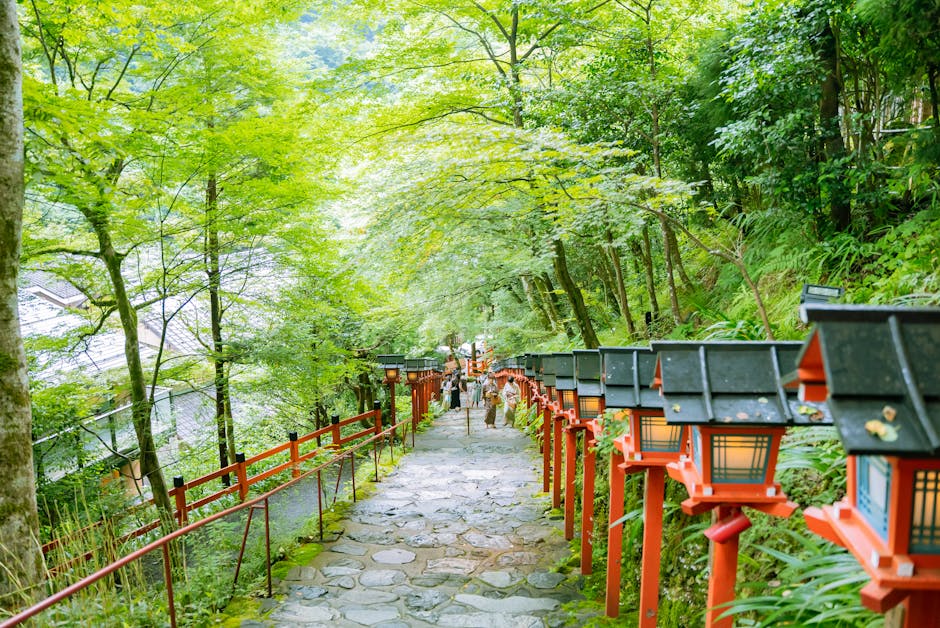
If that sounds familiar, you’re not alone — plenty of people genuinely want to walk Shikoku but can’t make it happen in real life.
Work, family, caregiving, health, distance. Once you actually try to plan a trip to Shikoku, the obstacles start stacking up fast.
The gap between “I want to go” and “I can’t go” only gets wider with age. Honestly, the window for putting it off is shorter than most people think.
But here’s the thing — “I can’t go, so I’ll give up” is actually a pretty hasty conclusion. The Shikoku tradition has built-in options for people who can’t physically make the trip, and they’ve existed for over a thousand years.
In this article, I’ll walk you through the options every “want-to-but-can’t” pilgrim should know about — why people can’t go, three real alternatives, and what the pilgrimage is actually about at its core.
- The 5 most common reasons people can’t make it to Shikoku
- Why “someday” turns into “never” — the psychology behind it
- 3 real ways to complete the pilgrimage when you can’t go yourself
- Why “having someone walk it for you” is a legitimate, traditional choice
- Why the real point of pilgrimage isn’t actually the walking
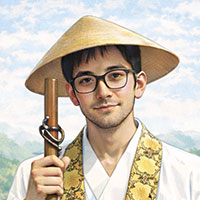
The Reasons You Can’t Go Are Personal — But You Don’t Have to Give Up

The reasons people can’t make it to Shikoku are usually tangled up with each other. It’s almost never just one obstacle — it’s several walls hitting at once.
But none of those reasons mean you have to give up on the pilgrimage itself. Once you sort through what’s actually blocking you, the way forward starts to show up.
No time, no stamina, too far away
The most common blockers are time, stamina, and distance — the classic three. Let me break them down.
- No time: Walking the route takes 45–60 days; even by car it’s over 10 days
- Stamina concerns: 1,200km of road and mountain trails is no joke
- Distance from home: Just getting to Shikoku and back is a haul
- Work constraints: You can’t take that much vacation in one block
- Family obligations: Caregiving, kids, looking after aging parents parents
These are real walls a lot of people are dealing with. “The desire is there, but the body and calendar can’t keep up” is something I hear a lot, especially from folks in their 40s and beyond.
The stamina piece gets harder every year. Someone who said “I’ll walk it someday” in their 50s often hits 60 and thinks “Maybe it’s too late now.” It’s a really common pattern.
And here’s the reality: “the window when you can actually go” is shorter than you’d guess. People plan to go after retirement, then their knees give out before they get the chance. I hear that one on the ground in Shikoku all the time.
By the time the kids are grown, your parents need care. By the time you retire, your own health starts shifting. The moments when free time and physical capacity line up are surprisingly limited.
Why “I’ll go someday” turns into years of nothing
If you want to walk Shikoku but keep saying “someday” while years pile up, there’s some real psychology behind it.
Sorting through what’s going on mentally can help you see your situation more clearly.
- Waiting for perfect conditions: You wait until stamina, time, and money all line up
- Confusing research with action: Reading books and websites starts to feel like going
- Missing every trigger: You don’t move unless something forces it
- It keeps dropping in priority: Work and family commitments push it down the list
- “Next year” on repeat: Procrastination becomes the default mode
This is normal — it happens to everyone. The problem is that while you keep saying “someday,” the chance to actually go often never arrives.
And the reality is, your physical buffer shrinks with time. People say “next year” ten years in a row, and at some point it just isn’t physically possible anymore.
That’s exactly why knowing the options that work even when you can’t go yourself matters. It’s how you avoid waking up at 75 wishing you’d done something differently.
3 Options You Need to Know If You Want to Go but Can’t
There are several options beyond “walk the whole thing yourself, start to finish”. Three real ways to make the pilgrimage happen without abandoning the desire.
Pick the one that fits your situation and budget.
Stage pilgrimage — chip away at it gradually
Stage pilgrimage (kugiri-uchi) means you don’t try to walk all 88 temples at once. You break it into chunks and complete it over multiple trips. This is often the first option people consider.
A typical pattern: one week per year, spread across 5 to 10 trips.
- 1–2 days at a time: Use weekends to cover nearby prefectures
- Prefecture by prefecture: Tokushima → Kochi → Ehime → Kagawa, one at a time
- Pace it to your body and budget: No rush, no pressure
- Take years if you need to: Some pilgrims finish over decades
The strength of stage pilgrimage is “go at your own pace, no pressure.” It’s a realistic option for people short on time or worried about stamina.
The catch is you need staying power. Plenty of people stall mid-way and never restart.
The trick is to set a rough pace upfront. Build a multi-year plan tied to holidays or long weekends, and you’re much more likely to actually finish.
Also, travel and lodging cost s add ups add up across all those trips. Even at a few times a year, the total cost of completing the pilgrimage can be more than people expect — worth keeping in mind.
Just visit the temples you can reach
Another option: skip “all 88” and just visit whichever temples you can actually get to.
Officially, “completion” (kechigan) means visiting all 88. But the pilgrimage as a practice can start with a single temple visit.
- Visit only Temple 1: Get a feel for the pilgrimage at Ryozenji in Tokushima
- Stick to easy-access temples: Pick ones near stations or sightseeing spots
- Tag it onto a family trip: Slot a few temples into your travel plans
- Visit related temples near home: Some affiliated sacred sites exist outside Shikoku
This works as “a doorway into the Shikoku pilgrimage world.” The mindset of “if I can’t do it all, at least I’ll do part” is a real way to honor the wish.
Temple 1 (Ryozenji) sits right at Tokushima’s entrance and is reasonably accessible from the Kansai region too. If you just want to feel the atmosphere once, it’s a good first step.
That said, this approach isn’t “completing the pilgrimage.” If you want a real nokyocho with all 88 stamps on your shelf, you’ll need a different option.
Have someone walk it for you
And then there’s “someone walks the pilgrimage in your place.” A lot of people don’t realize this is even an option, but it’s been around in Japan for over a thousand years.
It blows past the time, stamina, and distance walls in one shot. For people who can’t go, this is a powerful option.
For folks who think “I can’t go, but I want the pilgrimage completed,” this might be the most realistic path. For details on how it actually works and what to watch out for, the guide on having someone walk it for you covers it well.
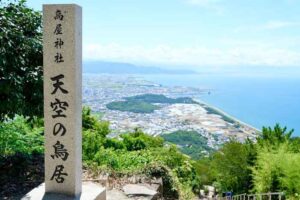
The Surprising Method People Use When They Want the Pilgrimage Done
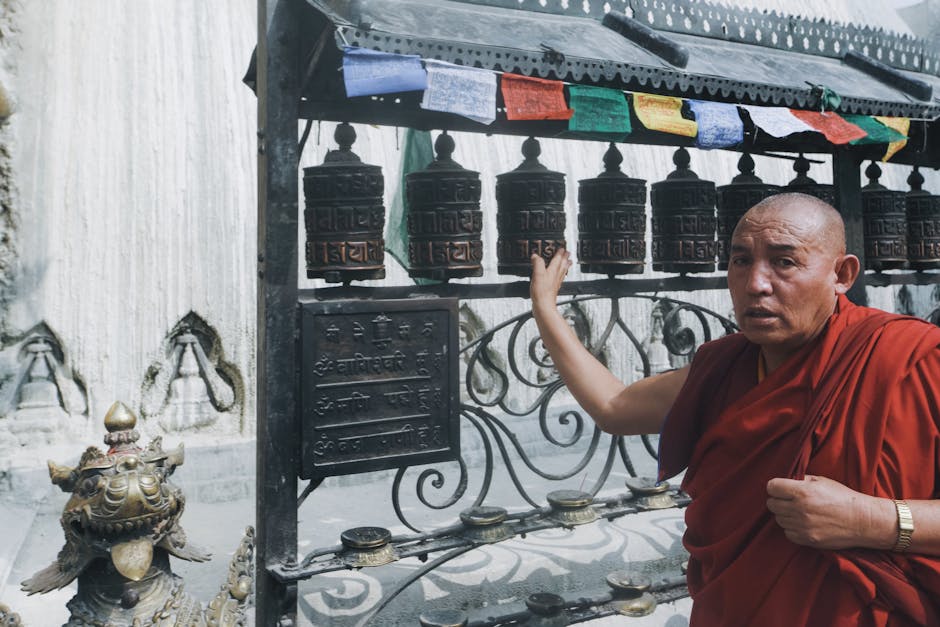
When people who almost gave up on Shikoku actually find a way to make the pilgrimage happen, here’s what they tend to choose.
The thing most folks don’t realize: “having someone go in your place” is actually recognized as a legitimate form of pilgrimage.
“Going on someone’s behalf” is a recognized formal practice
Having someone walk the pilgrimage for you isn’t a new service or a modern compromise. It’s a legitimate form of pilgrimage that goes back over a thousand years — embedded in Japan’s cultural fabric.
In the Edo period, villages used a system called “Ohenro-kō”: villagers pooled money to send one representative on the pilgrimage. The whole village’s prayers got entrusted to one person who’d make the trip.
This idea of having someone make the visit on your behalf has been called “daisan” in Japanese Buddhist culture for over a millennium. When you can’t go yourself due to distance or physical limits, you ask someone you trust — that’s the tradition.
For people back then, Shikoku was incredibly far away. The journey could take months and was genuinely risky, so trusting a village representative with everyone’s prayers was just a normal, accepted choice. “Having someone go for you” wasn’t a corner-cut or a compromise — it was woven into the culture.
So “I can’t go, so I’ll ask someone else” is a traditional, recognized option you don’t need to feel bad about. You could even argue the system exists specifically for people who can’t go themselves.
It wasn’t just the Edo era either — through the postwar and high-growth periods, there were people called “sendatsu” who walked the pilgrimage on others’ behalf as their work. Trusted locals carrying clients’ prayers across all 88 temples. That tradition feeds directly into the modern services.
For more historical background and why daisan is legitimate, see our full article on what daisan is and how it differs from a regular agency service.
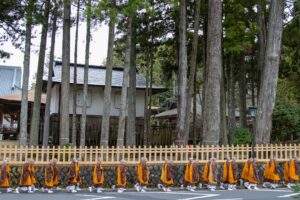
The proof arrives in your hands as a real nokyocho
“If someone else goes, did I really do the pilgrimage?” That’s a fair question. The answer is yes — the pilgrimage actually does count.
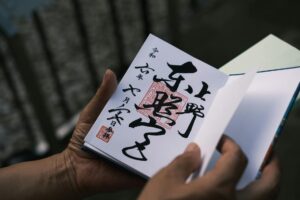
The proof: a real nokyocho gets delivered to you. All 88 stamps and the hand-brushed calligraphy from each temple — a genuine pilgrimage record you keep as the result.
- Real nokyocho: All 88 temple stamps and calligraphy in one unique book
- Verified visits: Formal visits to both the main hall and the Daishi hall
- Prayers delivered: Your wishes spoken at each temple
- Trip report: Photos, videos, and updates from the proxy walk
- Physical record: A tangible piece of evidence the pilgrimage happened
So the part you couldn’t physically do still ends up “arriving in your hands as a completed pilgrimage.” That’s the real-world landing point for “people who can’t go.”
The nokyocho gets hand-brushed at each of Shikoku’s 88 temples — a one-of-a-kind artifact. People often tell me that holding the real nokyocho gives them the solid sense of “the pilgrimage actually happened,” even if they couldn’t be there physically.
Some place it in front of a family member’s portrait. Others on the household altar, or in the living room where they can see it daily. How people relate to the nokyocho once it arrives varies, but because it’s a tangible object, it tends to stay meaningful for a long time.
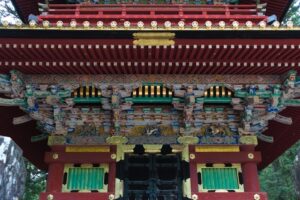
What You Still Get Even When You Can’t Go — Rethinking What Pilgrimage Is About
Some folks feel “if I’m not walking it on my own two feet, it’s not a pilgrimage.” But when you look at the real purpose of the pilgrimage, the picture shifts.
Even when you can’t make it to Shikoku, the essential part of the pilgrimage is still well within reach.
The original purpose isn’t “going” — it’s praying
The original purpose of the Shikoku pilgrimage is prayer, not the walking or the going itself. The act of walking has always been positioned as a method that deepens prayer.
This is core to Buddhist culture: it’s not the action that matters most, it’s “the seriousness of the prayer.”
- The point is the prayer: Offering devotion at the 88 temples linked to Kobo Daishi
- The travel mode is just one method: Walking, driving, taxi, or proxy — all valid
- If the prayer arrives, the pilgrimage counts: How it got there is secondary
- The completed nokyocho is the proof: Tangible evidence that prayer took form
So “didn’t walk it = not a pilgrimage” isn’t actually right. Honestly, fixating on “I have to walk” to the point of giving up the pilgrimage altogether might be straying further from the original purpose than you’d think.
The head priests at temples across Shikoku will tell you the same thing — they care most about “the seriousness of the prayer”. Who walked the prayer there, and how, doesn’t get ranked. That’s the underlying view.
You could even argue that “because I can’t go, the prayers I send carry more weight.” Months of preparation, entrusting your intentions to someone — that level of care means no single prayer feels casual. That orientation is closer to what the pilgrimage is really about.
The merit of the pilgrimage reaches the person who requested it
One of the foundational ideas in Buddhist teaching is that “the merit of pilgrimage reaches the one who asked for it.” That’s the theological grounding for daisan as a practice.
The reason Edo-era villagers chose “having someone go on their behalf” was that this idea was widely understood and accepted.
In the Buddhist view that “prayer circulates,” even when someone prays in your place, the merit reaches you, the person who requested it. It’s the wisdom that keeps people who can’t physically go from being shut out of the pilgrimage world.
This is also why the Edo-era “Ohenro-kō” worked. One village representative walks Shikoku, and the merit reaches every villager who chipped in. That belief has been deeply rooted in Japanese society for a long time.
Once you know this, the worry of “can prayers really reach me if I’m not the one going?” tends to ease up. The pilgrimage has been open to people who can’t go for over a thousand years — that’s the reality.
Even if the unease doesn’t fully disappear, just knowing the option of “I can’t go, so I give up” isn’t the only path can shift how you carry it.
One reason the Shikoku tradition has lasted over a millennium is precisely the generosity of not making it “for the able-bodied only.” Daisan, ohenro-kō, stage pilgrimage, local temple visits — the flexibility to choose your form is exactly why it’s stuck around this long.
Just knowing “I’m not the only one who can’t go” and “people throughout history dealt with the same constraints” can ease some of the guilt. Reading up on what the pilgrimage means and what it’s for tends to open up more ways of relating to it.
Common Questions From People Who Can’t Go to Shikoku
- How long does it take to complete a stage pilgrimage?
- If I have someone walk it for me, does it count as me having gone?
- If my elderly parent can’t go, is it appropriate for the child to go in their place?
- How do I complete the pilgrimage without quitting my job?
- If I have health concerns, should I push through and go anyway?
Don’t Wait for “Someday” — There’s a Form of Pilgrimage You Can Start Now
The reasons people can’t make it to Shikoku usually involve multiple walls — time, stamina, distance, work, family — stacked on top of each other. But options built specifically for people who can’t go have existed for over a thousand years.
What matters is not getting stuck on “going” as the form, and orienting around what the pilgrimage is actually about: the prayer.
- Reasons people can’t go are personal — usually multiple walls combined
- “I’ll go someday” can quietly turn into “the chance never came”
- 3 options exist: stage pilgrimage, local temple visits, or having someone walk it
- “Having someone go for you” is a thousand-year-old recognized form of pilgrimage
- The real point of pilgrimage is “did the prayer arrive” — not “did I go”
Rather than waiting for “someday,” starting in whatever form is possible now tends to be the choice you don’t end up regretting. Regret accumulates in the time you didn’t act.
What matters is that the heart of the pilgrimage is “the intention to pray.” Don’t get locked into “go vs. don’t go” — pick the form that fits your situation. That’s the way of walking the pilgrimage that aligns with its thousand-year-old generosity.
Carrying around “I want to go but I can’t” usually keeps you stuck. Starting in whatever form works moves things forward. Go in the form that’s possible, have someone go for you, or visit nearby — every one of those is a sincere expression of pilgrimage.
If you’re feeling “I can’t go myself, but I want the pilgrimage completed,” Ohenro Gift Bin walks Shikoku’s 88 temples on your behalf — that could be one option to consider. The real nokyocho and on-site records get delivered to you or to whoever you’re sending it for. A form of pilgrimage that reaches even people who can’t go — feel free to start with a free consultation.
▼ Related reads
- How to Have Someone Walk Shikoku for You — Process and What to Watch For
- What Is “Daisan”? Honest Look at the Difference From Agency Services, the History, and the Spiritual Merit
- What Is Ohenro? A Complete Guide to Its Meaning, Purpose, and What It’s For
![[Ohenro]Shikoku Pilgrimage Proxy Service: Costs and How to Choose a Trusted Provider](https://ohenro-gift.com/en/giftohenro369/wp-content/uploads/2026/03/agency_thumb-300x200.jpg)