
What to Do During Mochū After the 49th Day: A Bereaved Family’s Quiet Guide to the Mourning Period

After shijūkunichi wraps, a lot of families describe this strange sudden silence. Does that sound familiar?
Up until the memorial, you were running on adrenaline — arrangements, calls, paperwork, people. Then the moment the service ends, a kind of blank opens up in your chest that nothing really fills.
“What am I supposed to be doing during mochū, as the family left behind?” When you search around, most of what comes up is etiquette — the outward rules — and almost nothing about the inner side.
So this piece walks through both. What mochū looks like emotionally, and what it looks like in actual actions you can take.
- Why grief doesn’t suddenly close at the 49-day mark — and what’s actually happening inside bereaved families
- The concrete things a family can do during mochū: grave visits, memorial rites, sorting keepsakes, daily altar care
- How to translate the “I want to do something for them” feeling into actions that don’t wear you down
- Why daisan (proxy pilgrimage) quietly sits on the list of mochū options worth knowing about
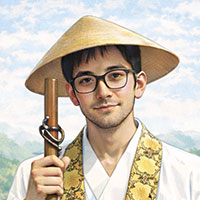
Why Mochū Feels So Unclear: What Bereaved Families Actually Carry After the 49th Day

When people search “what to do during mochū,” in my experience they’re almost never looking for etiquette rules — they’re looking for somewhere to put the feeling.
So let’s slow down and put words to what’s actually going on inside bereaved families right after the 49-day mark.
Why the Grief Doesn’t End When Ki-ake (the End of the 49-Day Period) Does
In Buddhist teaching, the 49th day is traditionally the day the soul of the deceased moves on to the next world.
On the family side, it’s framed as the end of the strict mourning stretch — the return-to-daily-life marker.
But here’s the thing: the heart doesn’t run on a calendar. A lot of people find the grief doesn’t fade at all once the 49 days are done.
Part of this is structural. From the wake, through the funeral, shonanoka (7th day), and shijūkunichi, you’re moving — handling things, signing things, greeting people. The moment that stops, there’s this abrupt drop in momentum.
With nothing left to prepare, you finally end up face-to-face with the plain fact that they’re gone.
The “I Should Be Doing Something” Pull, and the Reality of Not Being Able To
Somewhere during mochū, a restless pull shows up — this sense that I should be doing something. Does that sound familiar?
The frustrating part: no one actually tells you what that “something” is.
Books and articles cover the outward etiquette — mourning-period postcards (mochū-hagaki), whether you can go to a wedding, that kind of thing.
The inward stuff — how a bereaved person can actually spend these months in a way that’s good for them — barely gets written about. I find that gap genuinely striking.
That restless “I should be doing something” feeling? In my experience, it’s usually just love with nowhere to go yet.
Love only really settles once it gets converted into something you can do. So the rest of this piece is about laying those actions out.
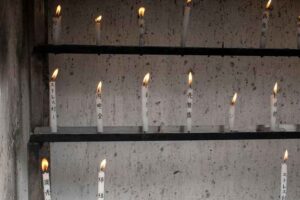
What to Actually Do During Mochū: Concrete Actions Bereaved Families Take to Steady the Heart
From here, let’s walk through the concrete side — the things families genuinely do during mochū.
Nothing on this list is a requirement. Read it with the mindset of “which of these fits me right now, at a pace that won’t break me”.
Grave Visits, Memorial Rites, Sorting Keepsakes: What the Mochū Months Actually Contain
The things bereaved families do during mochū tend to fall into four rough directions.
- Grave visits (ohaka-mairi): monthly death-day, Obon, Ohigan, around the anniversary — whenever it feels right
- Preparing memorial rites: gradually getting ready for hyakkanichi (100th day), isshūki (1-year), sankaiki (3-year) milestones
- Sorting keepsakes (katami-seiri): slowly going through belongings and photos, shaping what gets kept as memory
- Butsudan / ihai care: daily offerings, cleaning, refreshing flowers — folding the altar into ordinary life
Grave visits, past the 49-day mark, are probably the most everyday bridge between a bereaved family and the person they’ve lost.
Once a month, or just at the turn of each season, at whatever rhythm you can sustain without forcing it — that’s what matters more than frequency.
Memorial rites come in order: hyakkanichi (100th day), then isshūki (1-year memorial), then sankaiki (third-year memorial, held on the 2-year mark).
There’s no need to have everything lined up right after the 49th day. Realistically, quietly starting to think toward hyakkanichi or isshūki is more than enough pace.
Turning “I Want to Do Something for Them” Into an Actual Action
Bereaved families carry this specific ache: I want to do something for them.
In my experience, that feeling doesn’t settle until it gets converted into something concrete. It just keeps simmering otherwise.
Roughly three ways people convert it:
- Put it on the record: gather their photos, letters, and memories into an album or written collection
- Fold it into daily life: fix a specific moment each day to face the butsudan, light incense, and sit briefly
- Carry out what they never got to do: the unfinished wish, the place they wanted to visit — you go in their place, and complete it on their behalf
That third one — doing it on their behalf — is the direction a lot of families end up gravitating toward on their own.
A place they’d said they’d like to visit. Something they’d wanted to try. A person they’d meant to reach out to.
When a family picks those up and carries them forward, it ends up feeling less like closure and more like their intention still moving through the world.
If the unfinished wish was specifically Ohenro — “I always wanted to walk Shikoku someday” — I wrote a separate piece that goes deeper on that exact situation.
“He Always Wanted to Walk Shikoku”: Fulfilling a Deceased Loved One’s Ohenro Dream Through Proxy Pilgrimage picks up the same thread from a different angle.
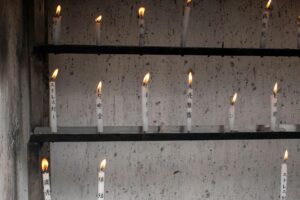
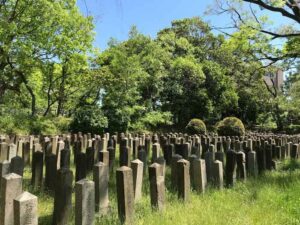
Facing the Deceased Through Kuyō (Memorial Offering): How Mochū Finds Its Rhythm
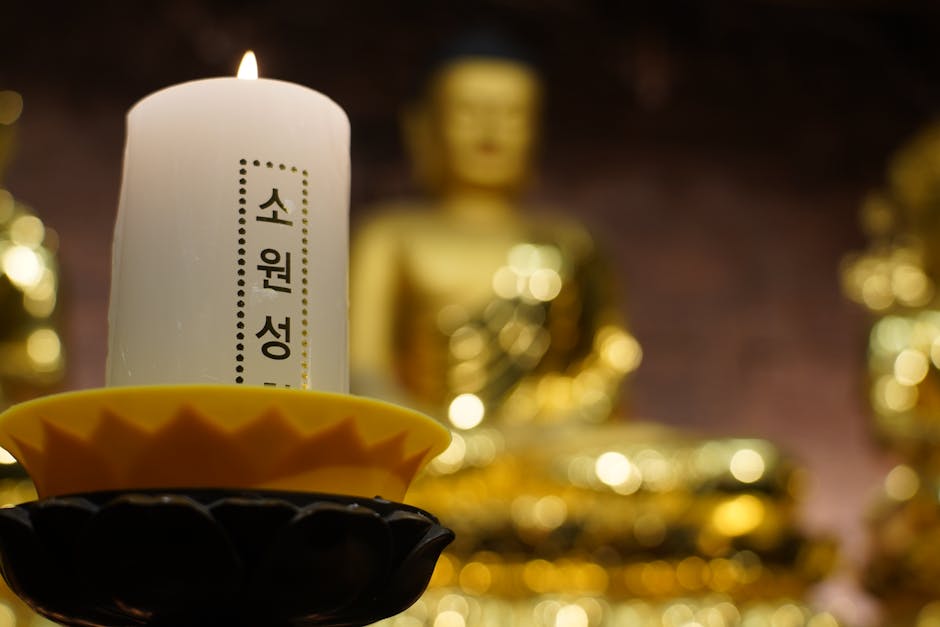
When families place kuyō (memorial offerings) at the center of mochū, something shifts. The heart eases a little. I see it consistently.
The word kuyō sounds formal, but in practice it’s much more a quiet practice woven into daily life than some grand ceremony.
Placing your hands together at the butsudan. Going to the grave on the monthly anniversary. Speaking to your ancestors and your loved one out loud. All of it counts — all of it is kuyō.
On top of that, some families end up wanting a somewhat deeper form of kuyō. That’s where the next option enters the picture: daisan — proxy pilgrimage pilgrimage.
Daisan: A Form of Kuyō That Delivers Prayer on the Deceased’s Behalf
A lot of people hear the word daisan (代参) for the first time in this context.
Daisan means someone walking a temple circuit in place of another person, carrying their prayer there. In the Edo period, villages ran formal daisan-kō (proxy pilgrimage guilds pilgrimage guilds), sending a representative to Ise or Shikoku to bring the prayers home.
In the Shikoku 88-temple context, daisan means a pilgrim walks the full route in place of the deceased, carrying the family’s prayers temple by temple.
This links directly to tsuizen kuyō (posthumous memorial offering) in Buddhist tradition — it’s part of a lineage of offering that stretches back over a thousand years.
- You can reach the deceased even when traveling to Shikoku yourself isn’t realistic
- The nokyocho (pilgrim stamp book) and goshuin come home with the family — something physical to return to during the mochū months
- It sits inside a thousand-year lineage of pilgrimage, quietly preserved and quietly passed down
Daisan isn’t a “should.” It’s one option among the ways a family can spend mochū.
Just knowing it sits there alongside grave visits and memorial rites widens the field of what’s possible. That alone tends to help.
If you want the Buddhist background — why daisan is treated as legitimate kuyō rather than a workaround — I wrote that up separately.
Ohenro Memorial: Walking Shikoku for Someone You’ve Lost — A 1,000-Year-Old Buddhist Tribute is the best starting point for that side of the picture.
Common Questions Bereaved Families Ask About Mochū After the 49th Day
- How long is mochū usually supposed to last?
- Is it acceptable to attend a wedding or other celebration during mochū?
- When should mochū-hagaki (mourning postcards) be sent?
- Is it inappropriate to take a trip during mochū?
- When is it appropriate to start sorting keepsakes (katami-seiri)?
Taking the First Quiet Step: Kuyō as the Anchor of Mochū
So that’s the shape of it — what a bereaved family can do during mochū, from both the emotional and the practical angle.
At the core, it’s simpler than it looks.
- Grief lingering past shijūkunichi is normal — every bereaved family passes through it
- Mochū actions sort cleanly into four directions: grave visits, memorial rites, katami-seiri, butsudan care
- “I want to do something for them” only settles once it’s converted into concrete action
- Putting kuyō at the center of mochū is what most reliably softens the weight
- Daisan — proxy pilgrimage that delivers prayer — sits inside this landscape as a legitimate option
Mochū is the period where a family quietly faces the deceased and slowly puts their own heart back together.
Not knowing what to do yet isn’t a problem. Nothing has to happen fast — whatever pace you move at, you’ll be fine.
If daisan feels like something worth holding as an option inside your mochū, Ohenro Gift-Bin is here for the quiet side of the conversation — we talk with bereaved families all the time, and there’s no pressure to commit to anything.
Plenty of people come in just wanting to hear what this actually is first, and that’s genuinely fine. The entry point doesn’t have to be a booking.
Use the time as a way to sketch out, together, how you’d like to shape the rest of your mochū.
» See service details and pricing
You can also view the full service overview quietly at your own pace.
The Shikoku 88-Temple Proxy Pilgrimage Service: Delivering the Real Ohenro Experience for Someone Else lays out how the service is structured.
▼ Related reading
- Ohenro Memorial: Walking Shikoku for Someone You’ve Lost — A 1,000-Year-Old Buddhist Tribute
- “He Always Wanted to Walk Shikoku”: Fulfilling a Deceased Loved One’s Ohenro Dream Through Proxy Pilgrimage
![[Ohenro]Shikoku Pilgrimage Proxy Service: Costs and How to Choose a Trusted Provider](https://ohenro-gift.com/en/giftohenro369/wp-content/uploads/2026/03/agency_thumb-300x200.jpg)