Special Ohigan Memorial: How to Send Your Feelings to the Deceased During Spring and Autumn Higan
If that’s where your head is at, you’re far from alone — more people sit with this than you’d think.
You’re aware ohigan is a turning point, but distance and time get in the way of doing it properly. That tension is incredibly common in modern life.
Work, kids, miles between you and home, fading stamina. “I want to go but I can’t” — it doesn’t care about your age or station.
In this article, I’ll lay out the special ways to honor the deceased during ohigan, including options beyond the standard grave visit, the way I see them.
- The Buddhist roots that make ohigan a season for ancestral memorial
- What ordinary ohigan looks like and the typical forms of memorial
- Special memorial options beyond the usual grave visit
- The mindset of sending “prayer” rather than physical offerings
- How to send memorial when distance or a busy life keeps you away

What Is Ohigan Memorial? The Meaning of Spring and Autumn Higan, and How People Spend It
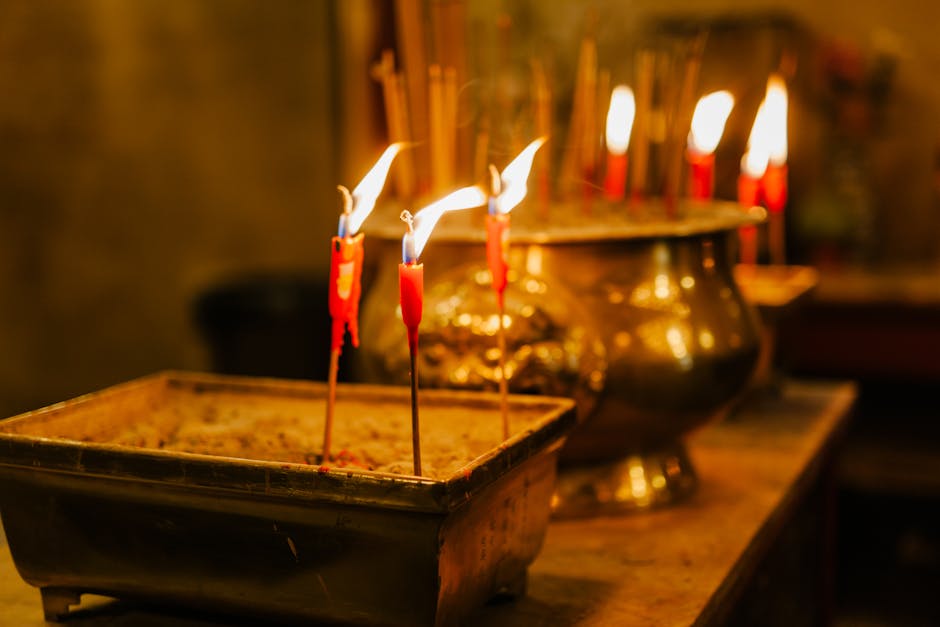
Ohigan is a Buddhist observance unique to Japan. Built around the spring and autumn equinox as the central day, with three days on either side — seven days total of memorial. A twice-yearly turning point that’s been woven into Japanese life for centuries.
Let me sort out what ohigan actually means before going further.
Why Buddhism marks ohigan as a season for ancestral memorial
The “higan” in ohigan is a Buddhist term meaning “the other shore”. It reflects a fundamental Buddhist idea — crossing from the world of the living (this shore) to the world of enlightenment (the other shore).
Here’s why the equinoxes specifically were chosen.
- The sun rises due east and sets due west: a symbolic day for facing the Western Pure Land
- Day and night are equal: a special day where yin and yang sit in balance
- A seasonal turning point: a major pivot in Japan’s four seasons
- The six paramitas: a seven-day window for accumulating six virtuous practices
- Distinctly Japanese: a fusion of Buddhism with agricultural culture
So ohigan got positioned as “a period when the living accumulate good and send prayer to those who’ve passed.” It connects directly to the Buddhist idea of tsuizen memorial.
The fact that ohigan happens twice — spring and autumn — matters too. Two regular chances each year to send prayer to ancestors and the deceased, woven right into the Japanese rhythm of life.
For centuries, the equinoxes have been seen as “the days when the other shore and this shore come closest”. People believed that during this special crossing window, prayer reaches the deceased more easily.
That belief is a uniquely Japanese fusion of nature and Buddhism. You won’t find ohigan in other Buddhist countries — it’s lived deep in Japanese memorial culture all on its own.
What ordinary ohigan looks like and the standard forms of memorial
The typical ohigan revolves around grave visits, tending the family altar, and preparing offerings. Local and household variations exist, but the core shape is recognizable across the country.
Let me lay out the usual rhythm.
Regional and sect-level details differ, but the basic flow is consistent nationwide. Plenty of folks know it from childhood without ever being formally taught.
- Visiting the grave: going on the central day or in the surrounding window
- Cleaning the family altar: polishing the implements, replacing the flowers
- Preparing offerings: ohagi, botamochi, the deceased’s favorite foods
- Higan-e at the temple: attending the memorial service at your bodaiji
- Family meals: gathering with relatives to remember the deceased
Spring’s “botamochi” and autumn’s “ohagi” — same anko sweet, different names tied to the seasonal flowers. Classic Japanese attention to seasonal feel.
The standard rhythm exists to create “important time for honoring ancestors and the deceased”. The form matters less than the chance — it’s a window for the family to think about the person who’s gone, the way I see it.
Some regions have customs like making higan-dango, or carrying offerings directly to the grave. Local variation and family tradition are worth honoring — whatever fits your household is fine.
The fact that the central day is a national holiday (Spring Equinox Day, Autumn Equinox Day) is itself distinctively Japanese. The overlap with a day off makes it natural for families to gather and observe memorial without forcing it.
Generations of grave visits get to stay habitual precisely because the holiday lines up. One reason ohigan has held such a particular place in Japanese culture.
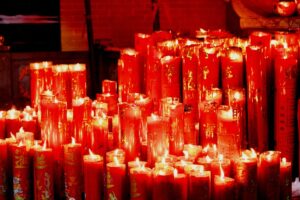
Want a “Special Memorial” for Ohigan? Options Beyond the Usual
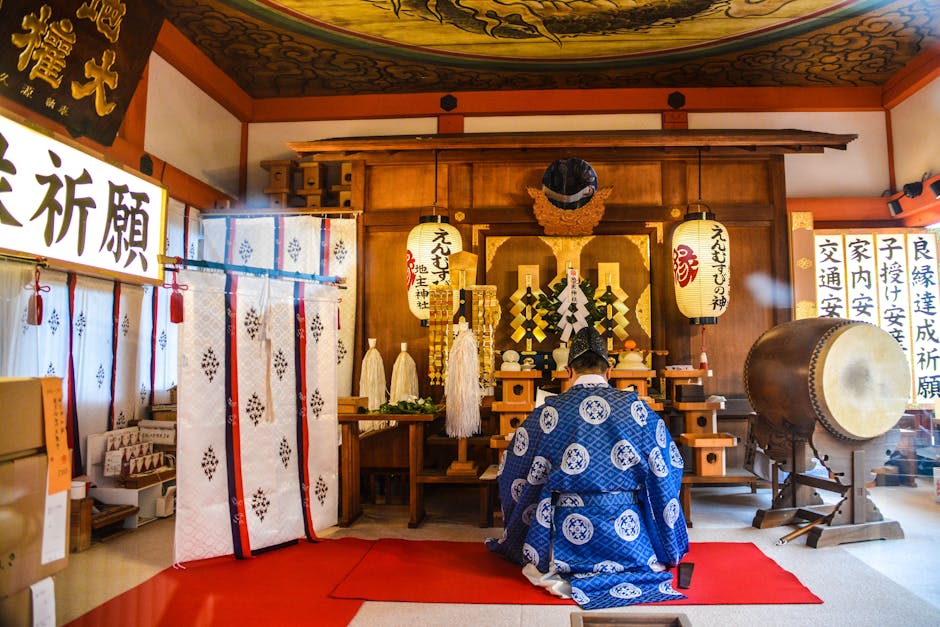
Plenty of folks feel a quiet “is this all?” about the same routine every year. The number of people asking “is there something that reaches the deceased more directly?” keeps growing.
Let me sort out a few options beyond the standard.
How to send memorial when distance keeps you from the grave
If distance physically keeps you from visiting, having a fallback approach takes a load off. “Can’t go” doesn’t equal “can’t honor them” — that’s the part worth holding onto.
Here’s what folks at a distance tend to choose.
- Hands together at the family altar: making time at home in place of a grave visit
- Praying to a photo or ihai (memorial tablet): facing the photo or tablet at home
- Grave-visit proxy services services: a professional handles the visit on your behalf
- Online higan-e: joining a temple’s online memorial service
- Daisan (proxy pilgrimage): having prayer at temples or sacred sites delivered for you
These exist as “a different shape, chosen because the physical visit isn’t possible.” Reframing them as their own form of memorial — rather than a substitute — eases the weight a lot.
The “guilt of not going” that distant family carry is, more often than not, heavier than it needs to be. The original Buddhist view puts intention ahead of form anyway.
The mindset of delivering “prayer” rather than physical offerings
What’s been gaining attention lately is the idea of sending “prayer” rather than things. Treating the feeling itself as the offering, not the object.
Concretely, “delivering prayer” looks like this.
These prayer-shaped memorials, timed to the central day or the surrounding ohigan window, become a special prayer with seasonal weight to them. A different angle from preparing physical offerings — supporting the deceased through the prayer itself.
- Sutra recitation requests: asking your bodaiji to chant sutras for the deceased
- Tōba memorial: dedicating a wooden plaque inscribed with the deceased’s posthumous name
- Goma memorial: fire ritual prayers at Shingon-school temples
- Pilgrimage / daisan: having prayer at sacred sites delivered for you
- Shakyō / shabutsu (sutra and Buddha copying): copying sutras or Buddha images by your own hand
Treating “prayer” as the offering connects right back to the original Buddhist idea of tsuizen memorial. It’s the depth of feeling — not the price tag of the tag of the offering — that supports the deceased.
Buddhism has a concept called “ekō (廻向)” — directing the merit of the living’s good deeds and prayer toward the deceased. Putting weight on the act itself rather than physical offerings is what memorial originally looked like.
In particular, shakyō and shabutsu are accessible prayer-shaped memorials you can do at home. The roughly hour-long stretch of focused copying becomes deep time spent with the deceased.
Choosing Shikoku 88-temple daisan as your ohigan memorial
One prayer-shaped memorial that’s been picking up: daisan along the Shikoku 88 temples. Sending prayer for the deceased along a pilgrimage route with over a thousand years of history.
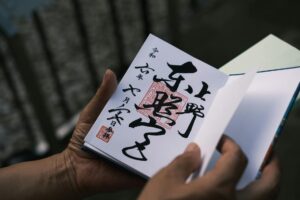
Time the daisan to ohigan, and the nōkyōchō can actually arrive in your hands around the central day. As an alternative for people who can’t make the grave visit, this option keeps coming up more often.
An ohigan-timed daisan delivers something like this.
For more on the meaning of tsuizen memorial, “Why people choose Shikoku ohenro daisan as tsuizen memorial” goes into it more deeply.
Shikoku 88-temple daisan as ohigan memorial gives you “a marker of the season” as part of the deal. Spring brings the cherry-blossom Shikoku landscape; autumn brings the maple Shikoku landscape. The seasonal weight in the pilgrimage report is part of the appeal.
For broader memorial care for the deceased, “Why people choose ohenro daisan as memorial for the deceased” is worth a look too. More folks are choosing it as an ohigan-timed offering each year.
The strength of an ohigan-timed daisan lies in being “a special memorial keyed to a specific seasonal turning point.” Different from everyday hand-clasping at the family altar — it stays in memory as a memorial tied to that turning point.
For Anyone Who Can’t Make It to the Grave for Ohigan: Sending Memorial Despite Distance or a Busy Life
“I want to go for ohigan, but I can’t.” This particular weight is genuinely common. Worth not carrying alone — there are realistic ways through it.
Let me sort the options by situation.
Whether you live far away, or you’re in the thick of working years, or aging has made getting out harder. Modern memorial has shapes built for each situation.
Realistic options when distance genuinely makes it impossible
If distance keeps you from the grave, you don’t have to give up on a meaningful memorial. Plenty of forms now exist that travel beyond physical distance.
Let me lay out the realistic ones.
The key is not letting “I can’t make the grave visit” turn into something pessimistic. The Buddhist take on tsuizen memorial puts “the heart that thinks of the deceased” ahead of the form. Even when you can’t physically go, the feeling reaches them through other shapes.
- Asking a relative to visit on your behalf: family that lives nearby steps in
- Using a grave-visit proxy service: a professional handles it and sends back photos
- Same-time memorial from home: putting your hands together at home on the central day
- Family video call: everyone joining at once via video
- Going later instead: scheduling the visit after ohigan with breathing room
The real key is “don’t fixate on the central day”. The Buddhist view never tied the memorial to a specific date — it’s the heart that counts.
People often deflate over not making the central day, but here’s the saving grace: ohigan runs seven days. Working a weekend on either side of the central day usually opens up a workable window.
Memorial options when age and stamina make it harder
More people find grave visits themselves getting physically harder as they age. Before defaulting to “I can’t do it anymore,” it’s worth looking at the new shapes.
Here are the options worth considering for older family members.
- Daily memorial at the family altar: a steady at-home rhythm
- Family doing the visit on your behalf: sons, daughters, grandkids stepping in
- Grave closure and eternal memorial: planning ahead for the long term
- Professional grave-visit proxy: hand it to a pro and receive the report
- Online attendance: joining the temple service via video from home
For folks who can’t get out, daily memorial at the family altar in particular becomes a precious place of prayer. Beyond ohigan itself, the daily hand-clasping is the strongest possible memorial for the deceased.
People often feel a quiet shame about “not being able to make the visit,” but the deceased wouldn’t want that. A shape that lets you keep memorial going in good health is what actually matters most, the way I see it.
Pushing through and ending up unwell or falling — that becomes the bigger worry from the deceased’s side. Looking after your own health is, in its own way, part of the memorial picture.
Daily hand-clasping at the family altar is a small memorial that compounds when you keep it up. Even a few minutes a day stacks into real depth over the years. Don’t lock onto ohigan — daily memorial pulls more weight than the calendar.
Family coordination is the other key. When you can’t go, handing it off to nearby relatives, kids, or grandkids works. Whole-family memorial — that’s the angle for keeping it sustainable.
For specifics on how proxy services actually work, the complete ohenro daisan guide is worth checking too.
![[Ohenro]Shikoku Pilgrimage Proxy Service: Costs and How to Choose a Trusted Provider](https://ohenro-gift.com/en/giftohenro369/wp-content/uploads/2026/03/agency_thumb-300x200.jpg)
FAQ on Special Ohigan Memorial
- If I can’t visit the grave during ohigan, am I being disrespectful to my ancestors?
- Is it okay to do the memorial on a day other than ohigan’s central day?
- If I want to request daisan for ohigan, how early should I start?
- How long should I keep doing ohigan memorial?
- If I request daisan, can I skip the grave visit?
Turning Your Feelings for the Deceased Into Form, at the Ohigan Turning Point
Ohigan is a twice-yearly turning point for ancestral memorial that carries real weight. A precious window built into Japan’s seasons, where the feeling of remembering the deceased gets sent on a regular rhythm.
The standard grave visit is a fine shape, but for folks far away, deep in busy years, or losing stamina, other options always exist. Not getting trapped by form — finding a shape you can actually keep — is what matters.
- Ohigan is a twice-yearly memorial period centered on the spring and autumn equinoxes
- Beyond the standard grave visit, there are special memorial options worth knowing
- The mindset of sending “prayer” rather than physical offerings is gaining traction
- Distance, busy lives, and aging don’t shut down memorial — other shapes work
- Beyond form, the steady “remembering of the deceased” is what carries the weight
Ohigan itself is protected time for confirming “we haven’t forgotten them”. Even when the form isn’t perfect, as long as the feeling keeps going, that’s enough, the way I see it.
Spring higan, autumn higan — remembering the deceased inside each season’s particular air. A memorial chance built right into the four seasons, sustained without force.
For those who can visit the grave, do it with care; for those who can’t, pick another shape. Neither is the “correct” answer. Expressing the feeling for the deceased within whatever your situation allows — that’s the heart of ohigan.
If you find yourself thinking “this year, I want to send something more special than usual”: Ohenro Gift Bin — walking the 88 temples of Shikoku to deliver prayer — could be one of those options.
A real nōkyōchō and a record of the pilgrimage that lands as a special ohigan memorial in your hands. The depth of prayer that physical objects can’t quite carry, given a form that does.
When the nōkyōchō arrives during the spring or autumn higan window, you can place it on the family altar and share the time with ancestors and the deceased. It works as a special turning-point memorial — different from ordinary days.
The whole family can sit with the nōkyōchō and let stories of the deceased come back to the surface. That kind of time is itself a respectable form of ohigan memorial — a space for emotional connection that physical offerings rarely create on their own.
Pricing, the actual mechanics, how to time it for ohigan — anything worth asking, please reach out via the plan and LINE consultation page. Even just a question is fine.
“We live far away — does that still work?” “How do we land it on the central day?” — specific questions get straight, honest answers, one by one. Moving forward only when you’re convinced is what we want too.
Spring higan, autumn higan. A twice-yearly memorial turning point — keep it in whatever shape works for your family. Don’t lock onto a perfect form; pick a shape you can keep, and let the feelings for the deceased ride that.
▼Related reads
- Tsuizen-Kuyō from the Ground Up: Buddhist Meaning and Modern Forms of Memorial Care
- Why People Choose Ohenro Daisan as Memorial for the Deceased
- The Complete Ohenro Daisan Guide: Pricing, Process, and How to Choose a Trusted Provider