Obon Memorial Through Ohenro Daisan: Sending Prayer From Shikoku to Your Ancestors
If that’s where your head is at, you’re far from alone — more people sit with this than you’d think.
Obon makes you want “to send something special to ancestors and the deceased” — that pull is natural at this turning point. The “is the usual really enough?” pause hits a lot of people.
Distance, caregiving, stamina, work schedules. “I want to go but I can’t” shows up in countless real situations.
In this article, I’ll lay out how Shikoku 88-temple daisan can serve as a special Obon memorial, the way I see it.
- The Buddhist meaning behind Obon and why it became a memorial season
- The standard ways Obon is observed
- Special memorial options beyond the usual grave visit
- The mindset of giving “prayer” a tangible form
- Why Shikoku 88-temple daisan fits Obon, and what lands in your hands

What Is Obon Memorial? The Seasonal Meaning of Sending Prayer to Ancestors

Obon is the most familiar season of ancestral memorial in Japanese life. Mid-August (or July in some regions), the period when the spirits of the deceased are believed to return to their families.
Let me start by sorting out what Obon actually means.
The Buddhist meaning and origin of Obon memorial
Obon’s formal name is “Urabon-e (盂蘭盆会).” Rooted in the Buddhist sutra “Urabon-kyō,” it took shape over centuries as the season for honoring ancestors and the deceased.
Here’s what’s actually happening, Buddhism-wise.
- Origin of Urabon-e: based on the story of the Buddha’s disciple Mokuren saving his mother
- Return of the spirits: the period when ancestors return from the other shore to their family
- Mukae-bi and okuri-bi: welcoming fires and farewell fires for the spirits
- Shōryō-uma: cucumber (horse) and eggplant (cow) figures as vehicles for ancestors
- Tsuizen memorial: the Buddhist concept of redirecting the merit of the living to the deceased
So Obon is “the season for the family to welcome ancestors back from the other shore and express gratitude.” A major memorial chance, alongside ohigan, that comes once a year.
The essence is “the whole family thinking about ancestors together.” Once a year, that gratitude that doesn’t surface day-to-day gets dedicated time.
The Buddhist view of tsuizen memorial holds that the merit accumulated by the living can be redirected to the deceased. Obon memorial sits squarely on this “ekō (廻向)” framework.
The standard ways Obon gets observed
The standard rhythm is welcoming fire, grave visit, offerings, and farewell fire. Local and household variation exists, but the core shape is consistent across the country.
Here’s the typical flow.
- ①Setting up the bondana / shōryō-dana: a separate altar to welcome ancestors
- ②Welcoming fire (the 13th): lighting a small fire at the entrance to invite the spirits in
- ③Grave visit: families visit the cemetery between the 13th and 15th
- ④Offerings: the deceased’s favorite foods, seasonal fruit, Bon sweets on the altar
- ⑤Farewell fire (the 16th): sending the spirits back to the other shore
Some regions still keep bon-odori dances and shōryō-nagashi (lantern-floating) traditions, with neighborhood-wide ancestral memorial still alive.
The standard rhythm exists to create “protected time for the family to be together and remember the deceased.” Less about the form and more about the chance to gather around the memory, the way I see it.
With nuclear families and dual-income households more common, the traditional Obon is harder to keep going for many households today. Less form, more sustained intent — that frame matters.
Versus ohigan: ohigan covers spring/autumn turning points; Obon is the full summer memorial — they complement each other rather than compete. Multiple memorial chances across the year, each with its own meaning.
Want a Special Obon Memorial? Options Beyond the Standard
The same routine year after year leaves a quiet “is this all?” feeling for plenty of people. The number of folks asking “is there a memorial that reaches ancestors more directly?” keeps growing.
Let me sort out the options beyond the standard.
Memorial options when grave visits aren’t possible
For folks who can’t make the grave visit due to distance, a fallback approach takes a load off. “Can’t go” doesn’t equal “can’t honor them” — that’s worth holding onto.
Here are the options.
- Memorial at the family altar / bondana: setting time at home to remember
- Praying to a photo or ihai: facing the photo or memorial tablet at home
- Grave-visit proxy services: a professional handles the cemetery on your behalf
- Group services at the temple: attending the temple’s Obon memorial service
- Daisan (proxy pilgrimage): prayer delivered at a sacred site on your behalf
These exist as “a different shape, chosen because the physical visit isn’t possible.” Reframing them as their own form of memorial — not a substitute — eases the weight a lot.
The “guilt of not going” that distant family carry is, more often than not, heavier than it needs to be. The original Buddhist view puts intention ahead of form.
The mindset of giving “prayer” a tangible form
What’s been gaining attention lately is the idea of sending “prayer” rather than things. Treating the feeling itself as the offering, not the object.
Concretely, “giving prayer a form” looks like this.
- Sutra recitation requests: asking your bodaiji to chant sutras for the deceased
- Tōba memorial: dedicating a wooden plaque with the deceased’s posthumous name
- Daisan along sacred routes: prayer at the Shikoku 88 or other sites
- Shakyō / shabutsu (sutra/Buddha copying): copying sutras at home as memorial
- Goma kitō: fire-ritual prayers at Shingon-school temples
Treating “prayer” as the offering connects directly to the original Buddhist idea of tsuizen-kuyō. It’s the depth of feeling — not the price tag of the offering — that supports ancestors.
Buddhism’s “ekō (廻向)” framework holds that the merit of the living’s good deeds can be directed to the deceased. Putting weight on the act itself rather than physical offerings is what memorial originally looked like.
Especially daisan along a sacred route fits the rhythm of Obon. The nōkyōchō can be timed to arrive on Obon’s central day (August 15), turning into a memorial with real seasonal weight.
For the broader idea of tsuizen memorial, “Why people choose Shikoku ohenro daisan as tsuizen memorial” goes deeper. Worth pairing with this read.
Ohenro Daisan as Special Obon Memorial: Prayer Delivered From Shikoku
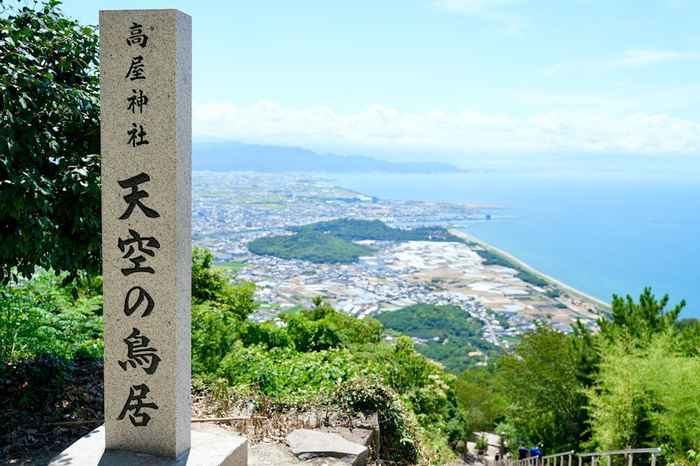
Choosing Shikoku 88-temple ohenro daisan as Obon memorial is something more people are picking. A pilgrimage route with over a thousand years of history, used to deliver prayer for ancestors and the deceased.
Let me work through how Obon and ohenro daisan fit together.
Why Obon and ohenro daisan are a natural fit
Obon and ohenro daisan are a natural fit for several reasons. Both Buddhist logic and modern-life logic line up here.
- Both are tsuizen memorial: connected through the Buddhist concept of ekō
- Serious ancestral memorial: prayer at the 1,200 km / 88-temple scale
- Aligns with a once-a-year turning point: lands during Obon’s protected time
- Distance doesn’t block it: prayer reaches even if you can’t make it to Shikoku
- Tangible record: a real nōkyōchō ends up in your hands
The strongest fit comes from “the once-a-year turning-point feel.” Like ohigan, anniversaries, or first-year memorial, it overlays cleanly on a season already weighted with thinking about ancestors.
Buddhist tsuizen memorial and Kobo Daishi tradition both run on the “delivering prayer to those who’ve passed” axis. Obon and Shikoku daisan ride the same line.
If “my late parents always said they wanted to walk Shikoku” describes the situation, Obon daisan can fulfill that wish on their behalf. Continuing their unfulfilled intent as a turning-point memorial is showing up more often.
For broader thinking on memorial for the deceased, “Why people choose ohenro daisan as memorial for the deceased” is also worth a look.
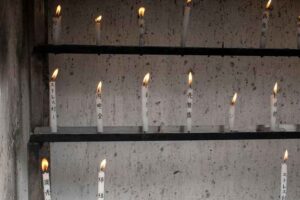
What ohenro daisan delivers to ancestors and the deceased
What an Obon daisan request actually delivers comes in two layers — the tangible record and the formless prayer itself.
Here’s the breakdown.
- A real nōkyōchō: seals and calligraphy from all 88 temples, the tangible proof of prayer
- Pilgrimage report: photos, video, GPS records from each temple
- Byakue dedication: a record of the white pilgrim’s coat with your name dedicated
- Prayer-content record: confirmation of what the prayer covered
- “Dōgyō ninin” with Kobo Daishi: the depth of a thousand-year tradition
The real nōkyōchō in particular, placed on the family altar during Obon, becomes something the whole family can share with ancestors. On the bondana, it functions as a record of prayer for the returning spirits.
Both “prayer” and “record” land in your hands. A space for emotional connection that physical offerings rarely create opens up during the family’s Obon gathering.
If you want “the nōkyōchō to land on Obon’s central day” specifically, starting three months ahead makes it realistic. Obon-timed memorial is showing up more as an option people choose.
FAQ on Obon Memorial and Daisan
- If I can’t visit the grave during Obon, am I being disrespectful to my ancestors?
- Is it okay to do the memorial on a day other than Obon’s central day?
- If I want to request daisan for Obon, how early should I start?
- If I request daisan, can I skip the grave visit?
- Who do people typically request Obon daisan for?
This Year’s Obon: Send a Special Prayer From Shikoku to Your Ancestors

Obon is the year’s most serious season for ancestral memorial. The protected time when families gather and express gratitude to those who’ve passed.
The standard grave visit is a fine shape, but for folks far away, deep in busy years, or losing stamina, other options always exist. Not getting trapped by form — finding a shape you can keep — is what matters.
- Obon is the Japanese form of Urabon-e — a once-a-year ancestral memorial period
- Beyond the standard grave visit, special memorial options worth knowing
- The mindset of giving “prayer” a tangible form is gaining traction
- Shikoku 88-temple daisan fits Obon naturally as a memorial form
- Starting three months ahead makes central-day delivery realistic
Obon itself is the year’s most important time for the family to think about ancestors. Even when the form isn’t perfect, as long as the feeling reaches them, that’s enough, the way I see it.
If “this year I want to send something more special than usual” describes the feeling — Ohenro Gift Bin, walking the 88 temples to deliver prayer, is one option to consider.
A real nōkyōchō and a record of the pilgrimage land as a special Obon memorial in your hands. Place it on the family altar or bondana, and the whole family can share the time with ancestors.
For pricing, the mechanics, or how to time it for Obon — anything worth asking, please reach out via the plan and LINE consultation page. Even just a question is fine.
“Does this work even though we’re far away?” “How do we land it on the central day?” — specific questions get straight, honest answers, one at a time. Moving forward only when you’re convinced is what we want too.
This year’s Obon, protected time for the family to think about ancestors. The Shikoku 88 has held a thousand years of prayer — your prayer can land with the same weight.
▼Related reads
- Why People Choose Ohenro Daisan as Memorial for the Deceased
- Tsuizen-Kuyō from the Ground Up: Buddhist Meaning and Modern Forms of Memorial Care
- The Complete Ohenro Daisan Guide: Pricing, Process, and How to Choose a Trusted Provider
![[Ohenro]Shikoku Pilgrimage Proxy Service: Costs and How to Choose a Trusted Provider](https://ohenro-gift.com/en/giftohenro369/wp-content/uploads/2026/03/agency_thumb-300x200.jpg)