“He Always Wanted to Walk Shikoku”: Fulfilling a Deceased Loved One’s Ohenro Dream Through Proxy Pilgrimage
“I want to walk Ohenro someday.” Those words, said in passing by someone you loved.
You meant to take them while they were still strong enough. Work, caregiving, the daily grind — the window kept getting pushed. And at some point, quietly, it closed for good.
“I should have moved when I had the chance” — that low, steady regret sits with more families than people realize.
But here’s the thing: a loved one’s dream doesn’t have to end with “we ran out of time.” There’s a way to carry it forward — someone walking the 88 temples of Shikoku on their behalf. It’s called daisan, proxy pilgrimage.
- Why an offhand “I want to walk Ohenro” stays in a grieving family’s mind long after the person is gone
- How daisan (proxy pilgrimage) has functioned as a legitimate way of carrying on someone’s wish for over a thousand years
- What the family physically receives: nokyocho, goshuin, and byakue (the pilgrim’s robe)
- The basic flow — from consultation through the walk to delivery — and what to prepare about the deceased
Why “I Want to Walk Ohenro” Stays With the Family Long After They’re Gone
When someone mentions they want to walk Ohenro, the words tend to land deeper in the listener than in the speaker.
It’s not like saying “I want to go to Hawaii someday.” Ohenro carries faith, a sense of life’s milestones, a quiet weight that sits differently in the chest.
Which is exactly why, after the person is gone, those words don’t fade out with all the other conversations. They stay.
The Quiet Regret of “We Didn’t Get to It” — and the Wish That Won’t Let Go
“If I’d just had a little more time, I could have taken them.” I hear that line almost weekly.
When they were working, matching schedules on a weekend was nearly impossible. By the time retirement opened up some breathing room, their legs couldn’t handle the walk anymore.
Before anyone realizes what’s happening, the window for Shikoku closes completely.
This isn’t a rare story. In my experience, it’s the standard timeline for most families who end up thinking about proxy pilgrimage in the first place.
Regret and love sit very close to each other.
The weight of “I didn’t get to do it” is usually a measure of how deeply the person was loved. That feeling needs somewhere to go, or it quietly accumulates for years.
How Families Choose to Keep a Loved One’s Dream From “Ending”
When someone passes, their unspoken promises and unfinished dreams tend to get archived as “things that can no longer happen”. That’s the default.
Ohenro, though, sits differently in the cultural landscape.
On these pilgrimage routes — walked for more than a thousand years — there’s a long-standing practice of the living walking on behalf of the deceased. That wasn’t a sentimental invention; it was baked into the pilgrimage from early on.
Through daisan, a loved one’s dream stops being “closed” and becomes “delivered.” That shift in framing matters more than it looks.
This connects directly to a Buddhist concept called tsuizen — merit transferred on behalf of the deceased — which I’ve written about in more depth elsewhere.
If the tsuizen framing is new to you, our piece on proxy pilgrimage as tsuizen memorial tribute is worth a read alongside this one.
Can a Proxy Walk Really “Fulfill” Their Dream? Ohenro’s Answer Goes Back a Thousand Years
Anyone considering daisan ends up at the same question.
“If someone else walks it, does that actually count as fulfilling what they wanted to do?”
This is the part most outside observers don’t know: in the world of Ohenro, proxy walking has been walking has been recognized for centuries as carrying on someone’s wish, not as a workaround for one.
Daisan as “Carrying the Wish”: The Meaning and the Thousand-Year History
Ohenro has a core concept called dōgyō ninin — literally, “two walking as one.”
The idea: the pilgrim is never walking alone. Kōbō Daishi walks alongside every walks alongside every step. That phrase is inscribed on the byakue (the pilgrim’s robe) and on the wooden staff every Ohenro carries.
And from early on, these pilgrimage routes were also roads walked on behalf of those who’d passed.
People walked for a sick family member’s recovery, for ancestors, for the unfulfilled dreams of someone now gone.
By the Edo period, entire communities ran something called daisan-kō — village associations where a designated walker would travel to Ise or Shikoku carrying the prayers of everyone back home, including those who had already died.
To put it plainly: daisan is a cultural mechanism built specifically for carrying on someone’s wish, and it’s been refined across more than a thousand years.
- Ohenro is grounded in dōgyō ninin — the walker is accompanied by Kōbō Daishi, regardless of who initiated the walk
- Edo-period daisan-kō established the cultural precedent of carrying prayers on someone else’s behalf — including the deceased’s
- Sutra recitation and stamp collection at every temple function as merit (ekō) formally dedicated to the person being honored
Walking with someone else’s wish on your back carries a weight that ordinary travel simply doesn’t accumulate.
The phrasing isn’t “having someone go in their place.” It’s “having someone walk, and deliver.” That nuance is the whole substance of daisan.
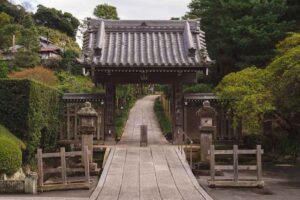
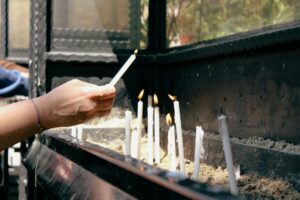
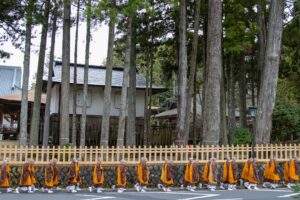
What a Proxy Walk Actually Delivers: The Physical Evidence a Dream Reached the End of the Route
The defining feature of daisan, to my eye, is this: the prayer arrives back at the family in a physical form.
Chanting and sutra-copying become offerings through the act itself, and that’s it. Daisan does both: the act of walking, plus durable physical evidence of it.
The stretch of Shikoku your loved one wanted to see shows up at your home as a book you can actually hold.
Nokyocho, Goshuin, Byakue: What Arrives in the Family’s Hands
Three main objects come back at the end of a memorial daisan:
- Nokyocho: a single bound book filled with the calligraphy and vermilion seals collected at all 88 temples
- Goshuin: vermilion stamps from both the main hall and the Daishi hall at each temple — the formal record of the visit
- Byakue (read: byakue): the pilgrim’s white robe, with “dōgyō ninin” inscribed across the back
The nokyocho is the book the walker receives at each temple after reciting sutras at the main hall and the Daishi hall — not a souvenir, a record of the prayer being offered.
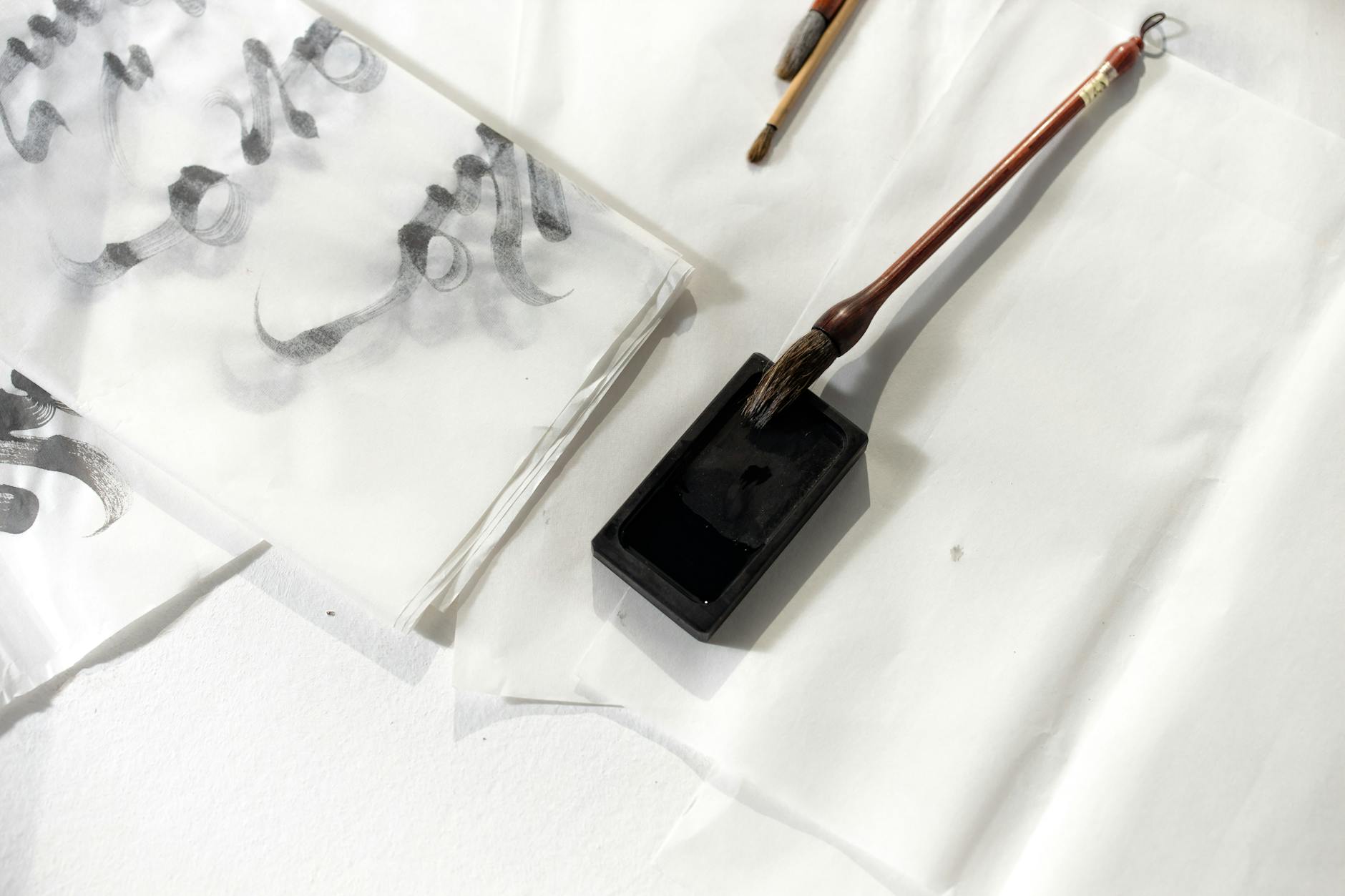
As of the April 2024 revision, the stamp fee is ¥500 per temple — ¥44,000 total across all 88 (roughly $300 USD).
That figure was set officially by the Shikoku Reijokai, and it’s built into our pricing structure the same structure the same way.
The byakue is the white robe that pilgrims traditionally wear on the walk.
For a memorial daisan, the walker can wear a byakue inscribed with the deceased’s legal name or kaimyō (posthumous Buddhist name) through all 88 temples.
After the walk, that same byakue is delivered to the family — effectively, a robe that holds 88 temples of prayer woven into it.
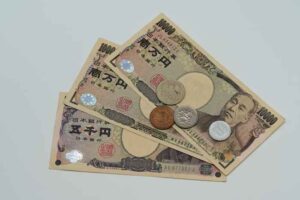
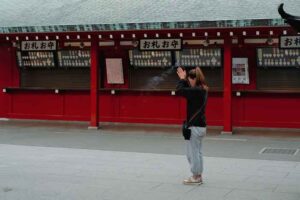
If You’re Thinking About It: The Basic Flow From First Conversation to Delivery
If “daisan” is a new word for you, knowing where to even start can feel unclear.
You don’t need to commit to anything upfront — just knowing the general flow makes the decision much easier to sit with.
Below is the overall process from initial consultation through the end of the walk, plus the kind of information about the deceased that helps most.
Consultation → Commission → Walking → Delivery: How the Process Actually Runs
The basic flow breaks into four steps:
- Consultation: we talk through who the deceased was and what you want to deliver to them
- Commission details: pilgrimage plan, timeline, byakue inscription, and any specific wishes are finalized
- The walk: the walker covers all 88 temples of Shikoku, offering prayers at each one
- Delivery: the nokyocho, byakue, and related items are handed over to the family
The walking period runs 20 to 60 days depending on the plan. Shikoku’s temples look genuinely different across the four seasons, and families sometimes pick the season the deceased loved best.
Throughout the walk, we also provide GPS tracking and live video, so the family can see the walker’s current location and witness the prayer being offered in real time.
What to Prepare About the Deceased (and How to Write the Intention)
At the consultation stage, the information we gather about the deceased typically centers on legal name, kaimyō (if they received one), and the context of the wish itself.
The background — why they wanted to walk Ohenro — matters especially. That context shapes how the walker holds the person in mind at each temple.
- The deceased’s legal name (as used in life)
- Kaimyō / posthumous Buddhist name, if one was given (not required — daisan works without one)
- Buddhist denomination (Shingon isn’t required — any denomination is fine)
- The story or feeling behind their wish to walk Ohenro — even a single sentence helps
- The intention you want delivered (healing, memorial, gratitude, etc.)
You don’t need to have everything lined up before reaching out. Most families figure it out piece by piece during the conversation.
The formal intention — gan-i — tends to be written as a single line of what the family wants delivered to the deceased, in the family’s own words.
If you’re worried about whether proxy pilgrimage counts as disrespectful in the first place, I’ve covered that head-on in a separate piece.
Our piece on proxy Ohenro for memorial tribute at the 49th-day and first-anniversary rites goes deeper on that angle.
Common Questions About Fulfilling a Deceased Loved One’s Ohenro Dream
- Does a proxy Ohenro still carry meaning if the deceased never actually mentioned wanting to walk it?
- It’s been years since they passed. Is it too late to commission a daisan for their dream?
- Our family isn’t Shingon Buddhist. Can we still commission a daisan for our loved one?
- Can we commission one daisan to honor multiple deceased family members at once?
- We live far from Japan. Can we still commission a proxy pilgrimage?
Carrying the Dream to Shikoku — Now, On Their Behalf
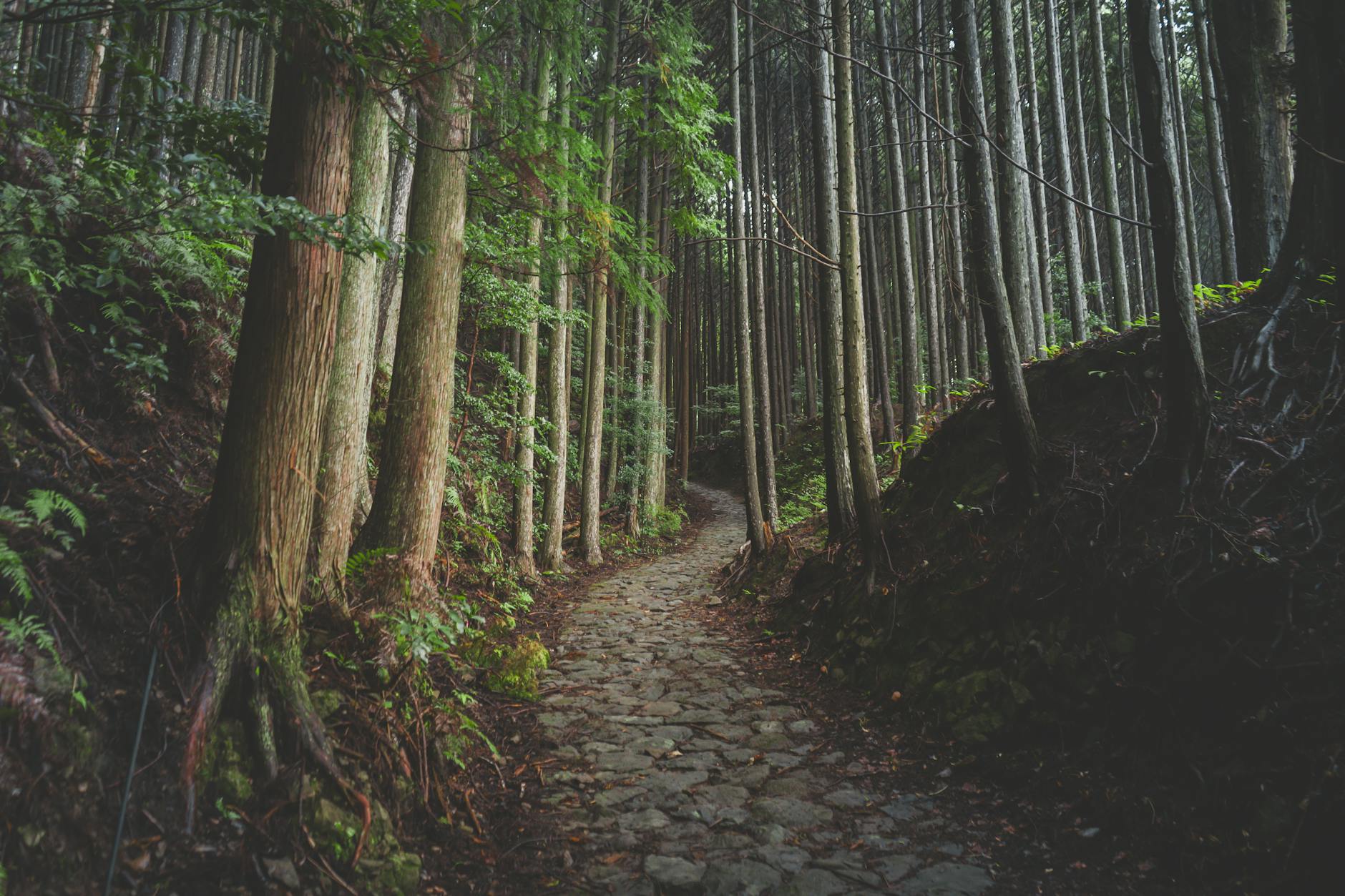
We’ve walked through fulfilling a deceased loved one’s “I want to walk Ohenro” through proxy pilgrimage from several angles.
The core of it, honestly, is pretty simple.
- “I want to walk Ohenro” said in passing stays with the family long after the person is gone
- Daisan has functioned for over a thousand years as a cultural mechanism for carrying on someone’s wish
- Nokyocho, goshuin, and byakue arrive at the family’s hands as physical evidence of the prayer delivered
- The commission starts with consultation — you don’t need all the information about the deceased upfront
- Even years after the person passed, there’s no such thing as “too late” for a memorial daisan
“I can’t do anything for them anymore” — a lot of families carry that quietly for years. You don’t actually have to.
A loved one’s dream can still be moved onto the Shikoku route, from today. That’s the single thing I most wanted this piece to leave you with.
Plan details, pricing, denominational concerns, how to translate the dream into a formal intention — whatever you need to ask is fine.
You don’t need to commit to anything. “I just want to talk through it” is a completely valid entry point.
Think of the consultation as time to shape the contour of how you want the dream delivered — together, without pressure.
» See plan details and pricing
If you’d like to see the full scope of the proxy pilgrimage service first, the overview page has everything in one place.
Authentic Ohenro proxy pilgrimage service — walking Shikoku’s 88 temples on your loved one’s behalf lays it all out.
▼Related reading
- Proxy Ohenro as Tsuizen Memorial Tribute: Delivering Prayers to a Loved One Across Shikoku’s 88 Temples
- Ohenro Memorial: Walking Shikoku for Someone You’ve Lost — A 1,000-Year-Old Buddhist Tribute
![[Ohenro]Shikoku Pilgrimage Proxy Service: Costs and How to Choose a Trusted Provider](https://ohenro-gift.com/en/giftohenro369/wp-content/uploads/2026/03/agency_thumb-300x200.jpg)