Healing Prayer at Shikoku’s 88 Temples: How a Proxy Pilgrimage Carries Your Wish for Recovery
When someone you love is in the middle of a long illness, the sense of your own helplessness can be almost physical.
Medicine is for the doctors. What’s left for you is prayer. You want to stand at a sacred place and ask for their recovery — but distance, schedule, and plain energy keep blocking the door. That tension isn’t rare. Plenty of people quietly live inside it.
There’s an older solution hiding in Japanese tradition, called daisan — proxy pilgrimage.
You ask someone else to walk the route, visit each temple, and carry your wish for healing as they go. Having a prayer delivered on your behalf is a practice that’s been alive in Japan for over a thousand years — and Shikoku’s 88-temple route is one of the places where that tradition still gets used today.
- Why Shikoku’s 88 temples became such a natural place to pray for healing
- How proxy pilgrimage differs from going yourself — and why Buddhism treats both as valid
- What physically lands in your hands as proof the prayer was delivered
- When a proxy pilgrimage fits better than a nearby shrine or temple visit
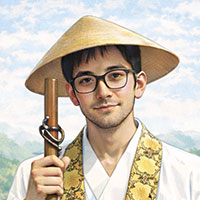
Why Shikoku’s 88 Temples Became the Place to Pray for Healing — Kobo Daishi and a Thousand Years of Compassion
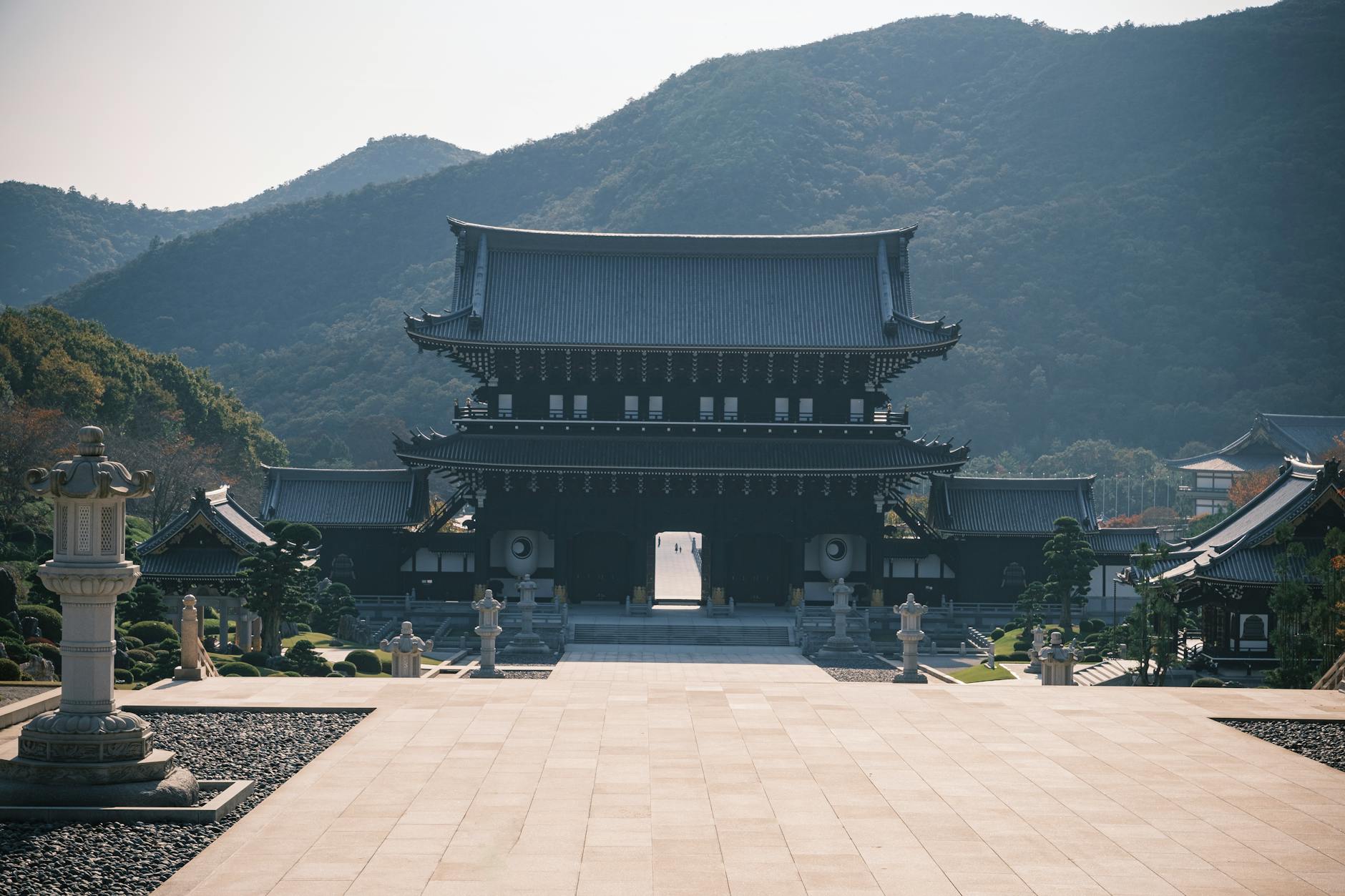
Shikoku’s 88-temple pilgrimage has been a place people went to pray for recovery for well over a thousand years.
This isn’t a sightseeing loop that got repackaged. Ordinary people have walked this route carrying their own illness, or a loved one’s, since long before most of modern Japan even existed. The reason Shikoku in particular became the healing destination comes down to two things: Kobo Daishi, and a Buddha specifically associated with medicine.
Let’s start with the history.
The Route Kobo Daishi Opened, and a Thousand-Year Thread of Healing Prayer
The 88-temple route is traditionally said to have been opened by Kobo Daishi — also known as Kukai — during the Heian period.
Kukai was the founder of the Shingon school of Buddhism, and he chose the mountains of Shikoku as a training ground. One of the central ideas he carried his whole life was shujō kyūsai — saving ordinary people from suffering. That included physical suffering. That included illness. The culture of pilgrimage on Shikoku grew out of that compassion, not out of tourism.
So from the beginning, healing was baked into the route.
- The route was opened by Kobo Daishi, whose whole ministry was grounded in relieving people’s suffering
- Since the Heian period, ordinary people have walked it carrying their own or their family’s illness
- The concept of dōgyō ninin — “two traveling as one” — says Kobo Daishi walks beside every pilgrim
- Over centuries, the path itself got soaked in the language of prayer and recovery
Dōgyō ninin is the emotional core of the whole pilgrimage.
You’re technically walking alone, but Kobo Daishi is understood to walk beside you the entire way. When a proxy pilgrim carries your prayer for someone’s recovery, the belief is that Kobo Daishi carries it too. That’s not marketing. It’s genuinely how generations of Japanese families have thought about the route.
Why So Many of Shikoku’s 88 Temples Enshrine the Medicine Buddha
Here’s a detail that surprises people outside Japan: a large chunk of Shikoku’s 88 temples enshrine Yakushi Nyorai — the Medicine Buddha.
Yakushi Nyorai is Buddhism’s healing deity. He’s usually depicted holding a small medicine jar, and he’s been prayed to for physical recovery since Buddhism first arrived in Japan. That association runs deep.
More than 20 of Shikoku’s 88 temples have Yakushi Nyorai as their principal deity.
- Temple 1 — Ryōzen-ji The very first temple on the route. Enshrines Yakushi Nyorai, and it’s where most pilgrimages begin
- Temple 23 — Yakuō-ji The name literally points to Yakushi Nyorai, and it’s been a destination for healing prayer for centuries
- Temple 26 — Kongōchō-ji A mountain temple near Cape Muroto, also enshrining Yakushi Nyorai
- Temple 75 — Zentsū-ji Kobo Daishi’s birthplace. A Yakushi Nyorai temple with the weight of being the head temple of the whole tradition
At temples like these, people are still showing up today to pray for a loved one’s recovery.
A pilgrimage route this heavy with Medicine Buddha temples is genuinely rare on a national scale. When Japanese families say “if you’re praying for someone’s health, Shikoku is the place,” that history of Yakushi Nyorai temples is a big part of why.
With the history in place, let’s look at what you actually do when you can’t walk the route yourself.
You Can’t Go — But Your Prayer Still Can: What Proxy Pilgrimage Actually Is
You want to pray for someone’s recovery at Shikoku, but realistically, you can’t go.
Maybe you’re the one doing the caregiving. Maybe Shikoku is an ocean away. Maybe your energy is already spent before the workday even ends. Whatever the reason, the inability to physically go doesn’t make the prayer any less real. And that’s exactly the gap proxy pilgrimage was designed to fill.
Let me walk you through how it works, starting with where the practice came from.
The Long History of Proxy Pilgrimage, and What It Really Means Compared to Going Yourself
Daisan means worshipping or making a pilgrimage on someone else’s behalf.
It sounds like a modern service, but the practice goes back to the Heian period — over a thousand years. Even back then, family members, monks, or trusted messengers would visit sacred sites on behalf of someone who was too ill or too old to go. The prayer was the point. Who delivered it was secondary.
The practice only grew from there.
By the Edo period, proxy pilgrimage was widespread. Entire villages would pool resources and send one representative to Ise, Kumano, or Shikoku — a system called daisan kō, where one person carried the wishes of dozens. Delegating a prayer to someone else who could physically reach the site was a completely normal part of Japanese spiritual life.
- Going yourself You show up in person, walk the route, and offer the prayer with your own voice and feet
- Proxy pilgrimage Someone else reaches the temple for you, delivers your name and your wish, and walks the same sacred ground in your place
- In Buddhist thinking, both forms deliver the prayer — the difference is in the method, not the weight
- What matters is the wish reaching the temple. The form it travels in has always been treated as secondary
So proxy pilgrimage isn’t a watered-down substitute.
You’re asking a pilgrim to carry a very specific wish — healing for this person — all the way to Kobo Daishi and Yakushi Nyorai on your behalf. It’s a division of labor: the person who can’t go supplies the wish, and the person who can walks it to the temple.
If you want to dig deeper into why proxy pilgrimage isn’t considered disrespectful and how it’s historically been treated, there’s a companion piece worth reading.
What Is Daisan? The Centuries-Old Ohenro Custom of Walking on Someone Else’s Behalf
So What Actually Reaches You? The Physical Proof the Prayer Was Delivered
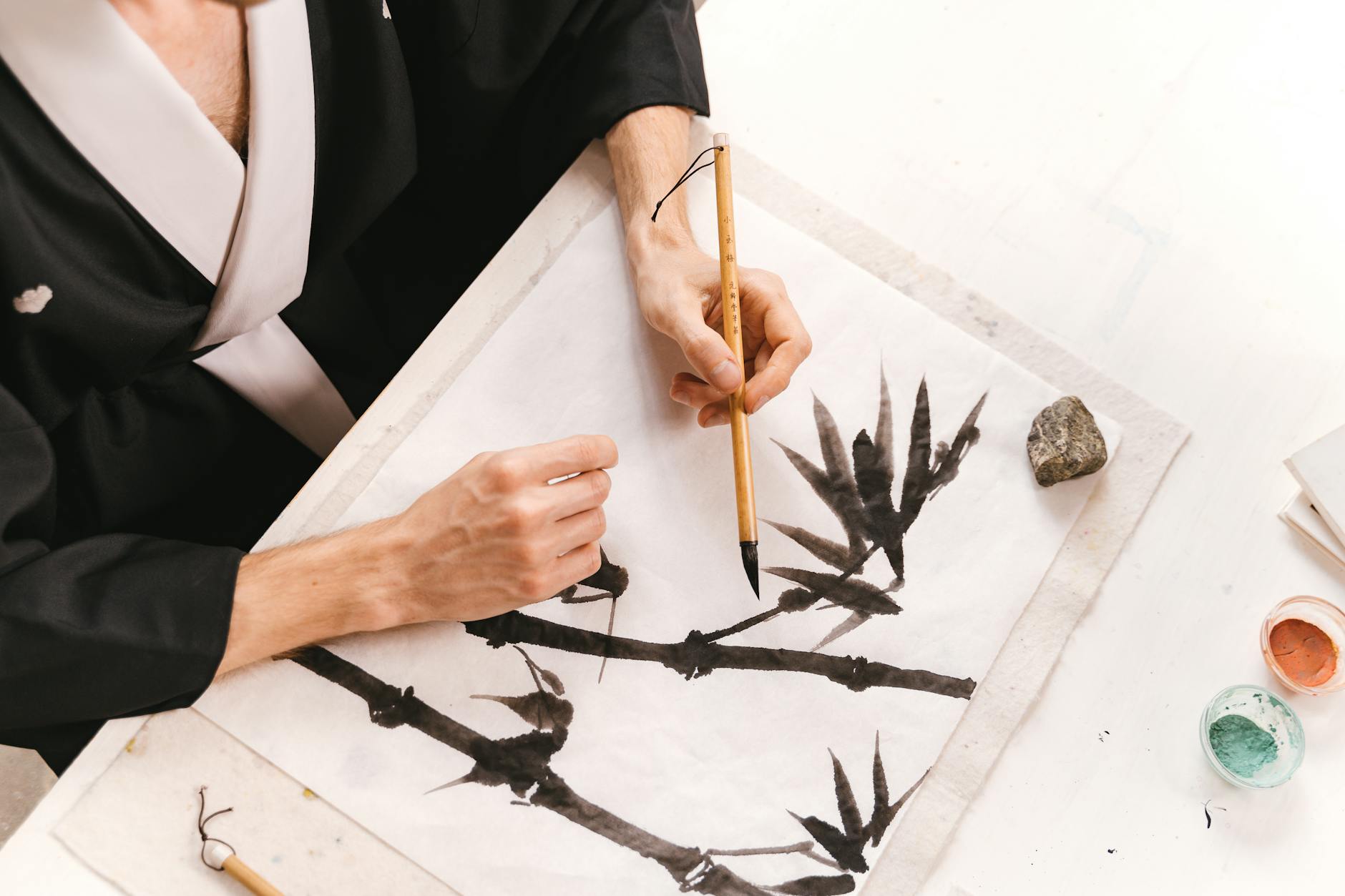
One of the things that sets proxy pilgrimage apart is that the prayer doesn’t just evaporate into the air.
Something physical makes it back to you. For the person who’s ill, and for the family around them, that tangible proof becomes something to hold on to. It’s a lot harder to feel adrift when you can literally open a book and see where the prayer went.
Here’s what you’re likely to receive.
The Nokyocho and Its Seals Come Home as Evidence of the Prayer
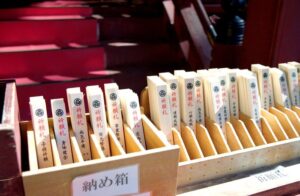
The centerpiece is the nokyocho — the pilgrim’s prayer book.
The nokyocho is what the pilgrim carries from temple to temple. At each one, they recite sutras at both the main hall and the Daishi hall, and a temple priest inscribes the book to record that the prayer was offered. It’s not a sightseeing stamp book. The origin is completely different.
Inside the nokyocho, each temple leaves its seal.
The seal is hand-brushed calligraphy of the temple’s name or the deity’s name, stamped in red vermilion. There’s no printer involved — a temple priest physically does the work, one temple at a time. Over the course of a proxy pilgrimage, these seals accumulate until the book itself becomes the record of the whole prayer journey.
- The nokyocho A pilgrim’s prayer book where each temple inscribes proof that your prayer was offered
- Temple seals The hand-brushed calligraphy and red vermilion stamps that accumulate page by page
- The byakue (white pilgrim’s robe) The garment the pilgrim wears — the recipient’s name can be written on it, and some temples will seal it too
When these reach your hands, the pilgrimage stops feeling abstract.
If the person in treatment is able to receive the nokyocho, they can see, visibly, that this volume of prayer was offered for them. They can turn the pages, trace the seals, and feel the weight of it. That physical contact is part of why the practice has survived for this long.
For more on how the nokyocho differs from a regular goshuin stamp book and why the real thing carries weight, this companion piece walks through the whole history.
Nokyocho vs Goshuincho: What Sets the Shikoku Pilgrimage Stamp Book Apart
Proxy Pilgrimage Is One Option Among Several — Here’s How It Stacks Up
Praying for someone’s recovery has more than one valid route.
A proxy pilgrimage is one of them, not all of them. I’m not here to tell you it’s the right answer for every family. What matters is picking the form that fits your situation. So before anything else, let’s lay the options side by side.
Shrines, Temples, Proxy Pilgrimages — How the Main Healing-Prayer Options Compare
You can broadly group healing prayer into three kinds of option.
Each fits different situations, and there’s no universal winner. The best choice depends on your distance, your time, and the depth of the prayer you want to offer.
| Option | What it involves | Best for |
|---|---|---|
| Prayer at a local shrine | A short visit for a blessing or purification at a nearby Shinto shrine | You want to offer a prayer quickly and there’s a shrine nearby |
| Prayer at a Buddhist temple | A goma fire ritual or healing service at a temple that enshrines Yakushi Nyorai | You want to stay inside the Buddhist tradition and there’s a temple accessible |
| Shikoku proxy pilgrimage | A pilgrim walks Shikoku’s 88 temples in your place and carries your prayer | You can’t reach Shikoku, but you want a full-weight prayer delivered there |
Local shrines and temples win on convenience.
Proxy pilgrimage wins on the weight of the route itself. Having a real walking pilgrim carry your prayer across Shikoku’s 88 temples is just a different order of magnitude than a thirty-minute shrine visit. Neither is “more correct” — they’re answers to different questions about how deep you want the prayer to go.
When Proxy Pilgrimage Quietly Becomes the Right Fit
Proxy pilgrimage tends to get chosen when going yourself isn’t realistic.
The exact reasons vary from one household to another, but the emotional starting point is consistent: you want to pray and you can’t physically go. These are the scenarios I hear most often.
- The patient, or their spouse, is currently in a hospital and can’t leave the bedside
- The caregiver family is locked in by work, childcare, or eldercare and can’t travel to Shikoku
- The person you’re praying for is too frail for long-distance travel or a walking route
- The family lives outside Shikoku — overseas, often — and the distance is simply too much
- There’s hesitation about a specific temple for religious reasons, but the family still wants the prayer delivered
Families in the middle of someone’s illness are almost always fighting the clock.
You’re visiting the hospital, parsing what the doctor just said, keeping your own life running, and underneath all of it is this steady pull of I want to do something more. A proxy pilgrimage is one of the shapes that pull gets to take. If you’re thinking specifically about a family member in hospital, there’s a piece focused on that exact case.

Frequently Asked Questions About Healing Proxy Pilgrimage on Shikoku
Here are the questions people most often bring up when they’re thinking about a healing-focused proxy pilgrimage.
- If I pay for a proxy pilgrimage, does that mean the illness will actually go away?
-
No one can promise that. A proxy pilgrimage is the act of offering healing prayer at Shikoku’s 88 temples — not a replacement for medical treatment. Think of it as a form of emotional and spiritual support that runs alongside the medicine, not as a competing treatment. It’s the right choice for people who find meaning in the prayer itself.
- Should I tell the person who’s ill that I arranged a proxy pilgrimage?
-
It really depends on their temperament and how they’re doing. If they’re open to pilgrimage or prayer, knowing about it tends to be a genuine source of comfort. If they’re the type to feel like you’re making a fuss over them, some families wait until the person has recovered and then hand over the nokyocho as a quiet gift. It’s worth talking through inside the family first.
- Can someone from a different Buddhist school — or no tradition at all — still request healing prayer on Shikoku?
-
Absolutely. Shikoku’s 88 temples are rooted in Shingon Buddhism, since Kobo Daishi founded that school, but the route has historically welcomed pilgrims from every background. A healing prayer doesn’t require matching sectarian credentials. If you have any concerns, a free consultation is the best place to ask specific questions before committing.
- How long does a proxy pilgrimage actually take?
-
A walking proxy pilgrimage across all 88 temples generally takes somewhere between 45 and 60 days. If time pressure is a factor — a specific medical milestone, for example — the schedule can be adjusted. A pre-booking consultation is the right place to talk through those constraints and see what’s realistic.
- What’s the difference between a shrine-bought omamori and the nokyocho from a proxy pilgrimage?
-
An omamori is a single-point prayer in a small charm — one visit, one request, compact by design. A nokyocho is the accumulated record of prayer offered across Shikoku’s full 88 temples, with hand-brushed calligraphy and a temple seal for each one. They serve different roles, and families often use both. The question isn’t which is “better” — it’s how much pilgrimage weight you want behind the prayer.
Sending Healing Prayer from Shikoku to Someone You Love

You want to pray for someone’s healing, and you can’t make it to Shikoku yourself.
Proxy pilgrimage exists exactly so that wish doesn’t dead-end in your living room. Getting a prayer delivered through someone else is a practice rooted over a thousand years deep in Japanese spiritual life. The fact that you’re even weighing this option means the prayer is already in motion.
- Shikoku’s 88 temples have been a healing destination for over a thousand years, since Kobo Daishi opened the route
- More than twenty of those temples enshrine Yakushi Nyorai — the Medicine Buddha — which shaped the route’s reputation for recovery prayer
- Proxy pilgrimage dates back to the Heian period and carries the same prayer weight as going in person
- The prayer comes home in a physical form: the nokyocho, its temple seals, and the byakue (white robe)
- Proxy pilgrimage is one valid option among several — the right answer depends on your situation
It’s not a magic wand.
But when a nearby shrine or a hospital waiting room isn’t big enough to hold the prayer you want to offer, knowing that Shikoku’s 88 temples are still a place you can send that wish changes the shape of the landscape. The willingness to act on someone else’s behalf is, in itself, the first shape a prayer takes.
- A real walking pilgrimage The pilgrim visits Shikoku’s 88 temples on foot, carrying your loved one’s name and prayer
- A nokyocho with actual temple seals Each temple’s priest inscribes it in person as proof the prayer was offered
- Name-inscribed byakue On request, the pilgrim’s white robe is marked with the name of the person you’re praying for
- Live video updates from the route So the family can share the walk as it’s happening, not just afterward
- A flexible itinerary We adjust length and pace based on your situation and any medical timing you’re working around
Healing prayer doesn’t come with a single correct answer, so the hesitation you might be sitting with is totally understandable.
If you’re thinking “I don’t even know if this is the kind of thing I’m allowed to ask about” — that’s already the shape of a question worth asking. Ohenro Gift treats consultation as a conversation, not a commitment. Putting the wish into words is a perfectly valid first step.
» See Ohenro Gift’s plans and pricing
![[Ohenro]Shikoku Pilgrimage Proxy Service: Costs and How to Choose a Trusted Provider](https://ohenro-gift.com/en/giftohenro369/wp-content/uploads/2026/03/agency_thumb-300x200.jpg)