Serious Ganakake at the Shikoku 88: How Daisan Delivers Real Prayer at Life’s Turning Points
If that’s where your head is at, you’re far from alone — more people sit with this than you’d think.
You’re after a form of prayer that matches the weight of the moment, not just a casual hand-clasp at the local shrine. That instinct shows up regardless of age or background.
A new job, a wedding, a child being born, a recovery, an exam. The moments that really matter are the ones that pull “I want to pray for real” out of you, the way I see it.
In this article, I’ll lay out what serious prayer at the Shikoku 88 temples looks like, and how daisan (proxy pilgrimage) works as a way to deliver it — without pushing anything.
- The difference between an ordinary ganakake (prayer wish) and the Shikoku 88-temple route
- The Buddhist reasons the 88-temple pilgrimage is considered “serious”
- What daisan means and why it’s a legitimate way to deliver prayer
- Why people who pray seriously tend to choose “prayer with a tangible form”
- How to actually start moving when you want daisan for a turning point
For Anyone Wanting Serious Prayer: How Shrines, Temples, and Shikoku 88 Differ
What does “serious” prayer actually mean? The weight of place and time directly translates into the weight of prayer — that’s how prayer was always meant to work.
Let me start by sorting out the difference between ordinary prayer and the Shikoku 88 route.
Ordinary prayer wishes vs. the Shikoku 88-temple pilgrimage
An ordinary ganakake gets done at the local shrine, neighborhood temple, or your family’s tutelary deity. Easy to drop in on — but the “weight” of it depends almost entirely on how you show up.
Shikoku 88 sits in a fundamentally different category.
- Pilgrimage scale: prayer that spans 88 temples and roughly 1,200 km
- Time required: 45–60 days on foot, 10–15 days by car
- Kobo Daishi faith: a religious tradition over a thousand years deep
- Dōgyō ninin: the unique idea of walking together with Kobo Daishi
- Nōkyōchō: physical seals and calligraphy from all 88 temples that stay with you
So the Shikoku 88 essentially means “prayer where the time and distance you’re pouring in are an order of magnitude bigger.” Even though it’s still called “ganakake,” the unit of energy invested is different.
The local shrine still works. But when you’re picking “the serious one for a turning point,” the difference in scale and history matters. That’s why people land on Shikoku 88.
Daily prayer at your tutelary shrine and serious ganakake at the Shikoku 88 — they play different roles, basically. Plenty of people use both, depending on the moment.
When you want to dial up the “seriousness” of a prayer, you go to the Shikoku 88. It’s been “the form of prayer chosen for life’s turning points” for centuries.
Why circling all 88 temples gets called “serious”
Why has visiting all 88 temples one by one been recognized as “serious prayer”? There are reasons rooted in both Buddhism and Japanese culture.
Let me lay out what makes it count as “serious.”
- The number itself: 88 represents the number of human bonnō (defilements) in Buddhism
- Kobo Daishi’s footsteps: the route Kūkai opened in the 9th century
- The six paramitas in practice: the act of walking is itself Buddhist training
- Stacking nōkyō: sutra recitation, dedication, and worship at all 88
- The tradition of ganakake: a thousand-plus years of people sending prayers through this place
The number 88 was tied to the count of human defilements. Going through all 88 temples means clearing those defilements one by one as you carry your prayer — that’s the symbolic logic baked into it.
Even the official Shikoku Reijōkai (88-temple federation) frames the pilgrimage as “training that traces Kobo Daishi’s footsteps.” Not sightseeing — historically loaded as an act of prayer.
People who want serious ganakake tend to pick by scale and history. 88 temples, 1,200 km, a thousand years — that’s a unit that matches the weight of a turning point.
You could absolutely settle for a local shrine visit. The fact that more people are still choosing the Shikoku 88 reflects “I want to pray somewhere that matches what I’m carrying” — a sign of how serious they are.
For more on whether daisan is appropriate, “Is daisan disrespectful? Setting the record straight” walks through the question carefully. If you’re going for serious prayer, this is worth reading first.
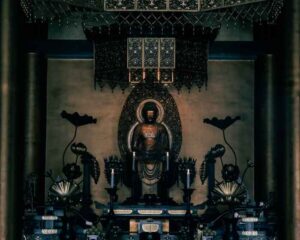
Serious Prayer at the Shikoku 88: Daisan, Honestly Explained
You want serious prayer, but actually getting yourself to Shikoku is off the table. That’s where daisan (代参) comes in — a Buddhist method, going back over a thousand years, of having someone else deliver the prayer for you.
Let me work through what daisan actually is and where it stands.
What daisan is: a legitimate way to deliver prayer without going yourself
Daisan is someone else worshipping and praying on your behalf. When you can’t physically make it, you hand the prayer off to another person to carry.
Here’s the Buddhist logic that makes it legitimate.
- Ekō (廻向): the Buddhist concept of redirecting the merit of prayer to another person
- Edo-period Ise pilgrimage: it was standard for one villager to carry everyone’s prayers
- Kobo Daishi tradition: daisan has been recognized within the Shikoku pilgrimage for ages
- The nōkyōchō’s weight: 88 seals and calligraphy serve as physical proof of prayer
- Modern formalization: dedicated daisan services exist today
So daisan is “a way of delivering prayer with real Buddhist grounding behind it.” Not some convenient shortcut — a method backed by a thousand years of history.
During Japan’s Edo period, the “O-Ise mairi” (Ise Grand Shrine pilgrimage) typically worked through villagers pooling money and sending one representative for everyone. Daisan is deeply woven into Japan’s prayer culture. Not a new invention — a modern continuation of an older practice.
For the broader concept and history, “What is ohenro daisan? The difference from proxy services and the meaning” covers it more fully. If you want the basics, give it a look.
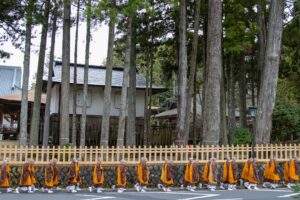
Does prayer actually reach through daisan?
“Does prayer actually reach through daisan?” That’s the honest question that matters most. Let me work through it both from the Buddhist angle and from a modern sensibility.
The original Buddhist take is that the power of prayer comes from “the act itself” and “the intensity of the wish”.
The “ekō (廻向)” framework holds that the merit accumulated by the living can be redirected toward others. Each step the daisan walker takes carries your prayer itself. That’s the basis for daisan’s legitimacy.
Of course, no one can promise “your wish will absolutely come true.” But there’s also a school of thought that the act of seriously wishing and entrusting a daisan request itself carries meaning.
The other thing that matters: a physical “record of prayer” that lands in your hands. When the nōkyōchō with seals and calligraphy from all 88 temples shows up, “the prayer was actually carried” becomes something you can hold.
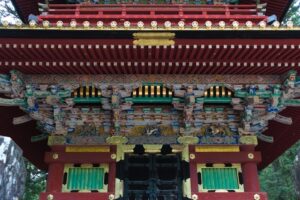
Why More People Choose Serious Prayer at Life’s Turning Points
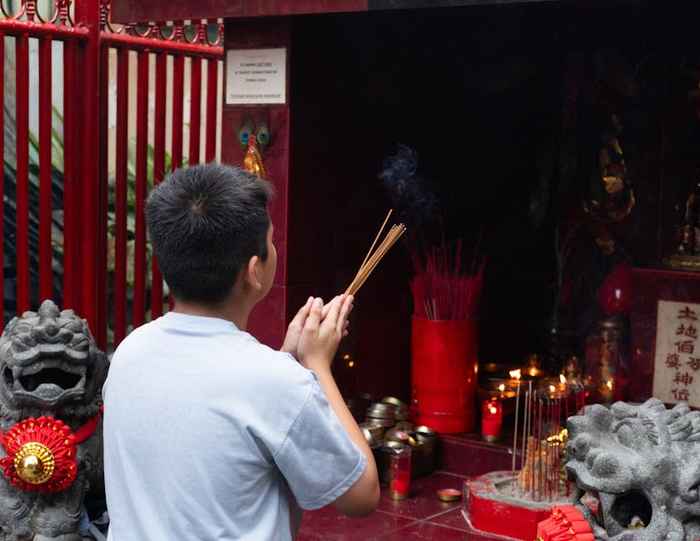
In recent years, quietly but steadily, more people are choosing serious prayer at the Shikoku 88 for life’s turning points. Not loud announcements on social media — quiet, real prayer in the heart.
Let me sort out why this is picking up.
Job changes, marriage, exams, recoveries — the moments ganakake gets chosen
Serious ganakake tends to get chosen at major turning points in life. The “this is it” moments where you want prayer to land for real.
Here are the moments where it actually gets chosen.
- Jobs / career changes: when the direction of your life turns on a single decision
- Marriage / having a child: marking a family turning point with prayer
- Exams: praying for your own or your child’s results
- Recovery from illness: praying for healing for yourself or family
- Starting a business: praying success at the launch of something new
- Family safety: overseas postings, big trips, moving
What ties these together is “there’s a piece you can’t fully control no matter how hard you work.” That’s exactly when entrusting prayer to something larger starts to make sense.
If a parent is sitting with “my child has an exam coming and I want to pray for them seriously” — and they can’t get to Shikoku themselves — daisan becomes a realistic way to deliver prayer at all 88 temples.
Or imagine “a family member is having major surgery.” When the family can’t leave the hospital on the day, requesting daisan to send a healing prayer through the 88 temples is a choice that’s been coming up more often.
For more on yakudoshi (unlucky-year) protection, “Serious yakudoshi cleansing through Shikoku daisan” is worth a look. Same family of “serious prayer” requests.
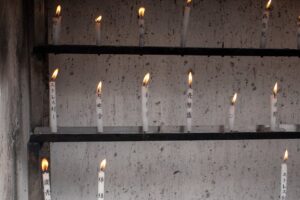
Serious wishers tend to look for “prayer with a tangible form”
Here’s a pattern that’s been clear lately: the more seriously someone is praying, the more they want “prayer with a tangible form.” Not just internal prayer — prayer that leaves a physical record.
Why “tangible prayer” gets chosen:
- A physical record: the nōkyōchō and pilgrimage report stay with you
- Prayer made visible: real proof that the prayer was actually carried
- Sharing within the family: the prayer at a turning point can be passed down
- Placement at the altar: a real nōkyōchō in your daily prayer space
- Continuity: a record of the moment that lasts a lifetime
Internal-only prayer leaves a quiet doubt — “did I actually pray, or did I just think about it?” The nōkyōchō landing in your hands is physical confirmation that the prayer happened.
Family turning points “sit alongside the photos and memories you keep” — that’s another strength of tangible prayer. A child’s wedding, a grandchild’s birth — keeping a nōkyōchō next to that history works.
Going for “tangible prayer” probably also reflects the SNS-era reality that “invisible prayer leaves a residue of doubt.” A physical nōkyōchō you can hold lines up well with what serious modern prayer needs to feel like.
The reason more people are praying seriously also lines up with a more uncertain era overall. That’s exactly the climate where wanting to pray seriously, in a place with a thousand years of history, makes natural sense.
FAQ on Serious Ganakake at the Shikoku 88
- Is it true that wishes get granted through daisan?
- Does serious ganakake require visiting all 88 temples?
- Is it embarrassing to share my wish content with a daisan provider?
- If I want to request daisan, how early should I start?
- Can I bundle multiple wishes into one daisan request?
If You’re Praying Seriously, Let the Shikoku 88 Carry It
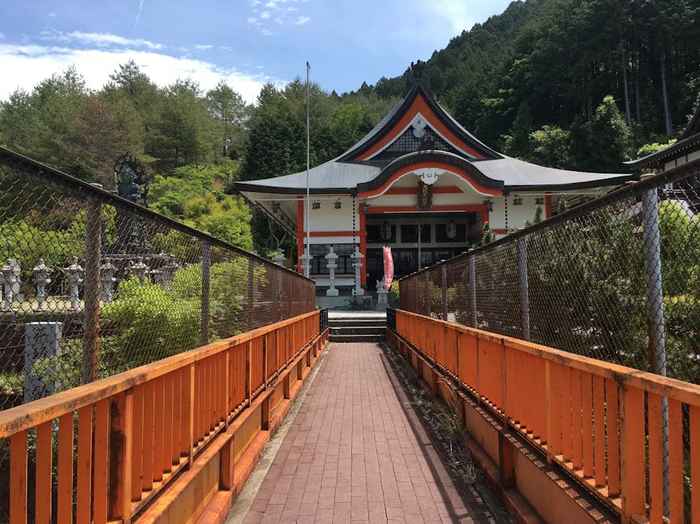
Serious prayer makes sense precisely because it’s a turning point. The local shrine isn’t enough; you want a place that matches what you’re carrying. That instinct is natural.
The Shikoku 88 is a place of prayer with over a thousand years of history. The scale — 88 temples, 1,200 km — carries the weight to match a real life turning point.
- The Shikoku 88 is a serious pilgrimage route covering 88 temples and 1,200 km
- Daisan is a legitimate prayer-delivery method with a thousand years of history
- Providers who guarantee “wishes will be granted” are worth treating with caution
- Serious wishers tend to choose “prayer with a tangible form”
- Starting three months before the turning point is a realistic timeline
What daisan delivers: a real nōkyōchō and a record of the prayer. Real seals and calligraphy from all 88 temples become a lifelong record of the prayer offered at your turning point.
Praying for a family member’s exam, for healing, for marriage or a new child. Whatever turning point you bring, the Shikoku 88 daisan has the scale to take it.
If you’re sitting with “this turning point — I want to send the prayer for real” — Ohenro Gift Bin, walking the 88 temples of Shikoku to deliver prayer, is one option to look at.
A real nōkyōchō and a record of the pilgrimage that stay with you as proof of the prayer offered at the turning point. The depth of prayer that physical objects can’t fully express, given a form that does.
If you’re thinking about serious prayer, the move is to talk through the wish content and timing with a daisan provider first. Confirm pricing, the process, and what they’ll cover, then decide once you’re convinced.
For broader guidance on choosing a daisan provider, the complete ohenro daisan guide is worth a look. The criteria for not picking the wrong one are laid out there.
Pricing, the actual mechanics, anything you want to ask about serious ganakake — please reach out via the plan and LINE consultation page. Even just a question is fine.
“Does this fit my wish?” “Can we land it on the turning-point day?” — specific questions get straight, honest answers, one at a time. Moving forward only when you’re convinced is what we want too.
Serious prayer belongs in a place that matches the weight you’re carrying. The Shikoku 88 has held a thousand years of prayer — your wish gets received with the same weight.
▼Related reads
- What Is Ohenro Daisan? The Difference From Proxy Services and the Meaning
- Is Daisan Disrespectful? Setting the Record Straight on Proxy Pilgrimage
- Serious Yakudoshi Cleansing Through Shikoku Daisan: Real Prayer at Unlucky-Year Turning Points
![[Ohenro]Shikoku Pilgrimage Proxy Service: Costs and How to Choose a Trusted Provider](https://ohenro-gift.com/en/giftohenro369/wp-content/uploads/2026/03/agency_thumb-300x200.jpg)