When Caregiver Fatigue Hits: How Prayer Steadies the Heart and Eases the Mental Weight
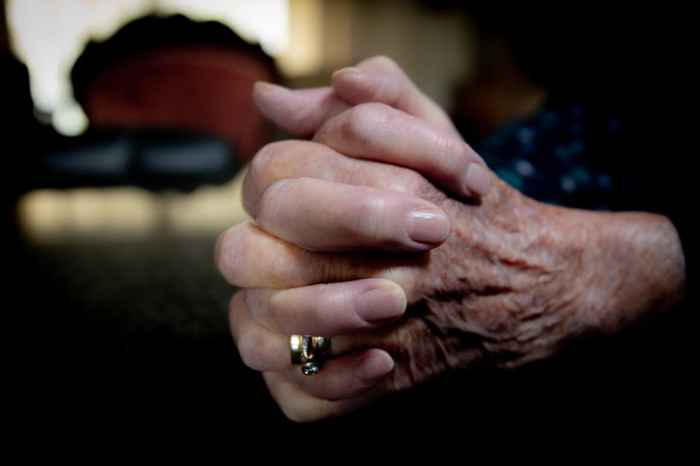
If that’s where your head is at, you’re far from alone — more people sit with this than you’d think.
You’re showing up for someone you love, and yet “I feel like I’m not doing enough” haunts you. The caregiver’s heart erodes more than what shows on the outside.
Late-night anxiety, heavy mornings, sudden tears that come out of nowhere. “I’m not allowed to complain” — that’s the trap that keeps tightening.
In this article, I’ll lay out how prayer can support a caregiver’s exhausted heart, the way I see it.
- What caregiver fatigue and care exhaustion actually do, mentally
- The structural reason “I have to keep going” never lets up
- Why prayer functions as emotional support
- Concrete ways to bring prayer into daily life
- How daisan (proxy pilgrimage) extends prayer when you can’t move

What Caregiver Fatigue Actually Is: The Real Mental Weight
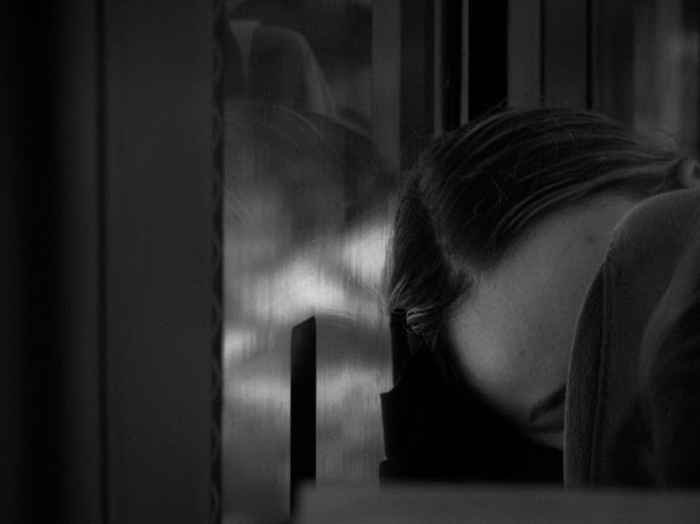
Caregiver fatigue isn’t just physical tiredness. The mental erosion is deeper, and it lasts longer.
Let me work through what’s actually happening underneath.
Why “I have to keep going” keeps showing up even when you’re depleted
Even when you’re depleted, “I have to be the one” keeps overriding the body’s need for rest. Several things are baked into that.
- Family responsibility: feeling like “no one else can do it”
- Self-sacrifice from love: “my own needs don’t matter”
- Resistance to relying on others: “I don’t want to be a burden”
- Guilt about resting: “is it okay for me to take a break?”
- No exit visible: the longer it drags on, the less light shows
What ties these together: “a structure where complaining isn’t allowed.” The caregiver puts their own state last by default.
Especially the “complaining isn’t a virtue” cultural undercurrent in Japan corners caregivers further. Telling yourself “I have to push harder” steadily drains the buffer without you noticing.
What kinds of mental weight caregivers actually carry
The specific emotional contents caregivers carry — let me break it down.
What surfaces, internally.
- Powerlessness: despair at the illness not improving
- Guilt: “there must be more I could be doing”
- Anger: at the unfairness of the situation, at people around you
- Sadness: from watching someone you love suffer day after day
- Loneliness: feeling no one truly gets it
- Anxiety about the future: not knowing how long this lasts
Most caregivers live with “all of these mixed together,” day after day. Each one alone gets dismissed; stacked, they hit the mental ceiling.
When this stretches on, the risk of caregiver depression becomes real. Recognizing “I’m telling myself I’m struggling — that’s a meaningful signal” is where the recovery starts.
For broader thinking on dealing with hospitalized family, “Sending ohenro daisan to a hospitalized family member” walks through it. Caregiver-side considerations get covered there too.

Why Prayer Works as Support for Caregiver Fatigue
Lately, more caregivers are using prayer to recenter when fatigue piles up. Why prayer functions as real emotional support — let me work through it.
How “I can’t do anything” shifts when you pray
What hurts most for caregivers is the “I’m not doing enough” sense of powerlessness. The structure where you’re already doing a ton, and yet it still feels insufficient.
Prayer functions as “one of the answers” to that powerlessness.
- “Praying” is itself an action: not nothing — it’s a real act
- Entrusting the buddhas or kami: you don’t have to carry it all alone
- Mental energy recovers: prayer time itself is rest
- A form of expressing love: prayer is unconditional love made visible
- Dialogue across time: present widens to past and future
So prayer is turning “I can’t do anything” into “praying is something I can do.” A real-world technique for slightly lifting the weight.
“Prayer doesn’t cure illness,” some folks think. No one can claim medical effects from prayer, but a caregiver’s heart steadying is a meaningful effect on its own.
The calm prayer can bring when nothing else helps
When caregiver-mode won’t switch off, prayer has a particular calming effect. Why that happens — let me sort it out.
What changes, by state.
| State | What prayer shifts |
|---|---|
| Anxiety won’t stop | Breath deepens, heart rate settles |
| Mind won’t quiet | Brief release from the thought spiral |
| Loneliness is heavy | Sense of connection with the buddhas / kami / ancestors |
| Powerlessness drags | “I can pray” as a holding point |
| Anger or sadness | Emotion gets sorted by being “entrusted” |
Beyond Buddhism, Christianity, or any specific religion, “the act of praying itself” has measurable psychological effects, recent psychology and neuroscience research has noted.
For more on healing prayer specifically, “Healing prayer at the Shikoku 88 through ohenro daisan” works through it. What prayer means for the caregiving family sits there.
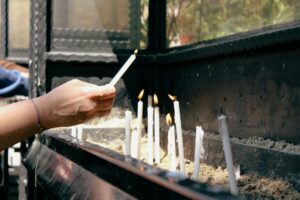
Bringing Prayer Into a Caregiver’s Daily Life: Concrete Methods

How do you actually bring prayer into your day, in realistic terms? Let me get specific.
Concrete ways to make prayer a daily emotional anchor
“Prayer” sounds like a special practice, but plenty of simple ways to fit it into daily life exist.
Here are concrete methods.
- Hands clasped for a few minutes after waking: at the family altar or in front of a photo
- Inner dialogue during walks: addressing the buddhas or the deceased while you walk
- Regular shrine/temple visits: even briefly, at your local site
- Sutra copying: a window of time at home for copying sutras by hand
- Evening gratitude prayer: thanks for the day before sleep
- Reading sutras aloud: chanting the Heart Sutra or similar
The point: not “doing prayer perfectly” — it’s “finding a form that calms you down.” Sustainability beats correctness.
If “I can’t sleep, anxiety spinning” shows up at night — even five minutes in bed, calling family members’ names in your heart while you pray, has settled folks down. Worth trying.
Daisan: extending prayer when you can’t physically move
When caregiving means you can’t get out, “daisan” (proxy pilgrimage pilgrimage) opens up. Entrusting prayer to someone else when you can’t move yourself.
What daisan changes.
- Physical load drops: more time for caregiving itself
- Real prayer gets delivered: at sacred sites like the Shikoku 88
- A nōkyōchō lands in your hands: prayer record in physical form
- Family-shareable: place it on the altar for shared family prayer
- Sustainable support: can be requested at every turning point
Especially Shikoku 88-temple daisan gets picked by caregivers thinking “I can’t get out, but I want to deliver real prayer.” Real seals and calligraphy from all 88 temples land on the nōkyōchō you’ll receive.
If “my father’s been sick a long time, I can’t leave the house, but I want to deliver something real” describes the situation, daisan becomes a workable option.
For shrine vs. temple healing-prayer comparison, “Shrine or temple for healing prayer? A practical comparison guide” works through it. How a caregiving family picks the right place for prayer sits there.
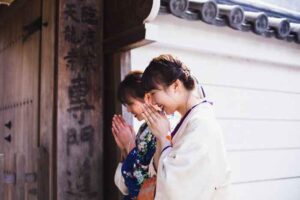
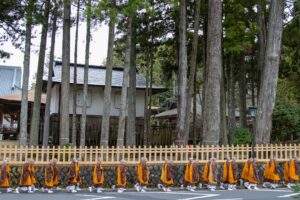
FAQ on Caregiver Fatigue and Prayer
- When I’m exhausted from caregiving, does prayer actually help?
- Can I pray if I’m not religious?
- When caregiver fatigue gets serious, what else is there besides prayer?
- What does requesting daisan involve?
- Is “complaining” as a caregiver wrong?
When Mental Weight Hits, Lean on Prayer as Real Emotional Support
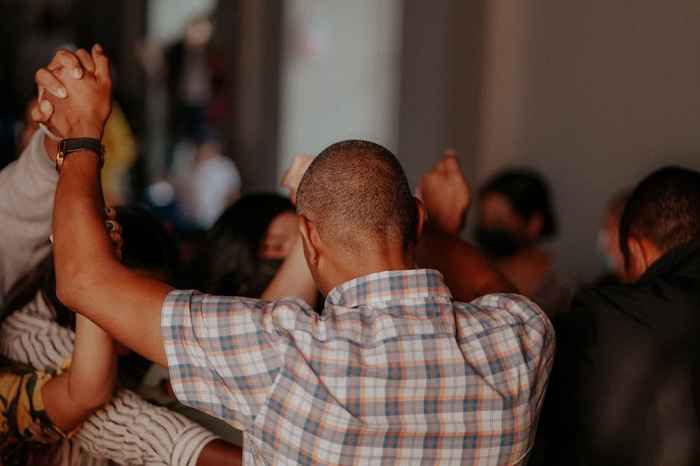
A caregiver’s exhausted heart breaks if you ignore it. Holding prayer as emotional support as emotional support is a real condition for sustaining caregiving long-term.
Hands together for a few minutes in the morning, evening gratitude, shrine/temple visits, daisan requests. Prioritize sustainability over form; find what works for your own life.
- Caregiver fatigue: the mental load runs deeper than the physical
- “I have to keep going” creates a structure that traps you — watch for it
- Prayer turns “I can’t do anything” into “I can pray”
- You can pray without any religion — sustainability beats correctness
- Daisan extends prayer when you can’t move physically
If “I can’t leave the house with caregiving, but I want to deliver real prayer for my family” describes you — Ohenro Gift Bin, walking the 88 temples to deliver prayer, is one option to consider.
A real nōkyōchō and a record of the pilgrimage land as proof of prayer in your hands. Place it on the family altar — the whole family can use it for daily prayer.
If you’re considering daisan, talk through prayer content and timing with a provider first. For caregivers with no time, LINE or phone-based completion paths exist.
For broader provider-selection guidance, the complete ohenro daisan guide walks through the criteria.
For pricing, the mechanics, or how to fit it around your caregiving schedule — anything worth asking, please reach out via the plan and LINE consultation page. Even just a question is fine.
“What options fit our situation?” “Will daisan actually ease the heart?” — specific questions get straight, honest answers, one at a time. Moving forward only when you’re convinced is what we want too.
The caregiver’s heart deserves to be a recipient of prayer too. Don’t keep cornering yourself; lean on the support that prayer offers.
▼Related reads
- Sending Ohenro Daisan to a Hospitalized Family Member
- Healing Prayer at the Shikoku 88: How Ohenro Daisan Delivers It
- Shrine or Temple for Healing Prayer? A Practical Comparison Guide
![[Ohenro]Shikoku Pilgrimage Proxy Service: Costs and How to Choose a Trusted Provider](https://ohenro-gift.com/en/giftohenro369/wp-content/uploads/2026/03/agency_thumb-300x200.jpg)